9999 CNIC Check Online 2026 You Might Be Eligible Check Now
9999 CNIC Check Online 2026: Honest Guide for Pakistani Families
Research-based | Not sponsored | Updated May 2026
The Real Frustration Nobody Talks About
Every Ramzan, the same confusion happens.
Someone says “send your CNIC to 9999 and get Rs. 13,000.” You try it. The message comes back “not eligible.” Or no reply at all. Or a reply that says “under verification” — and then nothing happens for weeks.
Meanwhile your neighbor got the payment without doing anything different.
Most articles just tell you to send your CNIC to 9999. Nobody explains:
Why some CNICs are eligible and others are not
Why your SIM card matters as much as your CNIC
What “under verification” actually means
Why sending the same CNIC twice can cause problems
How the government actually decides who qualifies
This guide answers all of that — based on how the system actually works behind the scenes.
Background: What Is the 9999 System?
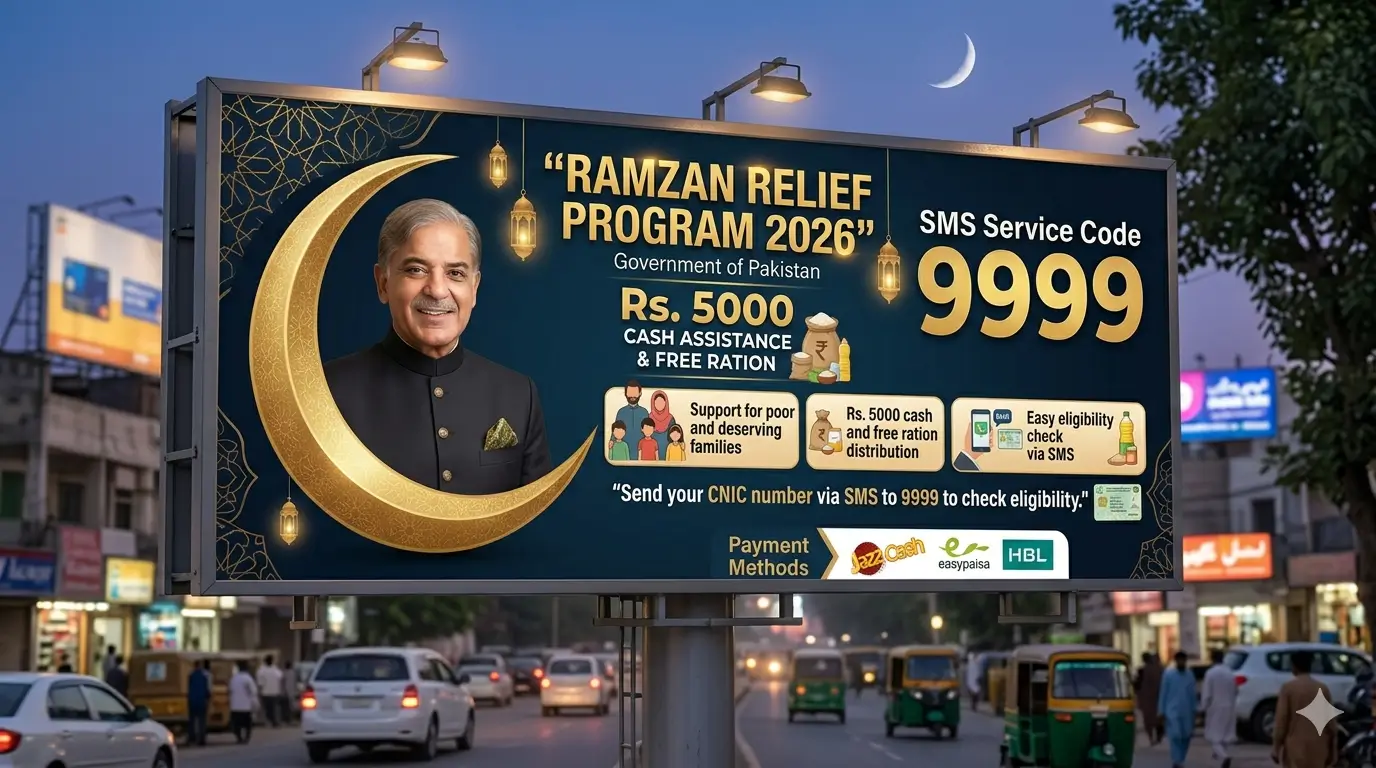
The 9999 SMS code is Pakistan’s federal-level digital welfare verification system. It was activated prominently for the PM Ramzan Relief Package 2026 — a Rs. 38 billion federal initiative that provides Rs. 13,000 one-time cash assistance to deserving families during Ramadan.
Key facts:
Launched under PM Shahbaz Sharif’s government as annual Ramzan relief
Target: over 12 million low-income households nationwide
Managed digitally through NITB (National Information Technology Board)
Official web portal: pmrrp.nitb.gov.pk
The critical thing most people miss: 9999 is not permanently active. It is activated only when the government officially announces a specific relief program. Outside of those announced periods, sending your CNIC to 9999 may get no reply or an error.
9999 vs. 8171 vs. 8070:
Code Level Program For Whom
9999 Federal PM Ramzan Relief Package All Pakistan
8171 Federal BISP / Benazir Kafalat BISP registered families
8070 Punjab Punjab relief programs (Nigehban etc.) Punjab residents only
Who Actually Qualifies for 9999 Relief
This is where most articles fail you. They list vague criteria. Here is the real picture.
Core Eligibility Requirements
Valid, active CNIC registered with NADRA
Mobile SIM must be registered in your own CNIC name (not your husband’s, son’s, or anyone else’s)
Low-income household — determined by PMT (Proxy Means Test) poverty score
Registered in NSER (National Socio-Economic Registry) or BISP database
Not an active taxpayer (NTN filer)
Not a government employee
Who Is Automatically Prioritized
Existing BISP/Benazir Kafalat beneficiaries — highest priority
Families registered in NSER with low poverty scores
Widows, disabled persons, daily wage earners in official databases
Common Disqualifying Factors
❌ SIM card not registered on your own CNIC
❌ CNIC expired or not renewed in NADRA
❌ Income or assets above the poverty threshold in NSER data
❌ Government job (even Grade 1–4 employees can be disqualified if salary exceeds the threshold)
❌ Foreign travel records or overseas residency data linked to your CNIC
❌ Tax filer status in FBR records
❌ Duplicate applications — sending CNIC to 9999 multiple times can flag your account
The Real Process — Step by Step
Method 1: SMS Check (Best for No-Internet Areas)
Steps:
Open your phone’s messaging/SMS app
Type your 13-digit CNIC number — no dashes, no spaces
✅ Correct: `3520112345678`
❌ Wrong: `35201-1234567-8` or `35201 1234567 8`
Send to 9999
Wait for reply — can take minutes to 72 hours during peak Ramzan period
What your reply means:
SMS Reply What It Means What to Do
✅ Eligible You qualify — payment instructions follow Follow the SMS instructions
⏳ Under Verification System is reviewing your income/poverty data Wait 2–3 days, check again
❌ Not Eligible You don’t meet criteria based on current data See steps below
No Reply Network congestion OR SIM not in your name Check SIM registration, retry
Method 2: Online Portal Check
Visit: pmrrp.nitb.gov.pk
Enter your 13-digit CNIC number
Complete the captcha code
Click Submit
Result appears instantly (when portal is active)
Tip: The portal gets very slow during peak Ramzan days due to heavy traffic. Try early morning (before 8 AM) or late night for faster results.
Method 3: If You’re Eligible — How to Collect Payment
Payment instructions are sent via SMS after confirmation
Collection is done via biometric verification at an authorized bank or payment center
Bring your original CNIC — no photocopy accepted
No registration fee is ever required. Anyone charging money is a scammer.
Real Timeline
Stage Official Claim Reality
SMS reply Within minutes Minutes to 72 hours during Ramzan
Portal result Instant Slow during peak days
Payment after eligibility Before Ramzan Delays common if verification pending
“Under verification” resolution Not stated 3–7 days typically
What Others Don’t Mention
1. The PMT Poverty Score is everything — and you can’t see it.
Your eligibility is not just about income — it’s about your Proxy Means Test (PMT) score stored in the NSER database. This score considers house size, assets, number of family members, utility consumption, and more. Even if you feel poor, if your NSER record shows a higher-than-threshold score, you will be rejected. You cannot challenge it without updating your NSER data.
2. Your SIM registration is a hidden barrier.
If the SIM you’re sending from is in your father’s, husband’s, or child’s name — the verification may fail. The system cross-checks CNIC against PMD (Pakistan Mobile Database) to confirm SIM ownership. Check your SIM’s registered owner by dialing *8484# on most networks.
3. Sending your CNIC twice causes problems.
Multiple SMS submissions can flag your account as a duplicate attempt. Send it once. If no reply after 72 hours, try the online portal instead.
4. The 9999 portal is only active during specific programs.
Many people try to check on 9999 between programs and get confused when there’s no response. The code is temporarily activated for specific campaigns — it is not a permanent service.
5. Scams are everywhere during Ramzan.
Fraudsters send fake “You are eligible” messages and ask for bank details or a fee to “release” your payment. The government never asks for money or bank details via SMS. If you receive such a message, ignore it.
Real Examples: Three Scenarios
✅ Normal Case — Samina, 38, Multan
Samina is a widow registered in BISP with a low PMT score. Her SIM is in her own CNIC name. She sends her CNIC to 9999 during Ramzan 2026. She gets an “Eligible” reply within 30 minutes. She receives an SMS with her nearest payment center address. She goes with her original CNIC, completes biometric verification, and collects Rs. 13,000 in cash. Total time: 2 days.
⚠️ Difficult Case — Khalid, 45, Lahore
Khalid is a daily wage laborer. His household is genuinely poor. But his SIM is registered in his son’s CNIC name — not his own. His SMS to 9999 gets no reply. He also has an old NSER registration from 2019 that shows him in a slightly higher income bracket. He needs to: (1) visit a mobile network franchise to transfer the SIM to his own CNIC, and (2) visit his nearest BISP/NSER update center to request a household re-survey. After updates, he can recheck eligibility in the next relief cycle.
❌ Rejection Case — Imran, 40, Rawalpindi
Imran works as a Grade-3 government employee at a local municipal office. He earns Rs. 28,000/month — which seems low. But FBR and government payroll records show him as a state employee. His CNIC check returns “Not Eligible” automatically. Government employees are excluded regardless of salary level. This is a hard disqualification with no appeal path for this specific program.
Surprising Insights Most People Miss
Why does the system check NSER data instead of asking you directly?
In earlier relief programs, people falsely claimed low incomes to qualify. By using pre-existing NSER household survey data, the government removes self-reporting from the equation. Your eligibility is based on what a government surveyor recorded about your household — not what you claim today. This is more fraud-resistant but also means errors in old NSER data can wrongly exclude genuinely poor families.
Why is 9999 temporary and not permanent?
Because each relief program has different eligibility rules, budgets, and payment channels. A permanent code would confuse citizens when program terms change. Temporarily activating 9999 only for specific campaigns ensures the right rules are applied each time.
Why does biometric verification happen at payment?
To prevent ghost beneficiaries. Past programs suffered when others collected payments on behalf of eligible people and kept the money. Requiring the beneficiary’s own biometric at collection ensures cash reaches the right person.
Honest Limitations: What 9999 Does NOT Solve
It does not help families not registered in NSER — unregistered poor are invisible to the system
Rs. 13,000 is a one-time Ramzan payment — it’s not a recurring monthly benefit
It does not work for families with old, inaccurate NSER data — errors require an in-person survey update
It is not active year-round — only during officially announced program windows
It does not provide feedback on why you’re ineligible — the system just says “not eligible”
Families outside official databases (informal, undocumented, or migrant households) cannot access this system
Practical Checklist Before You Check
Confirm your CNIC is valid and not expired — renew at NADRA if needed
Verify your SIM is registered in your own CNIC name — dial *8484# to check
Check if you are registered in NSER — visit your nearest BISP office to confirm
Type CNIC correctly — 13 digits, no dashes, no spaces
Send to 9999 once only — do not resend multiple times
If no internet, use SMS; if internet available, use pmrrp.nitb.gov.pk
Note your result: Eligible / Under Verification / Not Eligible
If “Under Verification” — wait 3–7 days before rechecking
Never pay anyone for registration or eligibility approval — it is always free
What to Do Right Now
If you got “Eligible”: Follow the SMS instructions exactly. Go to the specified payment center with your original CNIC. Complete biometric verification. Collect your Rs. 13,000. Do not share your payment details with anyone.
If you got “Not Eligible”: Don’t panic. Check if your SIM is registered on your own CNIC. Visit your nearest BISP/NSER office and request a household data review. Update your NSER record for future programs.
If you got no reply: Check your SIM registration. Try the online portal at pmrrp.nitb.gov.pk instead. If the portal shows an error, the program window may be closed — wait for the next official announcement.
Important: Only trust official channels. Official 9999 helpline and support: visit any BISP tehsil office or NSER update center in your area.
About This Post
I’m not a government official, welfare officer, or digital governance expert. I researched this topic by going through the official PMRRP portal documentation, multiple verified news sources covering the 2026 PM Ramzan Relief Package, and detailed guides on how the NSER/PMT verification system works. I focused especially on why people get rejected — because that’s what no article explains clearly. Always verify current program status at pmrrp.nitb.gov.pk or through official BISP channels before taking action.
—
Official portal: pmrrp.nitb.gov.pk | SMS: Send CNIC to 9999 | BISP helpline: 0800-26477
Last updated: May 2026 | Service active only during officially announced program periods