BISP Payment Deducted? Easy Step-by-Step Guide to Check a Short Payment and Complain (2026)
This is not an official BISP website. This guide is independent, general information to help BISP families check a short payment and complain about a deduction. For official information, always use the 8171 portal at 8171.bisp.gov.pk or the BISP helpline on 0800-26477.
BISP Payment Deducted: Your BISP Payment Should Arrive in Full
BISP Kafaalat payments are made in full, with no service charges or deductions. If your BISP payment deducted figure — the amount you actually received — is less than the amount shown on the 8171 portal, or less than what other beneficiaries in your area received for the same installment, something is wrong — and you have the right to ask about it and to complain.
This guide explains why a BISP payment deducted case happens, how to confirm the exact amount you are owed, and what to do if someone has deducted money from your payment.
Before you conclude that your BISP payment deducted amount was really taken, it is worth understanding what “the full amount” means for your household in this particular cycle. BISP payments are made quarterly, and the amount due can change between cycles.
The most reliable figure is the one shown for your own CNIC for this cycle — not what you received last time, and not what a neighbour received. That is why the first step in this guide is always to check, not to assume.
Example — a payment that looked short but was not a deduction: A beneficiary collects her payment and receives less than she received last quarter.
She is about to complain about a deduction, but first she checks the 8171 portal. The portal shows that the amount due for this cycle is the same smaller figure she received. In her case there was no deduction — the installment amount for this cycle was different. Checking first saved her a wasted complaint and a needless argument at the payment point.
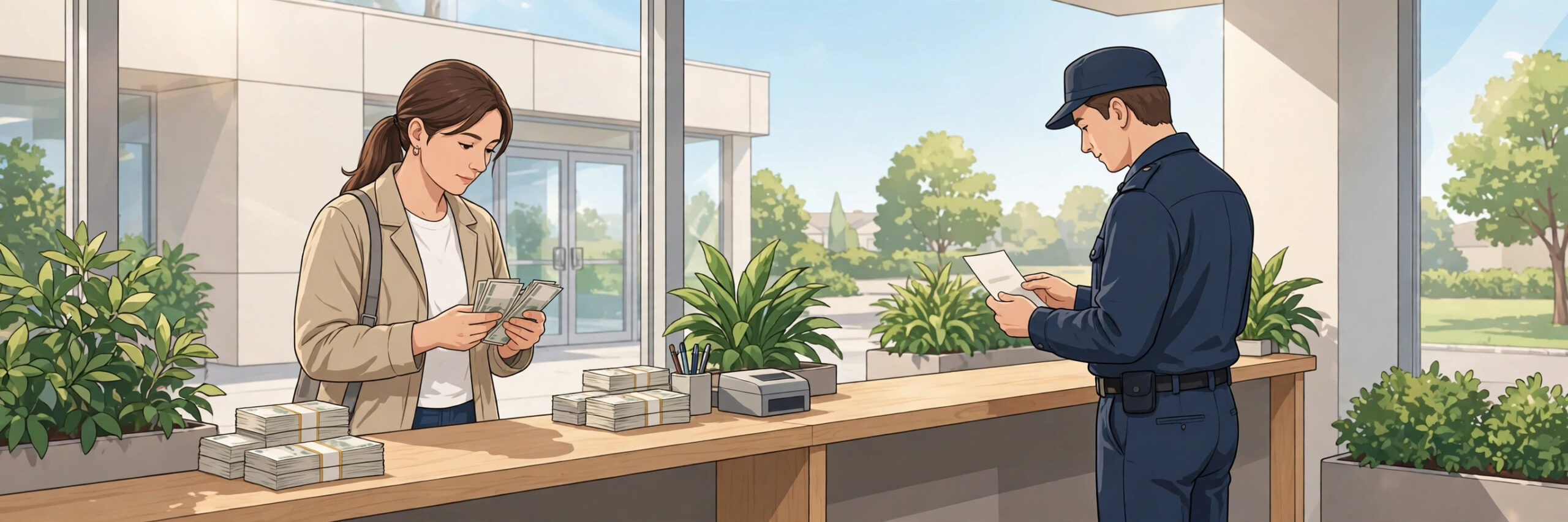
Example — a real deduction: Another beneficiary — a real BISP payment deducted case — collects her payment at a campsite. The printed receipt shows the full amount, but the man handing over the cash gives her Rs 2,000 less and says it is a “service charge”.
She counts the cash at the counter, points to the receipt, and asks for the full amount. When he refuses, she notes the name of the payment point, the date and time, keeps the receipt, and reports the deduction to the BISP helpline the same day. The receipt is her proof: it shows the full amount disbursed, while she received less.
Both examples show the same habit: check the portal, take the receipt, count the cash. Those three steps protect you whether the shortfall is a real deduction or a misunderstanding.
BISP Payment Deducted: Why Your Payment Might Be Less Than Expected
An Unauthorised Deduction by an Agent
This is the most common cause of a BISP payment deducted complaint. An agent, shopkeeper, or middleman at or near the payment point takes a share of your payment before handing over the rest — sometimes claiming it is a “service charge” or “fee”. There is no such fee. Any deduction by an agent is illegal.
Deductions happen in several ways. Sometimes the agent takes the cash first and hands you a smaller amount.
Sometimes the agent asks you to pay a “fee” before you are allowed to collect. Sometimes a middleman offers to collect the payment on your behalf and returns only part of it. In every case, the pattern is the same: someone who is not BISP takes a share of money that belongs to you. Authorised payment points are not allowed to deduct anything, and a complaint against an authorised agent is taken seriously — agents can lose their authorisation.
You Are Comparing Different Installments
BISP installment amounts can change between payment cycles. If you are comparing this payment with a previous one, or with a neighbour whose household situation differs, the amounts may legitimately be different. Always check the amount due for this specific cycle on the 8171 portal before concluding that money was deducted.
A neighbour’s household may differ from yours in ways that affect the payment — for example, if they also receive a Taleemi Wazaif stipend for a school-going child, their total collection may look larger, even though the Kafaalat amount itself is the same.
Comparing totals without knowing what is included is a common source of confusion. Check your own figure on the portal, for your own CNIC, for this cycle.
A Previous Adjustment
In rare cases, the system adjusts a payment because of a correction to an earlier installment. This is uncommon, and the BISP office can explain it if it applies to you. Do not assume an adjustment without asking.
An adjustment is not something an agent at a payment point can explain or impose. If you are told that an amount was “adjusted” or “cut by the system”, ask at the BISP tehsil office for a clear explanation, and ask for it in writing if you can.
If no adjustment is recorded, then the shortfall needs to be treated as a possible deduction and reported — a BISP payment deducted report should never rest on an unexplained “adjustment”.
A Partial Release
Very occasionally, a payment is released in stages. If the portal shows your payment as partially released, the balance may follow in the next phase. Check the portal again before taking further action.
A partial release can be confusing, because you may receive some money and assume the rest has been deducted. If the portal shows a partial release, wait and check again before complaining about a deduction — but keep your receipt from the part you did receive, and note the date, so you have a record if the balance does not follow.
Is It a Deduction or a Legitimate Difference?
| Situation | What it usually means | What to do |
|---|---|---|
| Receipt shows the full amount, but you were handed less cash | A deduction by the person at the payment point | Count the cash at the counter, keep the receipt, report the same day |
| Portal shows a smaller amount due for this cycle than last cycle | The installment amount for this cycle is different — not necessarily a deduction | Check the portal figure for your CNIC for this cycle before complaining |
| Your total is less than a neighbour’s total | Their household may receive an additional stipend (for example, Taleemi Wazaif) | Compare Kafaalat amounts only, and check your own portal figure |
| Portal shows a partial release | The payment may be released in stages, with the balance to follow | Keep your receipt, check the portal again, then complain if the balance does not arrive |
| Someone asks for a “fee” or “service charge” | An unauthorised deduction — there is no such fee | Refuse, keep the receipt, note the name and place, report the same day |
BISP Payment Deducted: How to Check the Exact Amount You Are Owed
Step 1: Check the 8171 Portal
Enter your CNIC on the 8171 web portal. The portal shows whether a payment has been released and, where the information is available, the amount due — the figure that proves whether your BISP payment deducted claim is right. This is the figure your payment should match. For reference, the current quarterly Kafaalat installment is Rs 14,500 per quarter for the Oct–Dec 2026 cycle, per the government’s June 2026 announcement, rising to Rs 18,000 planned from January 2027 — check the exact amount for your cycle on the 8171 portal.
The portal is 8171.bisp.gov.pk. Enter your 13-digit CNIC number carefully, complete the verification shown on the screen, and read the result.
If the portal shows a payment as released, note the amount shown, where the information is available, and the date. Take a screenshot or write the details down before you go to collect your payment, so you know exactly what to expect at the counter. If you have never used the portal before, read our guide on checking your BISP payment status or checking your BISP status by CNIC online for the step-by-step method. You can also send your CNIC by SMS to 8171 — SMS to 8171 is free — to check your status that way.
Step 2: Always Take a Printed Receipt
When you collect a payment, the payment point must give you a printed receipt. The receipt shows the amount disbursed. Check it before you leave the counter. If the receipt shows the full amount but you were handed less cash, that is the proof of the deduction.
Read the receipt at the counter, not at home.
Check that the name and CNIC on it are yours, that the amount matches the figure you saw on the portal, and that the date is today. If the receipt is missing, blurry, or shows a different amount, ask for a correct one before you leave. A receipt that you only discover is wrong at home is much harder to use as evidence.
Step 3: Keep Your Receipts
Keep every payment receipt in a safe place. If you need to complain later, the receipts are your evidence.
Keep receipts from every cycle together — in an envelope, a folder, or a plastic bag kept with your CNIC.
Write the date of collection on each one if it is not already printed. If you ever need to show a pattern — for example, deductions at the same payment point over several cycles — a set of receipts is far stronger evidence than a single complaint from memory.
Your Collection-Day Checklist
- I checked the amount due for this cycle on the 8171 portal before going.
- I have my original CNIC with me.
- I collected the payment myself, with my own biometric verification.
- I received a printed receipt and checked it at the counter.
- I counted the cash against the receipt before leaving the counter.
- I kept the receipt safe with my other payment receipts.
- If anything was short, I noted the name of the payment point, the person, and the date and time.
BISP Payment Deducted: What to Do If an Agent Deducts Money
At the Payment Point
- Politely but firmly ask for the full amount shown on the receipt.
- If the person refuses, note their name, the name of the shop or payment point, and the date and time.
- Do not argue or create a confrontation. Leave with whatever you were given and your receipt, then complain through the proper channel.
Staying calm matters. A confrontation at a busy payment point can turn unsafe, and it does not get your money back. Ask once, clearly, for the full amount shown on the receipt.
If the answer is no, do not hand over your receipt, do not hand over your CNIC, and do not agree to come back later for the rest. Leave with what you were given and your receipt, and report it the same day. Your safety comes first; the complaint is how the deduction is dealt with.
Example — asking firmly at the counter: A beneficiary is handed Rs 2,000 less than the receipt shows. She says, calmly: “The receipt shows the full amount. Please give me the full amount.”
The agent refuses. She does not argue further. She notes the shop name and the time, keeps her receipt, and calls the BISP helpline when she gets home. She has the evidence, and she has stayed safe.
Report It the Same Day
Call the BISP helpline on 0800-26477 and report the BISP payment deducted case, giving the payment point’s name and location. You can also report it in person at your nearest BISP tehsil office. Give the date, the amount deducted, and the name of the person if you know it.
The helpline is toll-free and operates Monday to Friday, 9:00 am to 5:00 pm. When you call, explain the problem in one or two clear sentences first — “My payment was deducted at the payment point” — then give the details: your CNIC number, the date of collection, the payment point, the amount shown on the receipt, and the amount you actually received.
Ask for a complaint reference number and write it down with the date of the call. If you report in person, take your original CNIC and the receipt, and ask for a reference number or a written receipt of your complaint.
For more on using the helpline, see our guide to the BISP helpline number.
If the Deduction Is by an Official Payment Agent
Authorised payment points are not allowed to deduct anything. A complaint against an authorised agent is taken seriously — agents can lose their authorisation. Your complaint protects other beneficiaries too.
This is worth remembering when you feel unsure about complaining. A deduction is not a small favour or a normal cost of collecting a payment. It is illegal, and the same agent is likely doing it to other families at the same payment point.
Your complaint creates a record against that agent, and that record is what allows BISP to act. Even if your own case takes time, the complaint matters for everyone who collects at that point after you.
BISP Payment Deducted: How to File a Complaint About a Short Payment
- Call the helpline on 0800-26477, or visit the BISP tehsil office.
- Explain the problem clearly: your CNIC number, the date of collection, the payment point, the amount shown on the receipt, and the amount you actually received.
- Ask for a complaint reference number and write it down.
- Follow up using the reference number if you do not hear back.
Keep copies of your receipts and your BISP payment deducted complaint reference number together. If you follow up by phone, give the reference number first, so the operator can find your complaint quickly. If you visit the tehsil office, take the reference number and the receipts with you. If you are told your complaint was never formally entered — only noted in conversation — ask for it to be registered properly and take a new reference number.
BISP Payment Deducted: Can You Get the Deducted Money Back?
In many reported cases, complaints about deductions lead to the agent being warned or removed, and beneficiaries being guided on how to recover the amount. The outcome depends on the evidence — which is why the printed receipt is so important. Even if recovery takes time, filing the complaint matters: it creates a record against the agent and protects other families.
This guide does not promise that deducted money will be returned, or how long a complaint will take. Deduction-complaint outcomes and timelines vary, and this guide keeps the original’s hedged wording on that point.
What is certain is that a complaint with a receipt, a date, and a named payment point is far stronger than a complaint from memory alone. Keep your evidence safe, keep your reference number safe, and follow up until you have an answer.
BISP Payment Deducted: How to Protect Your Payment in Future
- Always collect your payment yourself, with your own CNIC and biometric verification.
- Never hand your CNIC or your payment to a middleman to collect on your behalf.
- Count the cash at the counter, against the printed receipt, before you leave.
- If anyone asks for a fee or a share, refuse — and report them.
- Tell other beneficiaries in your area what happened, so they are not caught the same way.
- Check the amount due on the 8171 portal before every collection, for that cycle, so you know what to expect.
- If you withdraw your payment through a bank or wallet channel, use the official method only. See our guide to withdrawing your BISP cash and the BISP 14500 payment update for the current cycle.
Example — protecting the next payment: After a deduction, a beneficiary changes her routine: she checks the portal the day before collection, goes early in the morning when the payment point is less crowded, collects the payment herself, counts the cash at the counter, and keeps the receipt in an envelope at home.
At her next collection, she receives the full amount. The habit, not luck, is what protects her.
BISP Payment Deducted Frequently Asked Questions
My payment was less than last time. Was my BISP payment deducted? Not necessarily. Installment amounts can change between cycles. Check the amount due for this cycle on the 8171 portal first. If the portal shows the smaller amount, there was no deduction. If the portal shows the full amount but you received less, report it.
What is the current Kafaalat amount? For reference, the current quarterly Kafaalat installment is Rs 14,500 per quarter for the Oct–Dec 2026 cycle, per the government’s June 2026 announcement, rising to Rs 18,000 planned from January 2027 — check the exact amount for your cycle on the 8171 portal.
What proof do I need to complain about a BISP payment deducted case? The printed receipt is the most important proof, because it shows the amount disbursed. Keep it, together with the date, the name of the payment point, and the amount you actually received. A complaint reference number from the helpline is the second piece of evidence — always ask for one.
How do I file a complaint about a short payment? Call the BISP helpline on 0800-26477 (toll-free, Monday–Friday, 9:00 am–5:00 pm) or visit your nearest BISP tehsil office. Give your CNIC number, the date of collection, the payment point, the amount on the receipt, and the amount you received. Ask for a complaint reference number and write it down.
Can I get the deducted money back? In many reported cases, complaints lead to the agent being warned or removed, and beneficiaries being guided on how to recover the amount. The outcome depends on the evidence, especially the printed receipt. This guide does not promise recovery or a timeline — but filing the complaint is essential, because it creates a record and protects other families.
Should I argue with the agent at the payment point? No. Ask once, politely but firmly, for the full amount shown on the receipt. If the agent refuses, do not argue or create a confrontation. Leave with what you were given and your receipt, note the details, and report it the same day through the helpline or the tehsil office.
BISP Payment Deducted: Conclusion
Your BISP payment belongs to you in full. Check the amount due on the 8171 portal, take a printed receipt at every collection, count the cash before you leave, and report any BISP payment deducted case to the helpline on 0800-26477. Complaints are free, and they are the only way unauthorised deductions are stopped.
For reference, the current quarterly Kafaalat installment is Rs 14,500 per quarter for the Oct–Dec 2026 cycle, per the government’s June 2026 announcement, rising to Rs 18,000 planned from January 2027 — check the exact amount for your cycle on the 8171 portal at 8171.bisp.gov.pk.
If your payment is short, do not accept it quietly: check, keep the receipt, and complain the same day.