BISP Waseela-e-Rozgar 2026 — Easy Guide to BISP Skills Training, Then and Now
This is not an official BISP website. This guide is independent, general information about BISP Waseela-e-Rozgar and its successor programme. For official information, always check BISP at bisp.gov.pk or the Hunarmand portal at hunarmand.bisp.gov.pk before you apply or pay anything.
What Was BISP Waseela-e-Rozgar?
BISP Waseela-e-Rozgar was the Benazir Income Support Programme’s original vocational and technical training component, launched in the early 2010s as part of BISP’s effort to help poor families graduate out of poverty rather than depend on cash support forever. The idea was simple and ambitious: one member from each registered BISP beneficiary family would receive modern technical or vocational training, so that the family gained a skill it could earn with, and not just a quarterly payment. The name itself says it — “Waseela-e-Rozgar” means a means of employment.
BISP Waseela-e-Rozgar sat alongside two sister components under the same graduation approach. Waseela-e-Taleem looked after children’s education, paying stipends to keep children in school. Waseela-e-Sehat looked after health. Waseela-e-Rozgar looked after earning: the adult member of the family who would be trained, certified, and helped toward a job or a small business. Together, the three Waseelas were meant to attack poverty from three directions at once — money today, schooling for the children, health for the family, and a skill for earning tomorrow.
The scale of the ambition was large. Reports from 2012 say that 20,000 individuals were to complete training by the end of that year, and that BISP was aiming to train 150,000 youth a year with support from development partners, including KOICA and others. Those were targets for a young programme, and like many targets of that period, they describe what was planned more than what was delivered in full. But the idea survived even where the original scheme did not, and that is the story of this guide: BISP Waseela-e-Rozgar as a standalone scheme is not the live programme today, but its successor carries the same idea forward under a new name.
Example — the family that needed more than a payment: A BISP beneficiary family in rural Sindh receives its quarterly Kafaalat payment, and it helps, but it is never enough to change the family’s position. The father is a daily-wage labourer, the work is irregular, and there is no skill in the house that commands a steady wage. Under BISP Waseela-e-Rozgar, one member of the family would have been trained in a trade — electrician work, tailoring, mobile repair — and that skill would have given the family a second, steadier income. That was the promise of the programme, and it is the same promise its successor makes today.
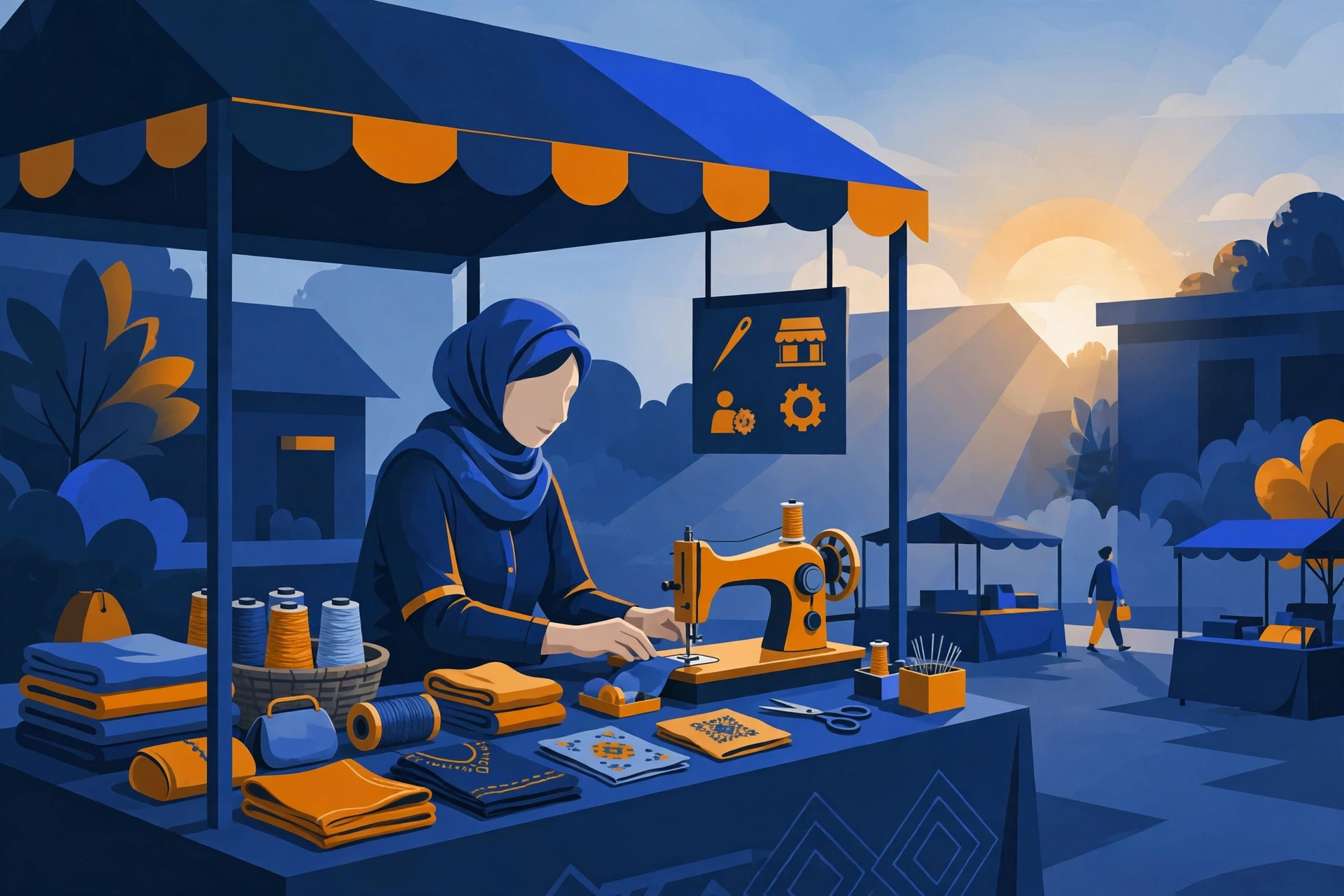
Example — the young woman who learned a trade: A 20-year-old daughter in a BISP family in Punjab finishes her matric and has no way forward — no money for further study, no skill, and no job. A training programme that takes one member from each beneficiary family and teaches her a trade changes her options completely. She learns stitching or beautician work, receives a certificate, and starts earning from home. BISP Waseela-e-Rozgar was built for exactly this young woman, and its successor, the Benazir Hunarmand Programme, is built for her too.
BISP Waseela-e-Rozgar Then and Now — The Honest Picture
Here is the honest picture, stated plainly at the start so that no reader is misled. BISP Waseela-e-Rozgar as a standalone scheme is not the live programme today, and it is not currently accepting applications. There is no portal for it, no current advertisement for it, and no office where you can apply for it by that name. Any website, video, or agent that tells you to apply for BISP Waseela-e-Rozgar today, or that asks you for a fee to register you for it, is either out of date or running a scam. This guide will not invent a portal for a programme that no longer takes applications.
What is live today is the successor: the Benazir Hunarmand Programme, known as BHP, launched on 21 June 2025 — the birth anniversary of Benazir Bhutto. It is implemented under BISP, working with NAVTTC, the PSDF, TEVTA, chambers of commerce, and GIZ, and it does what BISP Waseela-e-Rozgar set out to do: free vocational and digital courses, a monthly stipend during training, a certificate on completion, and job-placement support afterwards. The portal is hunarmand.bisp.gov.pk. If you are looking for BISP skills training in 2026, Hunarmand is where you apply — not a Waseela-e-Rozgar form that no longer exists.
The continuity matters, because the two programmes share the same design. Both take one member from a BISP family. Both are free. Both pay a stipend while you train. Both end with a certificate and help finding work. The difference is the delivery: Hunarmand works through a partnership of training bodies, offers digital as well as traditional trades, and is the programme with a live portal and live admissions in 2026. Our full guide to the Benazir Hunarmand Programme 2026 skills training explains it in detail, and the rest of this guide covers what Hunarmand offers and who can join.
Who Can Join the Successor Programme — Benazir Hunarmand
If you came here looking for BISP Waseela-e-Rozgar, the practical question is who can join its successor, and the reported rules for the Benazir Hunarmand Programme are clear. One family member aged 18 to 40, with at least a Matric education, from a BISP beneficiary family, can register. The age range is wider than the old programme’s youth focus — 40 at the top instead of 35 — and the Matric requirement is the main educational bar. If you are under 18, over 40, or have not completed Matric, you do not meet the reported Hunarmand criteria, and you should look at other options, such as the BISP internship 2026 or the Kamyab Jawan Programme.
Registration numbers reported for Hunarmand show a programme that is growing fast: more than 49,000 registered and more than 7,000 enrolled as of September 2026, according to reports. Those figures are reported, not officially confirmed on the portal, but they give a sense of scale — tens of thousands of people have already signed up, and thousands are already in training. That also means competition for places is real, and applying early, with your documents ready, is worth doing.
The training itself covers free vocational and digital courses. Traditional trades such as tailoring, electrical work, and hospitality sit alongside digital skills such as computer work and freelancing-oriented courses, which reflects how the job market has changed since the early 2010s. A monthly stipend is paid during training, a certificate is issued on completion, and job-placement support is offered afterwards. If your interest is specifically in online earning, our guide to the E-Rozgar Program Punjab 2026 freelancing training explains a Punjab programme built around freelancing, which suits a different kind of learner from a hands-on trade.
New in November 2026 — Residential and Women-Focused Pilots
The Hunarmand story did not stop with the main programme. In November 2026, the BISP Board approved a pilot residential skills programme with PAF-IAST Haripur, for 300 beneficiaries, in hospitality, healthcare, and IT, with at least 50% women. A residential programme means trainees live at the training site, which suits young people from areas where there is no training centre nearby.
A second pilot was approved with SZABIST ZABTech, for 50 women in Karachi and Shaheed Benazirabad, over three months. Both are pilots — small, test programmes — not nationwide admissions, and that distinction matters: do not travel to Haripur or Karachi expecting to walk into a residential course, because pilot places are limited and allocated through the programme’s own process.
These pilots tell you something important about where BISP’s skills work is heading. The emphasis on women — at least half the Haripur places, and all 50 of the ZABTech places — continues the original BISP Waseela-e-Rozgar spirit, which always saw women’s earning as the fastest way to change a family’s position. The choice of hospitality, healthcare, and IT as the Haripur trades shows a focus on sectors where jobs actually exist. If you are a woman in a BISP family, these pilots are worth watching, and the Hunarmand portal is where announcements about them will appear.
For families with children still in school, the education side of the old three-Waseela approach also continues. Our guide to Benazir Taleemi Wazaif explains the stipends paid for children’s schooling in BISP families, and if your family is not yet registered with BISP at all, our guide to BISP new registration 2026 explains how registration works — because without a BISP record, neither the old programme nor its successor can take you.
How to Apply for BISP Skills Training Today — Step by Step
Since BISP Waseela-e-Rozgar is not accepting applications, the steps below are for its successor, the Benazir Hunarmand Programme. Follow them.
Step 1: Confirm Your Family Is Registered With BISP
Hunarmand is for members of BISP beneficiary families. Check your family’s BISP status first — if your family is not registered, read our guide to BISP new registration 2026 and complete that process before you apply for training.
Step 2: Check the Age and Education Rules
You must be aged 18 to 40, with at least a Matric education, and you must be the one family member applying. Check your CNIC for your age and your matric certificate for your education. If you do not meet these reported criteria, look at the other options named in this guide instead of applying and being rejected.
Step 3: Open the Hunarmand Portal
Go to the official portal at hunarmand.bisp.gov.pk. Make sure the address is exactly that — the programme runs only on .gov.pk websites. Never enter your CNIC number on any other website that claims to register you for BISP training, and never pay anyone who offers to register you.
Step 4: Register and Choose Your Course
Create your account, fill in your details, and choose the course you want from the vocational and digital options listed. Choose by what you can earn from in your own area, not by what sounds impressive. A trade with customers near your home is worth more than a fashionable course with no local demand.
Step 5: Complete Training, Get Certified, and Use the Placement Support
Attend the training, collect your monthly stipend, and complete the course to earn your certificate. Then use the job-placement support the programme offers. A certificate on a shelf earns nothing — the placement support, and your own effort in finding work or starting a small service, is what turns the training into income.
BISP Waseela-e-Rozgar Compared With Its Successor and Other Options
This table puts the old programme, its successor, and two other options side by side, so you can see what is live and what is history.
| Waseela-e-Rozgar (original) | Benazir Hunarmand Programme | E-Rozgar / Kamyab Jawan | |
|---|---|---|---|
| When | Early 2010s | Launched 21 June 2025, live in 2026 | Live programmes |
| Run by | BISP | BISP with NAVTTC, PSDF, TEVTA, chambers, GIZ | Punjab govt / federal |
| Who | One member per BISP family | One family member, 18–40, at least Matric | Youth, criteria vary |
| Cost | Free training | Free, monthly stipend, certificate | Free training |
| Status today | Not live; not accepting applications | Live; portal hunarmand.bisp.gov.pk | Live; check own portals |
| Scale reported | 20,000 by end of 2012; aim 150,000/year | 49,000+ registered, 7,000+ enrolled (Sep 2026) | Reported separately |
The table makes the point of this whole guide in one glance: the name to search for in 2026 is Hunarmand, not Waseela-e-Rozgar. The old programme’s idea lives on, but its name does not take applications any more, and anyone using that name to collect fees is misleading you.
Common Problems — and What to Do
Someone Asks You to Pay for Waseela-e-Rozgar Registration
BISP Waseela-e-Rozgar is not accepting applications, and Hunarmand registration is free. Anyone who asks for a registration fee, an admission fee, or a payment to guarantee a training seat is running a scam. Report the number and apply only on the official portal.
You Apply to the Wrong Programme
With similar names and overlapping purposes, it is easy to apply to the wrong place — for example, to the Sindh BBSHRRDB programme when you meant the federal Hunarmand programme, or to a Punjab programme when you live in Sindh. Always check the portal address: Hunarmand is hunarmand.bisp.gov.pk, and BISP itself is bisp.gov.pk. If the portal does not match, you are in the wrong place.
You Do Not Meet the Matric Requirement
Hunarmand’s reported requirement is at least Matric. If you have not completed Matric, you cannot join this programme as reported, but that is not the end of the road. Some other training options have lower education requirements, and completing your Matric — including through Taleemi Wazaif support for younger family members — remains the most reliable way to open training doors. Do not pay anyone who promises to waive the Matric requirement.
Your Family Is Not Registered With BISP
Neither the old programme nor its successor can take you if your family has no BISP record. Registration is the first step, and our guide to BISP new registration 2026 explains it. Do not pay an agent for registration either — BISP registration is done through the official survey and the 8171 service, and the BISP internship 2026 guide on this site is another option for young people connected to BISP.
Your BISP Skills Training Checklist
- I know that Waseela-e-Rozgar is not live and not accepting applications.
- I know the live programme is the Benazir Hunarmand Programme, at hunarmand.bisp.gov.pk.
- My family is registered with BISP.
- I am aged 18 to 40, with at least a Matric education.
- I have chosen a course with real earning prospects in my own area.
- I have my CNIC, matric certificate, and photographs ready.
- I am applying only on the official portal — no agent, no fee.
- I will complete the course, get the certificate, and use the placement support.
Common Questions
What was BISP Waseela-e-Rozgar? It was BISP’s original vocational and technical training component from the early 2010s. One member from each registered BISP beneficiary family was to receive modern technical or vocational training to find better income opportunities. Reports from 2012 say 20,000 individuals were to complete training by the end of that year, with BISP aiming to train 150,000 youth a year with development-partner support.
Is BISP Waseela-e-Rozgar still accepting applications in 2026? No. BISP Waseela-e-Rozgar as a standalone scheme is not the live programme today and is not accepting applications. Its successor is the Benazir Hunarmand Programme, launched on 21 June 2025, with its portal at hunarmand.bisp.gov.pk. Do not pay anyone who offers to register you for Waseela-e-Rozgar.
What is the Benazir Hunarmand Programme? The Benazir Hunarmand Programme is BISP’s live skills programme, implemented with NAVTTC, PSDF, TEVTA, chambers of commerce, and GIZ. It offers free vocational and digital courses, a monthly stipend during training, a certificate on completion, and job-placement support. One family member aged 18 to 40 with at least Matric can register, and more than 49,000 had registered, with more than 7,000 enrolled, as of September 2026, according to reports.
How do I apply for BISP skills training in 2026? Apply for the Benazir Hunarmand Programme at hunarmand.bisp.gov.pk. Confirm your family is registered with BISP, check that you are aged 18 to 40 with at least Matric, register on the portal, and choose your course. Registration is free.
What were Waseela-e-Taleem and Waseela-e-Sehat? They were the sister components alongside the original programme under BISP’s graduation approach. Waseela-e-Taleem covered children’s education, and Waseela-e-Sehat covered health, while Waseela-e-Rozgar covered earning through skills training.
What are the November 2026 Hunarmand pilots? In November 2026 the BISP Board approved a pilot residential skills programme with PAF-IAST Haripur for 300 beneficiaries in hospitality, healthcare, and IT, with at least 50% women, and a SZABIST ZABTech pilot for 50 women in Karachi and Shaheed Benazirabad over three months. Both are small pilots, not nationwide admissions.
Who can join the Benazir Hunarmand Programme? One member of a BISP beneficiary family, aged 18 to 40, with at least a Matric education, according to reported rules. Courses are free, with a monthly stipend during training, a certificate, and job-placement support.
Does BISP Waseela-e-Rozgar have a portal? No. There is no portal for it, and this guide does not invent one. The live portal for BISP skills training is hunarmand.bisp.gov.pk, and BISP’s own site is bisp.gov.pk.
Conclusion
BISP Waseela-e-Rozgar deserves to be remembered honestly: it was the first time BISP said that a quarterly payment is not enough, and that a family also needs a skill. One member from each beneficiary family, trained in a trade, certified, and helped toward work — that idea was right in the early 2010s, and it is still right now. The programme itself is no longer live, and pretending otherwise would mislead the very families it was built for.
What is live is its successor, the Benazir Hunarmand Programme, launched on 21 June 2025 and growing fast, with tens of thousands registered and thousands already in training. If you are a member of a BISP family aged 18 to 40 with at least Matric, go to hunarmand.bisp.gov.pk, register for free, choose a trade with real demand near your home, and finish the course. The certificate matters, the stipend helps, but the skill is the point — it is the one part of the programme nobody can take away from you. For the full details, read our guide to the Benazir Hunarmand Programme 2026 skills training.