Punjab Vehicle Transfer 2026 — Easy Online Ownership Transfer, Fees & Documents
This is not an official Excise & Taxation Department website. This guide is independent, general information about the Punjab vehicle transfer. For official information, always check the Punjab Excise & Taxation Department or ePay Punjab before you pay anything. Never pay an agent for a transfer — the process is online, and the fee is on the challan.
What Is the Punjab Vehicle Transfer?
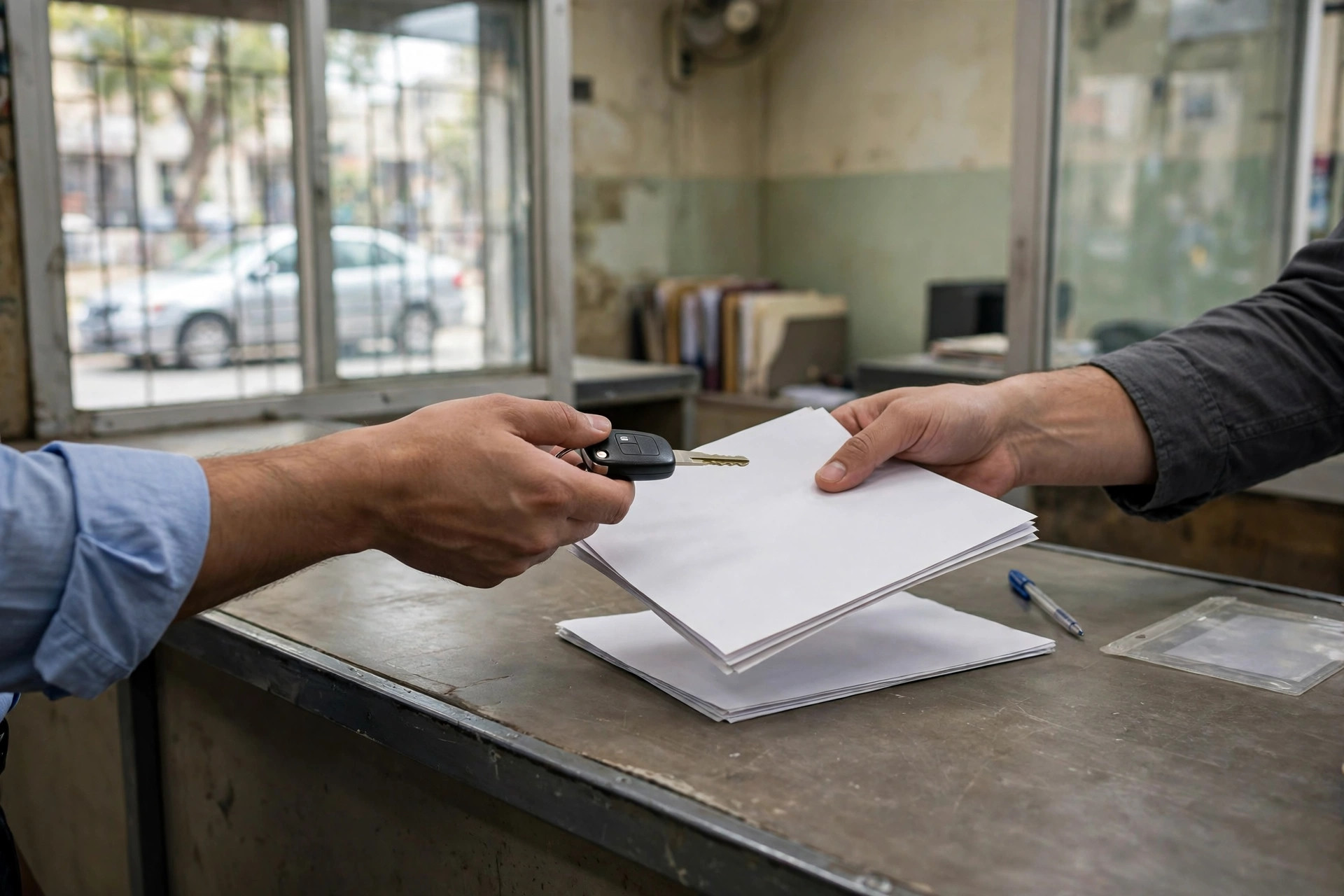
The Punjab vehicle transfer is the process that changes the registered owner of a vehicle in the Excise & Taxation Department’s record. When you buy a used car or motorcycle in Punjab, the vehicle is still registered in the seller’s name until the transfer is done. The transfer moves the ownership to the buyer — and until it is done, the seller is still legally responsible for the vehicle, including its token tax and any challans it collects.
The Punjab vehicle transfer starts online on ePay Punjab and finishes with biometric verification of both parties. The fee depends on the vehicle: a motorcycle costs Rs 910 to transfer, a car up to 1000cc costs Rs 4,540, a car from 1001 to 1800cc costs Rs 9,075, and a car above 1800cc costs Rs 18,150. The original registration certificate is required, with token tax paid up to date — unpaid token tax is added to the same challan.
The most important fact about the Punjab vehicle transfer is that it is the buyer’s protection. A buyer who drives a vehicle that is still in the seller’s name has no proof of ownership, cannot sell it on, and will be blamed for challans the seller’s name collects. A seller who never transfers has the opposite problem: the vehicle is still theirs on paper, and its fines and taxes are still theirs too. Both sides need the transfer, and both sides must verify biometrically.
Example — the buyer who checked first: A man in Lahore agreed to buy a used car for Rs 1,800,000. Before paying, he checked the car on MTMIS: token tax clear, no challans, not stolen, and the seller was the recorded owner. He paid, started the transfer on ePay Punjab, and both parties verified biometrically. The car was in his name within days, and the seller was free of it.
Example — the seller who never transferred: A man in Faisalabad sold his motorcycle in 2024 and never transferred it, because the buyer said he would “do it later”. The buyer never did. In 2026, the motorcycle collected three e-challans for signal violations — all in the seller’s name, because the record still showed him as the owner. He paid the fines himself, then spent weeks getting the transfer done to stop the next ones.
Punjab Vehicle Transfer — The Fee Table
The transfer fees for the Punjab vehicle transfer come from the Punjab Excise motor vehicle tax rates page, checked 14 November 2026. The table below gives them.
| Vehicle | Transfer fee |
|---|---|
| Motorcycle / scooter | Rs 910 |
| Car up to 1000cc | Rs 4,540 |
| Car 1001–1800cc | Rs 9,075 |
| Car above 1800cc | Rs 18,150 |
| HTV (heavy transport vehicle) | Rs 9,075 |
| Smart card | Rs 1,300 |
| Duplicate registration certificate | Rs 500 |
One warning about these figures: the Excise Department publishes two fee lists that disagree. Its vehicle registration page still shows older, lower figures — a bike at Rs 550, a car up to 1000cc at Rs 2,750. This guide uses the rates-page figures above, because they are the current rates, and it states plainly that the challan printed at the office is what you pay. If the challan shows a different figure, the challan is the authority — pay what the challan says, and ask why if it differs from this table.
Extra charges apply at transfer, and they can be larger than the transfer fee itself. The lifetime token tax applies for cars up to 1000cc (Rs 20,000) and motorcycles (Rs 1,500) if the vehicle is transferred within 10 years of registration, less 10% per elapsed year. CVT of 1% of the vehicle’s value applies for cars above 1300cc, for five years, with 10% depreciation per year. The buyer’s advance tax depends on filer status — a filer pays less than a non-filer. These are not part of the transfer fee, but they are part of the same challan, so budget for them before you agree a price.
Punjab Vehicle Transfer — How to Transfer, Step by Step
The Punjab vehicle transfer has two parts: the online part on ePay Punjab, and the biometric part. The steps below follow the official route.
Step 1: Open ePay Punjab and Start the Transfer
Open ePay Punjab and go to Excise & Taxation, then Transfer of Ownership for Motor Vehicle. Enter the vehicle’s registration number and check the tax position — the system will show whether token tax is clear and whether any amount is due. Unpaid token tax is added to the same challan, so you will see the full amount before you pay.
Step 2: Enter the Buyer’s Details
Enter the buyer’s CNIC number, name, address, mobile number and district. Check every digit of the CNIC — a wrong digit means the transfer goes to the wrong record, and fixing it takes weeks. The mobile number must be the buyer’s own, because the system uses it for confirmation.
Step 3: Generate the PSID and Pay
Generate the 17-digit PSID (payment slip ID) and pay it through mobile banking, an ATM, or e-Sahulat. Keep the payment receipt — it is your proof that the fee was paid, and you will need it if the system does not update. Do not pay anyone in cash for the transfer fee. The fee is paid through the PSID, and only through the PSID.
Step 4: Biometric Verification of Both Parties
Both the buyer and the seller must verify biometrically — through the NADRA Pak ID app or at an e-Sahulat centre, at a cost of about Rs 120–150. This is the step that stops fraud: the transfer cannot complete unless both parties prove who they are. If the seller refuses to verify, the transfer cannot proceed — which is why a buyer should never pay in full before the seller agrees to verify.
Step 5: Collect the Updated Registration
Once the biometric verification is done and the payment is confirmed, the transfer is recorded, and the registration certificate is updated to the buyer’s name. The smart card, if ordered, costs Rs 1,300. Keep the updated certificate with the vehicle at all times — it is the proof that the vehicle is yours.
Punjab Vehicle Transfer — The Buyer Checklist
Before you pay for a used vehicle in Punjab, check it on MTMIS. The Punjab vehicle transfer cannot fix a bad purchase — it can only change the name on a vehicle that is already clean. The checklist below is the step that saves buyers.
| Check | What to look for |
|---|---|
| Token tax | Clear — no unpaid token tax |
| Challans | None outstanding |
| Theft record | Not reported stolen |
| Recorded owner | The seller is the owner on record |
| Registration certificate | Original, with the seller’s name |
| Engine and chassis numbers | Match the certificate |
Verify the vehicle on MTMIS before paying — token tax clear, no challans, not stolen, and the seller is the recorded owner. Our guide to the Punjab MTMIS Vehicle Verification & E-Challan explains exactly how to check a vehicle, step by step, and what each result means.
If any check fails, stop. A vehicle with unpaid token tax will add that tax to your transfer challan. A vehicle with challans will add those fines. A vehicle that is not in the seller’s name cannot be transferred by that seller at all — and a stolen vehicle will be seized. The transfer fee is small; the cost of buying a bad vehicle is not.
Punjab Vehicle Transfer vs MTMIS Verification — Do Not Mix Them
MTMIS verification and the Punjab vehicle transfer are two different things, and buyers confuse them constantly. The table below separates them.
| Feature | MTMIS verification | Punjab vehicle transfer |
|---|---|---|
| What it does | CHECKS a vehicle | CHANGES the owner |
| When you do it | Before you pay | After you buy |
| Cost | Free to check | Transfer fee + taxes |
| Result | A report on the vehicle’s status | A new registration in the buyer’s name |
| Who does it | The buyer, online | Buyer + seller, online + biometric |
MTMIS verification is the check. It tells you whether the vehicle is clean — token tax, challans, theft, and owner. The transfer is the change. It moves the ownership from the seller to the buyer in the Excise record. Checking first is the step that saves buyers, because the transfer cannot fix a vehicle that is stolen, fined, or owned by someone else.
A buyer who skips the check and goes straight to the transfer is gambling. The transfer will go through on a vehicle with unpaid tax — and the tax will land on the buyer’s challan. The transfer will go through on a vehicle with challans — and the fines will land on the buyer. Check first, pay second, transfer third. That order is the whole discipline of buying a used vehicle.
Common Problems — and What to Do
The Seller Refuses Biometric Verification
If the seller refuses to verify biometrically, the transfer cannot complete. Do not pay in full before the seller verifies. The safe way to buy is to pay a small token, do the biometric verification together, and then pay the balance. A seller who takes full payment and then refuses to verify has your money and your vehicle is still theirs.
The Token Tax Is Unpaid
Unpaid token tax is added to the transfer challan, so the buyer pays it. Before you agree a price, check the token tax position on MTMIS and subtract the unpaid amount from the price — or ask the seller to clear it first. Our FBR Tax Filer guide explains the filer question too, because the buyer’s advance tax depends on filer status, and being a filer saves money at transfer.
The Registration Certificate Is Lost
If the original registration certificate is lost, get a duplicate before the transfer — a duplicate costs Rs 500. The transfer needs the original certificate, and a photocopy is not enough. Apply for the duplicate first, then start the transfer.
The PSID Payment Did Not Update
If you paid the PSID but the system still shows unpaid, wait a few hours — bank payments can take time to reflect. If it still shows unpaid after a day, take your payment receipt to the Excise office and ask them to update the record. Keep the receipt until the transfer is complete.
Punjab Vehicle Transfer — What to Do If the Seller Disappears
A Punjab vehicle transfer needs the seller’s biometric, and the most common problem after payment is a seller who disappears. The buyer has paid, the car is in the buyer’s hands, but the seller will not come for the biometric — and without it, the transfer cannot be completed. The buyer is left with a car that is still in the seller’s name, and every challan, every tax notice, and every legal problem that comes with the car still belongs to the seller on paper — and to the buyer in practice.
The way to avoid this is to do the biometric before you pay the full amount. Pay a small token to hold the car, do the biometric together at the facilitation centre, and then pay the balance. A seller who will not do the biometric before payment is a seller you should not trust. If the seller has already disappeared, keep every proof of payment — the bank transfer, the messages, the agreement — and go to the Excise office with it. The office cannot force a seller to appear, but it can advise you on the legal route. And for the next car, remember the rule: biometric first, full payment second.
The Excise office can also tell you whether the car has any outstanding dues — token tax, fines, or a loan — before you pay. Ask for the record before you buy, not after. A car with unpaid token tax carries the debt with it, and the debt becomes yours when the transfer is done. A five-minute check at the office, or on the MTMIS portal, saves you from buying someone else’s debt along with their car.
You Bought the Car, But the Transfer Is Still in the Seller’s Name
If you bought a car and the transfer is still in the seller’s name, you are driving someone else’s car in the eyes of the law. The challans go to the seller, the taxes are the seller’s, and if the car is involved in an accident, the legal owner is the seller — and you are the person holding it. A Punjab vehicle transfer is the only thing that changes the name, and until it is done, the car is not yours on paper. Finish the transfer within days of buying, not months. A seller who is friendly today may be unreachable next month, and a transfer delayed is a transfer at risk.
Punjab Vehicle Transfer — Mistakes That Cost You
The first mistake is paying before checking. The MTMIS check is free, and it takes minutes. A buyer who pays first and checks later has already lost the leverage to walk away.
The second mistake is paying in full before biometric verification. The seller’s biometric is the only proof that the seller agrees to the transfer. Pay a token, verify together, then pay the balance.
The third mistake is ignoring the extra charges. The transfer fee is only part of the challan — lifetime token tax, CVT and advance tax can add thousands. Budget for the whole challan, not just the transfer fee.
The fourth mistake is trusting an agent. The Punjab vehicle transfer is online on ePay Punjab, and the fee is paid through the PSID. An agent who offers to “do it faster” for cash is charging you for a process you can do yourself in an hour.
The fifth mistake is forgetting the filer question. A non-filer pays more advance tax than a filer. If you are buying a car, check your filer status first — our FBR Tax Filer guide explains how to become a filer, and it can save you money on every vehicle you ever buy.
Your Punjab Vehicle Transfer Checklist
- I checked the vehicle on MTMIS before paying — token tax, challans, theft, owner.
- I have the original registration certificate, with token tax paid up to date.
- I know the transfer fee for my vehicle from the fee table.
- I have budgeted for the extra charges — lifetime token tax, CVT, advance tax.
- I will pay through the 17-digit PSID only — no cash to any agent.
- Both buyer and seller will verify biometrically (NADRA Pak ID app or e-Sahulat).
- I will not pay in full until the seller has verified.
- I will keep the payment receipt and the updated certificate with the vehicle.
Common Questions
What is the Punjab vehicle transfer? The Punjab vehicle transfer is the process that changes the registered owner of a vehicle in the Excise & Taxation Department’s record. It starts online on ePay Punjab and finishes with biometric verification of both the buyer and the seller.
What is the vehicle transfer fee in Punjab? Motorcycle/scooter Rs 910; car up to 1000cc Rs 4,540; car 1001–1800cc Rs 9,075; car above 1800cc Rs 18,150; HTV Rs 9,075. Smart card Rs 1,300; duplicate registration certificate Rs 500.
How do I transfer a vehicle online in Punjab? Open ePay Punjab, go to Excise & Taxation → Transfer of Ownership for Motor Vehicle, enter the registration number, enter the buyer’s details, generate the 17-digit PSID, pay it, and complete biometric verification of both parties through the NADRA Pak ID app or e-Sahulat.
Do both buyer and seller need biometric verification? Yes. Both parties must verify biometrically — through the NADRA Pak ID app or at an e-Sahulat centre, at about Rs 120–150. The transfer cannot complete without both.
What documents do I need for a vehicle transfer? The original registration certificate with token tax paid up to date, the buyer’s CNIC, name, address, mobile number and district, and the PSID payment receipt. Unpaid token tax is added to the same challan.
What is the difference between MTMIS verification and vehicle transfer? MTMIS verification CHECKS a vehicle (token tax, challans, theft, owner) before you buy. The transfer CHANGES the owner after you buy. Check first, pay second, transfer third.
What extra charges apply at transfer? Lifetime token tax (cars up to 1000cc Rs 20,000, motorcycles Rs 1,500, if transferred within 10 years of registration, less 10% per elapsed year), CVT 1% of vehicle value for cars above 1300cc, and buyer advance tax depending on filer status.
How do I check a vehicle before buying? Check it on MTMIS — token tax clear, no challans, not stolen, seller is the recorded owner. See our MTMIS verification guide for the step-by-step check.
Conclusion
The Punjab vehicle transfer is a simple process with one hard rule: check first, pay second, transfer third. The fee is small — Rs 910 for a bike, Rs 4,540 to Rs 18,150 for a car — but the extra charges and the risks of a bad purchase are not. Verify the vehicle on MTMIS, pay through the PSID, verify biometrically with the seller, and keep the updated certificate with the vehicle.
A transfer done properly protects both sides: the buyer gets a vehicle that is truly theirs, and the seller is free of a vehicle they no longer own. And if you are buying your first vehicle, check your filer status first — our FBR Tax Filer guide explains how — and use the NADRA Pak ID app for the biometric step, so the whole transfer is done from your phone.