
Punjab E-Taxi Scheme 2026 — Easy Step-by-Step Guide to Apply Online, Eligibility & Cost
This is an independent informational website, not the Punjab government’s official website. For official information, use the scheme portal or call the scheme helpline.
You have seen the Punjab E-Taxi Scheme 2026 headlines: “1,100 Electric Taxis!” “Zero Fuel Cost!” But if you are a driver planning to apply, the headlines are not what matters.
What matters is the actual cost: the down payment, the monthly instalment, charging, and how competitive the balloting is. This guide gives you the honest picture — with the figures as announced for Phase 1.
Quick Answer
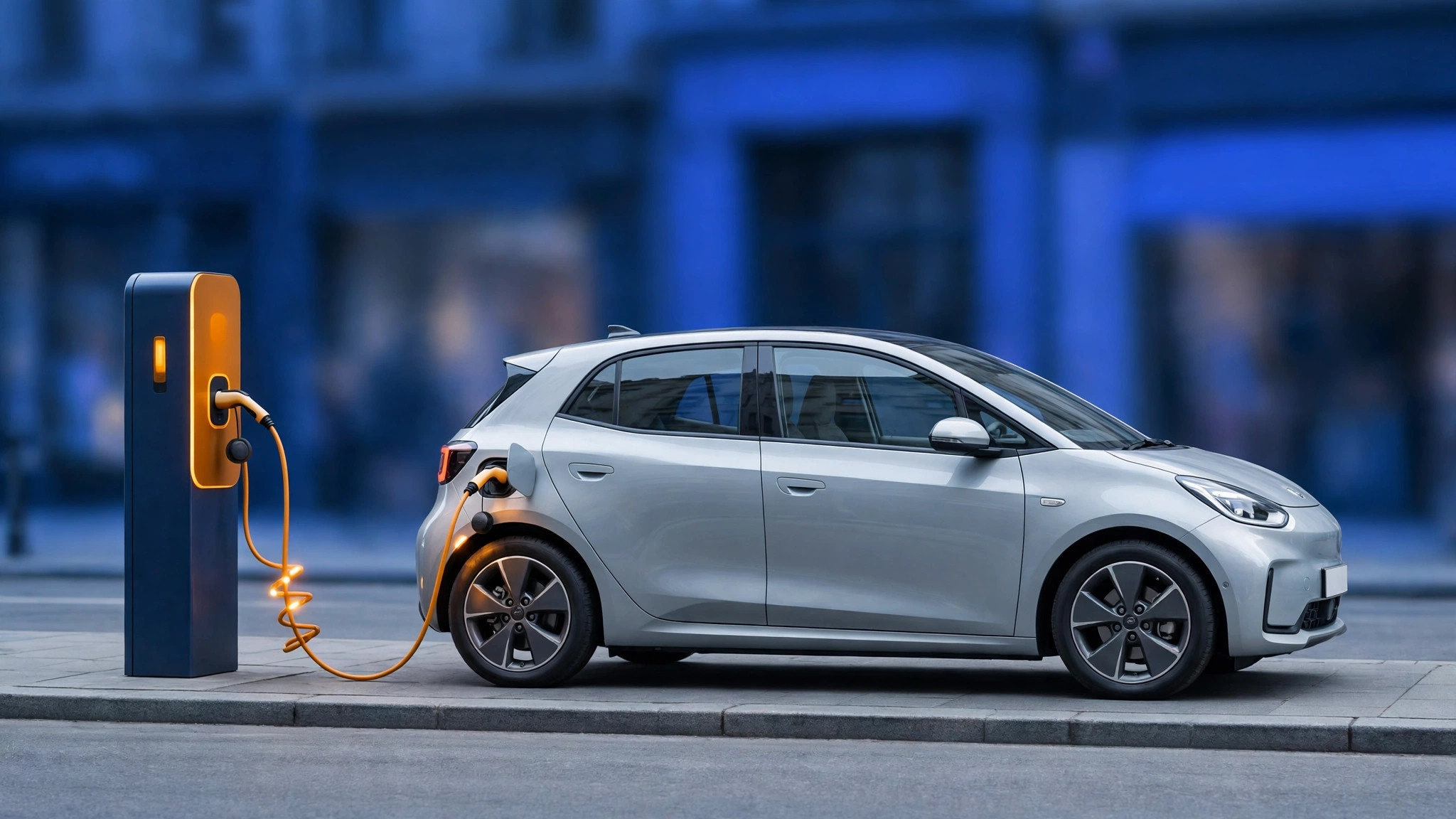
The Punjab E-Taxi Scheme 2026, launched in February 2026, offers electric taxis to eligible Punjab residents through computerised balloting, managed digitally by PITB (Punjab Information Technology Board). As announced for Phase 1, 1,100 vehicles were allocated — locally assembled electric vehicles with a range of around 200–300 km per charge.
Applicants must be Punjab residents aged 21–50 with at least Matric, a valid LTV licence, a clean record, no previous commercial vehicle from a government scheme, and no active loan defaults. Apply only at e-taxi.punjab.gov.pk — no registration fee. Prices and instalments are set per phase.
⚠️ Read This First — The Announced Figures Do Not Fully Reconcile
Before you read any further, understand this clearly: the Phase 1 figures as announced do not fully reconcile with each other. The announced price is around Rs. 8,499,000, the announced subsidy is around Rs. 585,000, the announced down payment is around Rs. 3,364,000, the announced financed amount is around Rs. 4,550,000, and the announced monthly instalment is around Rs. 79,825 for 5 years.
Those numbers, taken together, do not add up cleanly — and this guide will not invent reconciled figures or smooth the arithmetic to make them look tidy. Do not sign any agreement, pay any down payment, or make any financial commitment based on the figures in this guide alone. Confirm the exact figures on the portal — e-taxi.punjab.gov.pk — and in writing from the bank before deciding. The rest of this guide explains what each announced figure is, so you know exactly what to confirm.
Why the Punjab E-Taxi Scheme 2026 Exists
The scheme addresses two problems: urban youth unemployment and worsening smog. A traditional taxi driver spends a large amount daily on petrol. An electric vehicle cuts that cost sharply. The programme is managed digitally by PITB.
For the applicant, the question is simpler: can you afford the upfront payment and earn enough driving it?
The Punjab E-Taxi Scheme 2026 smog argument is easy to understand for anyone who has driven in Lahore in winter: petrol and diesel vehicles are a major source of the smoke that blankets the city. Replacing even a thousand petrol taxis with electric ones will not clear the air on its own, but it is a visible start — and for the driver, the more immediate benefit is the fuel bill.
A petrol taxi’s largest daily cost is fuel; an electric taxi’s largest daily cost is charging, which is far cheaper per kilometre. That difference is the whole financial logic of the scheme. But the logic only works if you can clear the first hurdle: the down payment, which — as announced — runs into millions, not thousands. This is not a low-income welfare programme, and no one should apply believing it is.
Who Actually Qualifies for the Punjab E-Taxi Scheme 2026
| Criteria | Requirement |
|---|---|
| Age | 21–50 years, as announced |
| Residency | Punjab resident (domicile required) |
| Education | Minimum Matric (10th grade pass) |
| Driving licence | Valid LTV licence (not a learner’s permit) |
| Annual income | Household income below Rs. 600,000 |
| Criminal record | Clean record required |
| Previous scheme | No commercial vehicle from any government scheme |
| Bank record | No active loan defaults |
This is for first-time commercial vehicle owners only. Existing taxi owners are not eligible, and applicants must be bank-loan compliant. As announced, 30% of vehicles are reserved for women, and the government covers a larger share of the down payment for women. Women’s taxis are coloured pink and green for visibility and safety.
Three of the Punjab E-Taxi Scheme 2026 requirements deserve special attention, because each one quietly disqualifies large numbers of applicants. First, the licence: it must be an LTV licence, not a learner’s permit and not a regular car licence. Many experienced drivers hold a car licence and assume it is enough — it is not, and upgrading to LTV takes time, so start the upgrade before you apply, not after you are selected.
Second, the income limit: household income below Rs. 600,000 a year, as announced — check how household income is assessed for your case before assuming you qualify. Third, the “no previous commercial vehicle” rule: if you, or your household, already received a commercial vehicle under any earlier government scheme, you are disqualified, even if that vehicle is no longer in use.
Punjab E-Taxi Scheme 2026 Financial Breakdown — The Real Costs
All figures below are as announced for Phase 1 and may vary by model or bank partner — confirm the current figures on the portal before deciding.
| Item | Amount, as announced for Phase 1 |
|---|---|
| Total vehicle price | Around Rs. 8,499,000 |
| Government subsidy | Around Rs. 585,000 |
| Applicant down payment | Around Rs. 3,364,000 |
| Financed amount | Around Rs. 4,550,000 |
| Monthly instalment | Around Rs. 79,825 for 5 years |
| Grace period | 3 months |
Does it make financial sense? A petrol taxi driver spends roughly Rs. 100,000–120,000 a month on fuel alone. An EV’s estimated charging cost is around Rs. 20,000–30,000 a month. That fuel saving offsets most of the monthly instalment for active drivers. But you still need roughly Rs. 3.3 million as an upfront down payment after the subsidy. This is not a low-income welfare programme.
Note the announced figures do not fully reconcile — confirm the exact figures on the portal before signing anything.
Look at the Punjab E-Taxi Scheme 2026 numbers the other way round, using only the announced figures. On the announced figures, the monthly fuel saving — the gap between roughly Rs. 100,000–120,000 of petrol and around Rs. 20,000–30,000 of charging — is roughly Rs. 70,000–100,000 a month. Set against the announced instalment of around Rs. 79,825 a month, the saving covers most or all of the instalment for a driver who works the car hard every day.
But that arithmetic only holds if you actually drive full-time, if charging is available where you work, and if the announced figures are the figures in your final agreement — which is exactly why the warning at the top of this guide matters. A driver who works part-time, or who cannot charge conveniently, does not get the same saving, and the instalment still has to be paid in full every month.
Then there is the down payment itself. Around Rs. 3,364,000 as announced is a very large sum for the households this scheme is aimed at. Before applying, ask yourself honestly where it would come from — savings, family support, or a separate arrangement — and whether paying it leaves you with anything in reserve.
A driver who empties every saving to pay the down payment has no cushion for the first slow month, a repair, or a family emergency. The grace period of 3 months, as announced, gives breathing room at the start — but three months pass quickly, and the instalments after that run for five years.
How to Apply for the Punjab E-Taxi Scheme 2026 — Step by Step
1. Gather your documents. A valid CNIC, a current Punjab domicile certificate, a valid LTV licence (not a learner’s permit), a Matric certificate, recent photographs, bank statements, and clean criminal record verification.
If you hold a regular car licence, start the LTV upgrade now — you will need it before delivery. Check every document’s expiry date: a domicile certificate or licence that expires before verification can stall your file, and a bank statement that is months old may need to be refreshed.
2. Apply online. The official portal is e-taxi.punjab.gov.pk — only use this authentic site. There is no registration fee. Register with your CNIC and mobile number, fill in your information, upload scanned documents, and submit for balloting.
Selected candidates receive an SMS and a letter. Use your own mobile number, registered against your own CNIC, because selection messages go to that number — a missed SMS can mean a missed deadline. Make clear scans of every document; a blurred licence or CNIC is one of the most common avoidable reasons for disqualification before balloting.
3. The balloting process. Balloting is automated through PITB. As announced for Phase 1, around 18,451 submissions were received for 1,100 vehicles — approximately 1-in-17 odds. Incomplete documents mean automatic disqualification before balloting.
Apply early — there is more time to correct document errors. Understand what the Punjab E-Taxi Scheme 2026 odds mean: most applicants will not be selected, however strong their file. That is not a reason not to apply — the application is free, and someone has to win the 1,100 places — but it is a reason to have a plan B. If you are not selected, your driving career does not stop: the Kamyab Jawan Program offers business loans for other kinds of work, and the Parwaz Card supports overseas driving jobs for those with a verified offer abroad.
Punjab E-Taxi Scheme 2026 Hidden Challenges
EV charging is still limited. Charging downtime is part of your work schedule. Lahore has the most developed network; other cities lag. Research charging points before committing.
A driver in Lahore may charge overnight at home or at a nearby station; a driver in a smaller city may need to plan each day around a single charging point. Before you commit millions to the Punjab E-Taxi Scheme 2026, drive the route you would actually work, find the charging points on it, and ask how long a full charge takes and what it costs — those answers decide whether the fuel saving in the table above is real for you.
You must work through ride-hailing apps. All taxis are pre-registered with ride-hailing platforms. If you have never used a ride-hailing app as a driver, learn how it works before delivery — ratings, acceptance rates and working hours all affect your earnings.
GPS tracking is mandatory. Every car is linked to the Safe City Authority. This is a condition of the scheme, not an option — understand it before you accept the vehicle.
Default consequences are real. A grace period applies for late payments; persistent defaults may lead to repossession. Five years of instalments is a long commitment. If your earnings fall — a slow season, an illness, a family emergency — contact the bank before you miss a payment, not after. Silence turns a difficulty into a default, and a default can end with the vehicle being taken back.
Beware of fake portals. The scheme charges zero fee — only use e-taxi.punjab.gov.pk. Any website, agent or social-media page asking for a “registration fee”, a “booking amount” or a “balloting charge” is a scam. The real application is free, online, and on that one portal.
Punjab E-Taxi Scheme 2026: Three Real-Life Scenarios
Straightforward. Usman, 28, from Lahore, is a private car driver with a valid LTV licence, a Matric certificate and no previous government scheme benefits. He applies online with complete documents and enters the balloting pool. His case is straightforward because every eligibility box was already ticked before he applied — the licence, the domicile, the clean record — and his documents were complete on the first submission.
More effort needed. Shahida, 35, from Faisalabad, qualifies for the women’s quota. But she holds a regular car licence, not an LTV licence. She must upgrade before delivery. She applies in advance and starts the upgrade. Her case shows why applying early matters: the upgrade takes time, and a driver who only starts it after selection may miss the delivery deadline. Starting early turns a disqualification risk into a routine errand.
Not eligible. Tariq, 42, from Multan, previously received a loader vehicle under an earlier government scheme. He is automatically disqualified — this scheme is for first-time recipients only. He also has an outstanding loan default. His application is rejected at verification. Two separate disqualifiers, either of which alone would have been enough. If he had checked the rules first, he would have known before applying — and he could have spent the effort on clearing the default and looking at other options instead.
Punjab E-Taxi Scheme 2026 Checklist Before You Apply
- Confirm a valid LTV licence (not a learner’s permit) and a current, valid Punjab domicile.
- Verify household income is under the announced limit.
- Confirm no commercial vehicle from any government scheme and no active loan defaults.
- Prepare scans of your CNIC, domicile, licence and Matric certificate.
- Research EV charging stations near your operating area — and the time and cost of a full charge.
- Work out honestly where the down payment would come from, and what reserve you would have left.
- Confirm the exact price, subsidy, down payment, financed amount and instalment on the portal — remember the announced figures do not fully reconcile.
- Use only e-taxi.punjab.gov.pk — no registration fee.
- Apply early, so there is time to correct document errors.
- Keep your mobile number updated — selection messages go to it.
Punjab E-Taxi Scheme 2026: What to Do Right Now
If you qualify, go to e-taxi.punjab.gov.pk today and submit your application. The Phase 1 quota is limited.
If you do not qualify yet, work on the missing piece first: need an LTV licence? Start now. If unsure, call the helpline at 042-111-333-267. And before you commit to anything, confirm the exact figures in writing — the price, the subsidy, the down payment, the financed amount and the instalment — because the announced figures do not fully reconcile, and the figures in your agreement are the only ones that matter. If the numbers in your agreement differ from what you expected, stop and ask the bank to explain the difference before you sign.
If driving is not your route after all, the CM Punjab Solar Panel Scheme is a different kind of Punjab support worth a look for households rather than drivers.
Punjab E-Taxi Scheme 2026 Frequently Asked Questions
How do I apply? Only at e-taxi.punjab.gov.pk. Register with your CNIC and mobile number, fill in the form, upload documents, and submit for balloting. No registration fee.
What is the down payment? As announced for Phase 1, around Rs. 3.3 million after the subsidy. Confirm the current figure on the portal.
What is the monthly instalment? As announced for Phase 1, around Rs. 79,825 for 5 years, after a 3-month grace period.
Why do the announced figures not add up? The Phase 1 figures as announced — price around Rs. 8,499,000, subsidy around Rs. 585,000, down payment around Rs. 3,364,000, financed amount around Rs. 4,550,000 — do not fully reconcile with each other. This guide keeps them exactly as announced and does not invent reconciled figures. Confirm the exact figures on e-taxi.punjab.gov.pk and in writing from the bank before signing anything.
What are my chances in the balloting? As announced for Phase 1, around 18,451 submissions were received for 1,100 vehicles — approximately 1-in-17 odds. Incomplete documents mean automatic disqualification before balloting, so apply early with complete documents.
Can women apply? Yes — as announced, 30% of vehicles are reserved for women, the government covers a larger share of the down payment for women, and women’s taxis are coloured pink and green.
This guide is independent information, not an official Punjab government publication. Vehicle prices, subsidies, down payments and instalments are set per phase — always verify the current figures at e-taxi.punjab.gov.pk before deciding.






One Comment