
Ehsaas Program 8171 — Easy Step-by-Step Guide to Check Eligibility & Track Payment 2026
This is an independent informational website, not BISP’s official website. For official information, use the 8171 portal or call the BISP helpline.
Looking for financial support from the government? The Ehsaas Program 8171 service is the front door: using your CNIC, you can check whether you qualify for support, track your BISP payment, and find out what to do if the answer is no — all safely and for free, by SMS or through the official online portal. This guide explains what 8171 actually is, how the two check methods work, what your result means, how much money is involved, what to do when something goes wrong, and how to avoid the scams that surround it.
Many families first hear about 8171 from a neighbour, a relative, or a message forwarded on WhatsApp. That is also where the confusion starts. One person says 8171 is a registration service. Another says it pays Rs 25,000. A third says you must pay an agent to get your name added. None of those claims is quite right, and acting on the wrong one can cost you a wasted trip, a lost fee, or — worst of all — your CNIC details in the wrong hands. This Ehsaas Program 8171 guide separates the service itself from the rumours around it, step by step, so you can check your own status in a few minutes and know exactly what to do next.
Quick Answer
Send your 13-digit CNIC (no dashes) to 8171 by SMS — it is free — or check at 8171.bisp.gov.pk. The reply tells you whether you are eligible, under verification, or not eligible, and whether a payment has been released. Registration cannot be done through 8171: if you are not in the system, you must visit a BISP Tehsil Office in person with your original CNIC. Rs 14,500 per quarter for the Oct–Dec 2026 cycle, per the government’s June 2026 announcement, rising to Rs 18,000 planned from January 2027 — check the exact amount for your cycle on the 8171 portal.
What Is the Ehsaas Program 8171?
Ehsaas is the government’s wider poverty-alleviation framework, launched in 2019, covering many different schemes — cash support, food subsidies, scholarships, mother-and-child health, free meals. BISP, the Benazir Income Support Programme, runs the cash-transfer side of it, and 8171 is BISP’s checking service. That is the relationship most guides blur: Ehsaas is the umbrella, BISP is the organisation that pays, and 8171 is the number you use to check your status.
When you send your CNIC to 8171, the system cross-checks your NADRA identity, your PMT poverty score, your payment history and your Dynamic Survey record. Any one of those checks can produce an unexpected answer, which is why “not eligible” usually needs investigating rather than accepting. BISP itself was launched in 2008 and is the country’s largest cash-transfer programme, reportedly supporting around 9 million families. Its main payment is Benazir Kafaalat, a quarterly payment to eligible women.
The Ehsaas Program 8171 distinction matters in practice. If someone tells you to “register on Ehsaas”, they usually mean registering with BISP through the survey at a Tehsil Office. If someone tells you to “check on 8171”, they mean the SMS or portal check described below — not a form, and not a payment. And if a scheme has its own name, such as Taleemi Wazaif for schoolchildren or Nashonuma for mothers and young children, it has its own rules and its own guide, even though it sits under the same umbrella. This post is the hub: it explains the shared checking service and points you to the dedicated guides for each scheme, instead of repeating their details here.
| Name | What it is | What it does for you |
|---|---|---|
| Ehsaas | The wider poverty-alleviation framework, launched in 2019 | Sets the umbrella under which cash support, food, education and health schemes run |
| BISP | The Benazir Income Support Programme, launched in 2008 | The organisation that runs the cash transfers and keeps the beneficiary record |
| 8171 | BISP’s checking service, by SMS and online portal | Lets you check eligibility and payment status by CNIC, free of charge |
For the dedicated guides, see 8171 check online CNIC, Benazir Kafaalat 8171, Benazir Taleemi Wazaif and BISP registration check by CNIC.
The Ehsaas Emergency Cash Programme was a one-off COVID-era payment and is not open for new registrations in 2026 — see our Ehsaas Emergency Cash Programme guide for the full history and current status.
How to Check Eligibility by CNIC With Ehsaas Program 8171
There are two official methods. Both are free, both use the same record, and both should give you the same answer. Use whichever suits you — SMS if you have no internet, the portal if you want to read the result on a screen and keep a record of it.
Method A: SMS (easiest, works on any phone). Open your messaging app, type your 13-digit CNIC (no dashes), send it to 8171, and wait for the reply. The Ehsaas Program 8171 SMS is free and works on any mobile phone, with no internet needed — which is why it is the best option for most people, especially in remote areas.
The reply usually arrives within minutes, though it can take longer when the system is busy. Send the message from a SIM registered in your own name: a SIM in someone else’s name is one of the commonest reasons for a failed or confusing reply. Type the number carefully — one wrong digit checks a different person, or no person at all. Keep the reply message; it is the record you will need later, because it names the payment point where you collect a released payment.
Method B: Online portal. Go to 8171.bisp.gov.pk (it must end in .gov.pk — fake sites exist), enter your CNIC and the captcha, and read your status. Check the address in the browser bar before you type anything: copycat sites use very similar addresses and ask for extra personal details the real portal never asks for. If the captcha is hard to read, refresh it rather than guessing. The portal shows the same eligibility and payment information as the SMS reply, and it is the place to check the exact amount for your own cycle. For a fuller walkthrough of the online method, see 8171 check online CNIC.
A real-life example. Imagine a widow in a small town, let’s call her Amina, who has never used the portal. She sends her CNIC to 8171 from her own SIM on a basic phone. Within minutes she receives a reply saying she is eligible and a payment has been released. She does not need to visit an office to learn that — the SMS tells her.
What she does need to do next is go to the payment point named in that SMS, with her original CNIC, for biometric verification. The check took her two minutes. The trip to the payment point is the only travelling she needs to do, and she knows before she leaves home that the money is there.
| Result | What it means | What to do |
|---|---|---|
| Eligible — payment released | You qualify and a payment is ready | Collect it at the payment point named in your 8171 SMS |
| Under verification / under process | Your data is still being checked | Wait and check again later; it can take several weeks |
| Not eligible | PMT score above the cut-off, or a data problem | Ask your Tehsil Office for your PMT score and a review |
| Not registered | You are not in the system at all | Visit a BISP Tehsil Office for fresh registration |
| No reply | A network or SIM problem | Check your SIM is in your name, then try again |
Ehsaas Program 8171: How Much Money Does It Pay?
This is the question most readers come with, and it is also where most articles mislead them, because the figure changes between cycles and different sources quote different numbers. Here is what can be stated, and what cannot. The main payment under this system is Benazir Kafaalat, paid quarterly to eligible women. Rs 14,500 per quarter for the Oct–Dec 2026 cycle, per the government’s June 2026 announcement, rising to Rs 18,000 planned from January 2027 — check the exact amount for your cycle on the 8171 portal.
Do not treat any figure you hear from a neighbour, a shopkeeper or a forwarded message as the Ehsaas Program 8171 amount you will receive. The amount shown for your own CNIC on the portal is the one that applies to you. Other schemes under the umbrella pay separately and on their own schedules — Taleemi Wazaif, for example, is a stipend linked to children’s school attendance, not part of the Kafaalat quarterly amount — so do not add figures from different schemes together and expect a single combined payment.
If a message promises you a much larger one-off amount, such as Rs 25,000, and asks you to pay a fee or share a code to claim it, that is a scam, not a programme. The safest habit is simple: check your own status, read the amount shown for your own CNIC, and collect only what the official reply says has been released. For payment tracking in detail, see BISP payment check and BISP next payment date.
Ehsaas Program 8171: What to Do If You Are Not Eligible
Do not give up at the first “not eligible”. Many people are marked ineligible because of outdated CNIC or survey data, and become eligible after updating their records. The common reasons are a PMT score above the cut-off — the verified rule is 32 or below, or 37 or below where a household member has a disability — an expired CNIC, a SIM not registered in your own name, incomplete survey information, or a biometric verification problem.
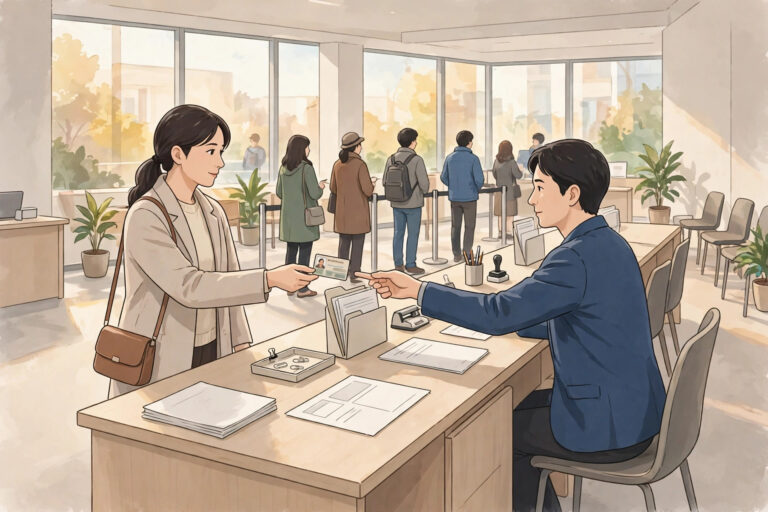
Visit your nearest BISP Tehsil Office with your original CNIC, your children’s B-Forms and a recent utility bill, and ask staff to show you your exact PMT score. If your circumstances have changed — income dropped, a family member died, a disability was registered — ask for a Dynamic Survey update or a re-survey.
That Ehsaas Program 8171 conversation at the office is the most important step, and it is worth preparing for. Ask three specific questions: what is my PMT score, which record is causing the problem, and what document or update would fix it? Write down the answers. If the score is genuinely above the cut-off and nothing in your household record has changed, the honest answer may be that you do not qualify right now — but if the score is based on old information, a survey update can change it.
A second example shows why: a family whose income fell after the main earner lost work was still showing an old, higher income in the survey. After a Dynamic Survey update at the Tehsil Office, their record reflected the change and a later 8171 check gave a different result. The check itself did not change their circumstances; updating the record did. For the survey process, see BISP Dynamic Survey, NSER registration and PMT score check online.
Ehsaas Program 8171 Common Problems — and How to Fix Them
Most 8171 problems fall into a small set of patterns. Working through them in order saves repeated trips.
No reply to the SMS. First check that you sent the 13-digit CNIC with no dashes to 8171, and that the SIM is registered in your own name. Then try again after some time — the system is sometimes busy — and try the portal as a cross-check. If neither Ehsaas Program 8171 method responds, the problem is more likely your SIM or network than your eligibility, so do not assume you have been rejected.
“Not eligible” when you expected to qualify. Ask the Tehsil Office for your PMT score, as described above. Check also whether your CNIC has expired and whether your survey record is complete. An expired CNIC alone can block a payment even when everything else is in order; see BISP payment blocked — CNIC expired.
“Under verification” for weeks. This usually means your data is still being checked against NADRA and survey records. It can take several weeks, and there is no shortcut an agent can sell you. Keep checking periodically, keep your CNIC and survey details up to date, and visit the office only if the status does not change after a long period or you are asked to complete a step in person.
Payment released, but the payment point cannot pay you. This is often a biometric problem — worn fingerprints are common for elderly women and manual workers — or a mismatch between the name on the CNIC and the record. Ask at the office about alternate verification rather than paying someone to “fix” it, and keep your BISP verification slip and any SMS replies as your record.
A message asks you to click a link or pay a fee. Stop. The official check needs only your CNIC, by SMS or on the official portal. Any message asking for money, a PIN, a password or a one-time code is not from BISP. Report it to the helpline and do not reply.
Ehsaas Program 8171 Biometric Verification and Payment Collection
To receive a payment you must complete biometric verification — a thumbprint that confirms your identity against your CNIC. Payments are released only after verification, so the money goes to the right person.
Once verified, collect your payment at the payment point named in your 8171 SMS — a partner bank agent, an official payment centre, or a BISP campsite during the disbursement period. Always bring your original CNIC, count your money before leaving, and never pay any commission. Collection is free. If your fingerprints cannot be read — a common problem for elderly women and manual workers — ask at the office about alternate verification rather than paying someone to “fix” it.
Plan the Ehsaas Program 8171 trip like this: check first, travel second. Confirm on 8171 that a payment has actually been released, note the payment point named in the SMS, and only then travel with your original CNIC. Arriving without checking first is the commonest wasted journey, because a payment that has not yet been released cannot be collected early. If you are collecting for an elderly relative, check at the office whether she must attend in person for biometrics — in most cases she must, because the thumbprint is hers. For office locations, see BISP office near me.
Ehsaas Program 8171: How to Avoid Scams
Some people try to scam beneficiaries of the Ehsaas Program 8171. The rules are simple: always use only the official 8171 SMS or the 8171 web portal to check eligibility and payment status. Never pay anyone for registration, verification, or faster payments — the whole process is free. Never share your CNIC details outside official channels, never share PINs or passwords, and never give your CNIC to an agent outside an official centre. If someone asks for money, it is a scam. Report it to the BISP helpline at 0800-26477 (toll-free, Monday–Friday, 9:00 am–5:00 pm).
Be especially careful with three tricks. First, fake portals that look like the official site but end in a different address and ask for bank details.
Second, forwarded WhatsApp messages promising a large one-off payment if you forward the message or pay a small “processing fee”. Third, an agent near a payment point who offers to collect your payment for you, for a commission. All three end the same way: money or personal details lost, and no payment gained. The real process has no fee, no middleman and no shortcut — if someone is selling you one, they are selling you a scam. For helpline details, see BISP helpline number.
Ehsaas Program 8171 Checklist: Before You Check, and Before You Travel
Before you check:
- Your original CNIC is in hand, and it has not expired
- You are sending from a SIM registered in your own name
- You have typed all 13 digits, with no dashes or spaces
- You are using only 8171 by SMS or 8171.bisp.gov.pk — no other number or site
Before you travel to collect a payment:
- The 8171 reply says a payment has been released
- You know the payment point named in the SMS
- You have your original CNIC with you
- You have kept the SMS reply as your record
- You know collection is free — you will pay no commission to anyone
Ehsaas Program 8171 Frequently Asked Questions
What is the Ehsaas Program 8171? A government service that lets families check eligibility for financial support from BISP and Ehsaas, by SMS or through the online portal, using their CNIC.
Who can use it? Anyone can use the Ehsaas Program 8171 check: low-income families, widows and women-led households, elderly and disabled people — anyone registered with BISP, or anyone who wants to check whether they qualify.
How do I check eligibility by SMS? Type your 13-digit CNIC (no dashes) and send it to 8171. You will get a reply saying eligible, not eligible, or under process.
How do I check eligibility online? Go to 8171.bisp.gov.pk, enter your CNIC and the captcha, and click submit.
How much money will I get? Rs 14,500 per quarter for the Oct–Dec 2026 cycle, per the government’s June 2026 announcement, rising to Rs 18,000 planned from January 2027 — check the exact amount for your cycle on the 8171 portal. Do not rely on figures quoted by other people.
What should I do if my fingerprints do not work at the payment point? Ask at the BISP Tehsil Office about alternate verification. Do not pay anyone who offers to fix it for a fee.
This guide is independent information, not an official BISP publication. Verify current amounts on the official portal 8171.bisp.gov.pk or by calling the helpline 0800-26477 (toll-free, Monday–Friday, 9:00 am–5:00 pm).