Punjab Clinics on Wheels 2026 — Easy Guide to Free Mobile Health Vans, Services & Schedule
This is not an official Punjab government website. This guide is independent, general information about Punjab Clinics on Wheels. For official information, always check the Punjab Primary and Secondary Healthcare Department at pshealthpunjab.gov.pk or your District Health Authority before you rely on any figure.
What Is Punjab Clinics on Wheels?
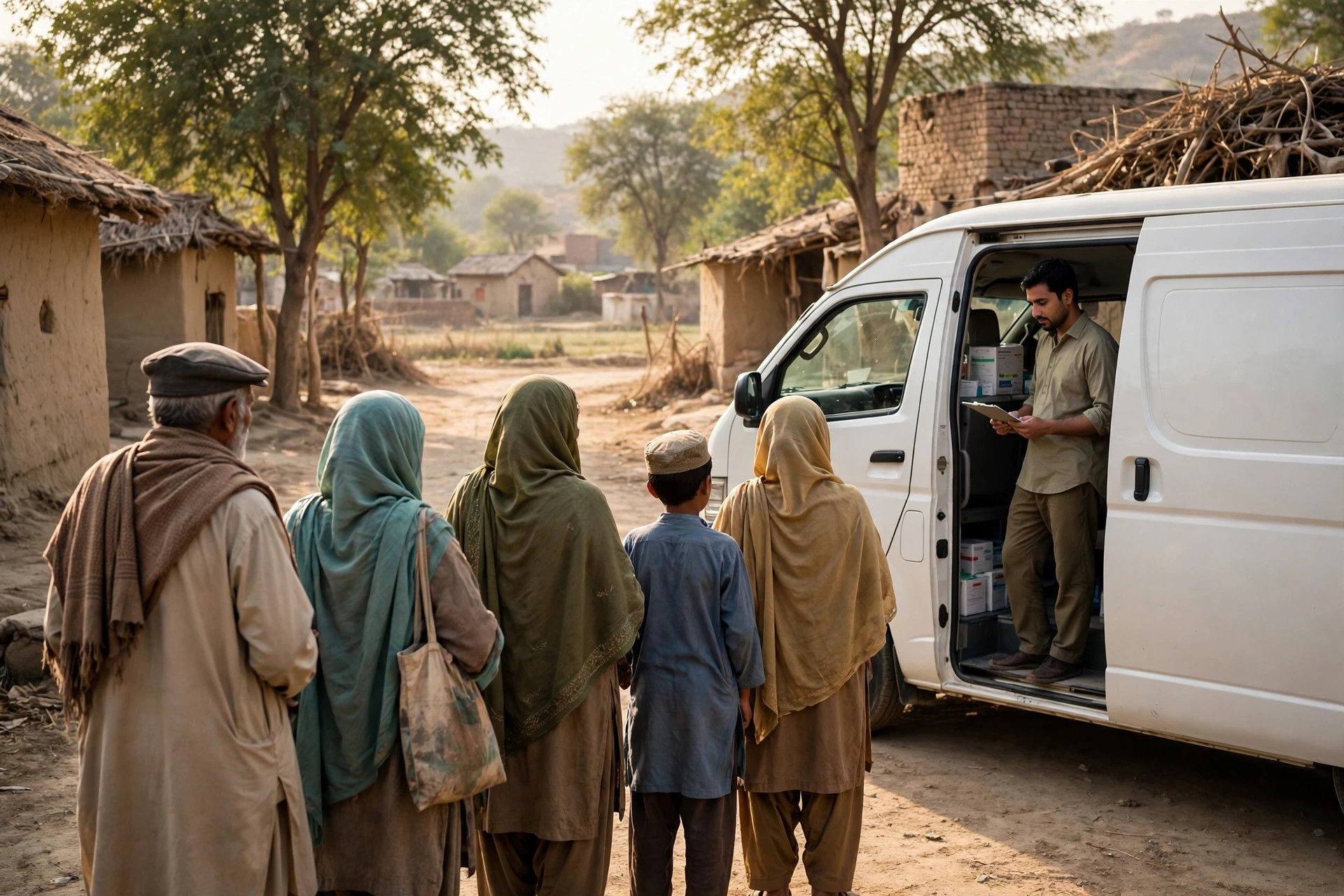
Punjab Clinics on Wheels is a fleet of mobile health vans that bring a doctor, medicines and basic tests to the doorstep of people who live too far from a hospital or a clinic. The Punjab Clinics on Wheels programme is run by the Punjab Primary and Secondary Healthcare Department, and it is the flagship health initiative of Chief Minister Maryam Nawaz Sharif. Each van is a complete clinic on the road: air-conditioned, staffed by a doctor and support staff, carrying medicines and diagnostic equipment, and visiting villages, tribal areas and urban slums on a fixed schedule.
The programme began with about 200 to 250 vans, and it grew fast. Phase 2, launched on 19 June 2025, expanded the fleet to 911 mobile vans across all 36 districts of Punjab, serving more than 45,000 patients a day, according to the official Phase 2 launch announcement. The programme aims to reach about 4 million people across the province. The vans prioritise areas more than 5 kilometres from the nearest Basic Health Unit or hospital, and rural and remote communities where reaching a fixed clinic is difficult.
The idea behind Punjab Clinics on Wheels is simple: if the patient cannot reach the clinic, the clinic must reach the patient. A woman in labour in a village ten kilometres from the nearest hospital, an old man with diabetes who cannot travel, a child with a fever in a tribal area — for all of them, the van is the difference between treatment and no treatment. The programme gives first priority to local doctors from the 36 districts, so that the doctor serving a community is a doctor from that community.
Example — the village with no clinic: A village in Rajanpur is 12 kilometres from the nearest Basic Health Unit, and there is no public transport. A woman with a sick child used to wait for a relative with a motorcycle, or go without treatment. Now the Punjab Clinics on Wheels van comes to the village on its fixed day: the doctor examines the child, gives the medicine free, and tells the mother when the van will return. The child is treated the same day, and the mother pays nothing.
Example — the old man with diabetes: A 70-year-old man in a village in Layyah has diabetes and high blood pressure. He cannot travel to the tehsil hospital every month, and his medicine runs out. The Punjab Clinics on Wheels van visits his village regularly, checks his blood pressure and sugar, and gives him his medicine free. He does not need to travel, he does not need to pay, and his condition is monitored instead of ignored.
What Services Do Punjab Clinics on Wheels Provide?
A Punjab Clinics on Wheels van is a small clinic, not an ambulance, and it provides the services a Basic Health Unit provides — plus a few that a BHU cannot. The exact services vary a little by van, because not every van carries every piece of equipment, but the core list is the same across the fleet.
- Outpatient consultation with a doctor, free of charge.
- Free medicines for common illnesses — fever, cough, diarrhoea, skin infections, diabetes and blood pressure.
- Basic laboratory tests, including blood sugar and blood pressure checks.
- Maternal and child health care, including antenatal check-ups for pregnant women.
- Vaccination and immunisation for children, on the van’s schedule.
- Ultrasound facilities on some vans — 50 of the first 200 vans at launch were equipped with ultrasound, according to reports.
- Free food packets for malnourished children, active specifically in South Punjab districts including Dera Ghazi Khan, Rajanpur, Muzaffargarh and Layyah.
- Referral to the nearest hospital for cases the van cannot treat.
What the van does not do is also worth knowing. It is not an emergency ambulance, and it does not carry patients to hospital. It does not do surgery, and it does not admit patients. If the doctor finds a serious condition, the van refers the patient to the nearest hospital — and the patient must arrange their own transport. The van is primary care on wheels, and it is free, but it is not a hospital.
Punjab Clinics on Wheels — How Big Is the Programme?
The size of the Punjab Clinics on Wheels programme is reported differently by different sources, and the differences are worth stating honestly, because they come from different dates and different ways of counting.
| Figure | Value (reported) | Source / date |
|---|---|---|
| Vans at launch | About 200 (50 with ultrasound) | Launch ceremony |
| Phase 1 fleet | About 250 | Phase 1 reports |
| Phase 2 fleet (19 June 2025) | 911 vans | Official Phase 2 launch announcement |
| Vans approved by cabinet committee | 444 across 112 tehsils | Cabinet Standing Committee on Finance and Development |
| Vans in the Annual Development Programme | 556 total, 315 fully fabricated and equipped | Punjab ADP Booklet |
| Patients per day | More than 45,000 | Phase 2 launch announcement |
| Patients treated to date | Over 9.17 million | Punjab ADP Booklet |
| Patients served (Sep 2026 briefing) | 30 million | Government briefing, reported by Radio Pakistan |
The headline figure to use is the Phase 2 launch figure: 911 vans across all 36 districts, serving more than 45,000 patients a day. The other figures come from earlier counts, from the ADP booklet’s accounting, and from a later government briefing, and they do not all count the same thing. The 30 million figure from the September 2026 briefing, for example, is a cumulative total reported at a government meeting, and it has not been independently assessed. This guide gives you the figures with their sources, so you can see which ones are launch announcements and which ones are later reports — and so you do not mistake a cumulative total for a daily one.
How to Find the Punjab Clinics on Wheels Van in Your Area
The Punjab Clinics on Wheels vans run on a schedule set by the local health authorities, and the schedule varies by district and is updated regularly. There is no single national timetable you can download, and no single phone number that tells you where the van is today. Here is how to find it.
Step 1: Ask Your District Health Authority
Every district has a District Health Authority (DHA) office. Go there, or call it, and ask for the Clinic on Wheels schedule for your tehsil and your village. The DHA is the office that sets the van’s route, and it is the first place to ask.
Step 2: Check the Health Department Website
Go to pshealthpunjab.gov.pk, the website of the Punjab Primary and Secondary Healthcare Department. The site carries the programme’s announcements and the Phase 2 launch details. For the current schedule, van routes by district, and how to request that a van be sent to your village or area, the district health office is still the authoritative source, because the routes are managed locally.
Step 3: Ask at Your Nearest BHU or Rural Health Centre
If a fixed clinic is reachable, ask there. The staff at your nearest Basic Health Unit or Rural Health Centre know the van’s schedule for the area, because the van and the BHU work together — the van covers the villages the BHU cannot reach. If no fixed clinic is reachable in the meantime, the Maryam Nawaz Health Clinic at the nearest upgraded BHU is the best alternative for primary care.
Step 4: Watch for the Van’s Regular Day
The vans visit on a fixed pattern — the same villages on the same days — so once you know your village’s day, you can plan around it. Keep the day in mind for follow-up visits, because a doctor who sees you twice can track your condition, and a doctor who sees you once cannot.
Punjab Clinics on Wheels — A Day on the Van
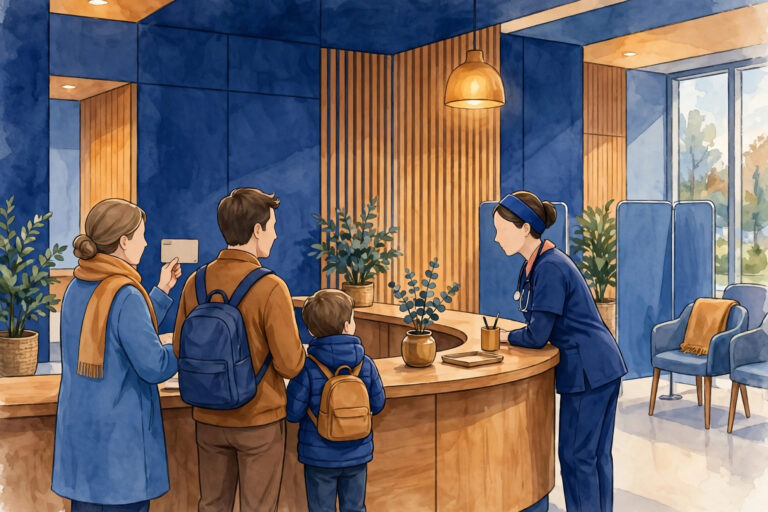
A visit from a Punjab Clinics on Wheels van follows the same pattern in every village, and knowing the pattern helps you get the most from it. The van arrives in the morning, parks in a central place — usually near the village school, the mosque, or the Union Council office — and the staff set up a small queue. There is no appointment and no ticket: you join the queue, and the doctor sees patients in turn.
Registration is first. The staff write down your name, your CNIC number, and the reason for your visit. Bring your CNIC, and bring your child’s B-Form if the visit is for a child, because the staff record the details and the record is what lets the doctor follow up on your next visit. If you have an old prescription or a previous test result, bring that too — the doctor can see what was prescribed last time and whether it worked.
The consultation comes next. The doctor examines you, asks about your symptoms, and checks your blood pressure and blood sugar if needed. The consultation is short — the van sees many patients in a day — so describe your symptoms clearly and in order: when they started, what makes them worse, and what medicine you have already taken. A clear description in two minutes is worth more than a confused one in ten.
Then comes the medicine. If the doctor prescribes something the van carries, you receive it free, on the spot, with instructions on how to take it. If the medicine is not on the van, the doctor writes a prescription and tells you where to get it. And if the doctor finds something serious — a condition the van cannot treat — you are referred to the nearest hospital, with a referral note. Take the note with you: it tells the hospital what the van doctor found, and it saves time at the hospital.
Many of the children the van sees are girls who should be in school. If your daughter is in grades 6 to 10 at a government school, the Benazir Taleemi Wazaif stipend pays her family for keeping her enrolled, and the van’s visit is a good day to check her health at the same time — a healthy child attends school more, and a child who attends school keeps the stipend. And if the van refers your family member to a hospital and the cost of transport is the problem, check whether your family qualifies for BISP support: our guide to the BISP helpline number explains how to call 0800-26477 and ask about your payment status.
Example — the mother’s morning: A mother in a village in Muzaffargarh brings her two children to the van on its regular day. The elder child has a cough, the younger one needs a vaccination. The staff register both children, the doctor examines them, gives the elder child cough medicine free, and vaccinates the younger one. The whole visit takes less than an hour, costs nothing, and the mother is home before noon.
Example — the referral that saved a life: An old man in a village in Dera Ghazi Khan visited the van with chest pain. The doctor examined him, recognised a heart problem the van could not treat, and wrote a referral note to the District Headquarters Hospital. The man’s family took him the same day, and the hospital admitted him. The van did not treat him — but it found the problem, and finding it in time is what the van is for.
Punjab Clinics on Wheels vs Maryam Nawaz Health Clinics
Punjab has two free primary-care programmes with similar names, and families often confuse them. The table below sets them apart.
| Punjab Clinics on Wheels | Maryam Nawaz Health Clinic | |
|---|---|---|
| What it is | A mobile health van that comes to you | A fixed clinic at an upgraded Basic Health Unit |
| Where | Villages, tribal areas, urban slums — 36 districts | 150 upgraded BHUs across Punjab |
| Staff | A doctor and support staff on the van | Doctors and staff at the clinic |
| Services | OPD, medicines, basic tests, ultrasound on some vans | Everyday illness, blood pressure, maternal care, basic lab tests |
| Cost | Free | Free |
| Portal | pshealthpunjab.gov.pk | mnhc.pshealthpunjab.gov.pk |
| Best for | People far from any clinic | People near an upgraded BHU |
Use whichever one is closer to you. If you live near an upgraded BHU, the Maryam Nawaz Health Clinic is the better choice, because it is there every day. If you live far from any clinic, the Punjab Clinics on Wheels van is the better choice, because it comes to you. Both are free, and both are run by the same department.
There is also a third, newer mobile programme to know about, so you do not confuse it with Clinics on Wheels. In October 2026, the Chief Minister launched the Social Security Mobile Health Programme for industrial workers and their families — 65 mobile health units in the first phase, serving more than 4.6 million workers and their families in Lahore, Kasur and Sheikhupura, with expansion to 12 more districts by March 2027. That programme is run by the Punjab Employees Social Security Institution (PESSI), not by the health department, and it is for registered workers and their families, not for the general public. It is a separate programme with separate rules.
Common Problems — and What to Do
The Van Did Not Come on Its Day
Van schedules change — a van breaks down, a doctor is absent, or the route is changed for a campaign. If the van does not come, ask at your District Health Authority office or your nearest BHU for the revised schedule. Do not wait a month: if you need treatment, go to the nearest Maryam Nawaz Health Clinic or BHU in the meantime.
The Van Does Not Carry the Medicine You Need
The van carries medicines for common illnesses, but not every medicine. If the doctor prescribes something the van does not have, ask where to get it — and check whether your family qualifies for the Sehat Card 2026, which covers free hospital treatment. Our guide to the Sehat Card explains the hospitals and the cover.
You Need Emergency Care
A Punjab Clinics on Wheels van is not an ambulance. If someone needs emergency care — a serious injury, heavy bleeding, labour complications — do not wait for the van. Take the person to the nearest hospital immediately, and call 1122, the Rescue emergency number, if the situation needs it.
You Live in an Urban Slum
Phase 2 expanded the programme into urban slum areas, using the Punjab Urban Slum Survey data. If you live in an urban slum and the van has never visited, contact your District Health Authority and ask for your area to be added to the route. The programme covers all 36 districts, including urban areas, and the route is set locally.
Your Punjab Clinics on Wheels Checklist
- I know the Punjab Clinics on Wheels van visits villages and slums far from any clinic, free of charge.
- I have asked my District Health Authority or nearest BHU for the van’s schedule in my area.
- I know the van provides OPD, free medicines, basic tests and maternal/child care.
- I know the van is not an ambulance and does not do surgery or admissions.
- I know the nearest Maryam Nawaz Health Clinic at an upgraded BHU as the fixed alternative.
- I will take my CNIC and my child’s B-Form when I visit the van.
- I will keep the van’s regular day in mind for follow-up visits.
- In an emergency, I will go to the nearest hospital or call 1122 — I will not wait for the van.
Common Questions
What is Punjab Clinics on Wheels?
Punjab Clinics on Wheels is a fleet of mobile health vans run by the Punjab Primary and Secondary Healthcare Department, bringing free primary care — a doctor, medicines and basic tests — to villages, tribal areas and urban slums across all 36 districts of Punjab.
How many vans are in Punjab Clinics on Wheels?
The Phase 2 fleet, launched on 19 June 2025, is 911 vans, according to the official launch announcement. Earlier counts differ — about 200 at launch, about 250 in Phase 1, 444 approved by the cabinet committee, and 556 in the Annual Development Programme booklet — because they come from different dates and different ways of counting.
Is Punjab Clinics on Wheels free?
Yes, completely free. Consultation, medicines and basic tests on the van cost nothing. Nobody can charge you for treatment on a van.
What services do Punjab Clinics on Wheels provide?
Outpatient consultation, free medicines for common illnesses, basic lab tests, maternal and child health care, vaccination, and ultrasound on some vans. Free food packets for malnourished children are provided in South Punjab districts. Serious cases are referred to the nearest hospital.
How do I find the Clinic on Wheels schedule in my area?
Ask your District Health Authority office or your nearest BHU or Rural Health Centre. The schedule is set locally and updated regularly. The health department website pshealthpunjab.gov.pk carries programme announcements, but the district office is the authoritative source for routes.
What is the difference between Clinics on Wheels and Maryam Nawaz Health Clinics?
Clinics on Wheels is a mobile van that comes to your village. A Maryam Nawaz Health Clinic is a fixed clinic at an upgraded Basic Health Unit — 150 across Punjab. Both are free and run by the same department. Use whichever is closer.
Does Punjab Clinics on Wheels cover all of Punjab?
Yes, all 36 districts, according to the Phase 2 launch announcement. The vans prioritise areas more than 5 kilometres from the nearest BHU or hospital, and Phase 2 expanded into urban slums.
Can the van take me to hospital in an emergency?
No. A Clinics on Wheels van is not an ambulance. In an emergency, go to the nearest hospital immediately and call 1122 if needed.
Conclusion
Punjab Clinics on Wheels is the health programme that comes to you. Nine hundred and eleven vans, more than 45,000 patients a day, and a doctor who arrives in a village that has never had one — that is a scale no fixed clinic can match, and it is why the programme matters most to the people who live furthest from a hospital. The care is basic, the medicines are free, and the van is not a hospital — but for a child with a fever, a pregnant woman who needs a check-up, and an old man who needs his blood pressure medicine, basic and free and present is enough.
Find your village’s van day from the District Health Authority or your nearest BHU, keep it in mind, and use it. And if you live near an upgraded BHU, use the Maryam Nawaz Health Clinic as well — the two programmes are designed to work together, and between them they cover almost every village in Punjab. For the hospital care the van cannot provide, read our guide to the Sehat Card 2026, which covers free hospital treatment, and if your family has a young child who needs nutrition support, our guide to the Benazir Nashonuma Programme 2026 explains the food and cash support for mothers and children under two.