Benazir Nashonuma Programme 2026 — Easy Step-by-Step Guide to Eligibility, Benefits & Registration
This is not an official BISP website. This guide is independent, general information about the Benazir Nashonuma programme. For official information, always use the 8171 portal at 8171.bisp.gov.pk or the BISP helpline on 0800-26477.
What Is the Benazir Nashonuma Programme?
The Benazir Nashonuma programme is a nutrition programme run under BISP for mothers and young children. Its aim is to prevent stunting and malnutrition in the first 1,000 days of a child’s life — from pregnancy until the child’s second birthday — which is the most important period for a child’s growth and brain development.
The Benazir Nashonuma programme gives registered mothers and children specialised nutritious food, regular health check-ups, and a cash stipend to support the family’s nutrition. It works through health facilities and dedicated Nashonuma centres.
The first 1,000 days matter because this is when a child’s body and brain grow faster than at any other time in life. Good nutrition during pregnancy helps the baby grow properly before birth.
Breastfeeding and the right complementary foods in the first two years help the child grow taller, learn faster, and resist illness. If a child misses out on good nutrition during this window, the effects — stunting, weaker immunity, slower learning — can last for years and are difficult to reverse later. Nashonuma exists to protect exactly this window.
That is also why the Benazir Nashonuma programme is different from a cash-only programme. The food, the health check-ups, the growth monitoring, and the counselling are as important as the stipend.
A family that only receives money may still not know which foods help a pregnant mother or a six-month-old child. Nashonuma pairs the support with guidance, so the family knows what to do with it.
Example — why the first 1,000 days matter: A mother in her second trimester visits a Benazir Nashonuma programme centre for the first time. She is underweight, tired, and eating very little because she believes eating less will make delivery easier — a common misunderstanding.
The health worker explains that the baby needs extra food during pregnancy, gives her the specialised nutritious food provided by the programme, and checks her health. At the next visit, her weight and energy have improved, and she understands what to eat. Without that visit, neither she nor her baby would have received that help.
The Benazir Nashonuma programme is run through the health system, not through payment campsites. That is an important difference to remember: registration, food distribution, and check-ups happen at participating health facilities and Nashonuma centres, not at the BISP tehsil office. If you go to the tehsil office asking to register for Nashonuma, the staff will direct you to the nearest health facility — so it is better to start there.
Who Qualifies for the Benazir Nashonuma Programme?
You may qualify if you fall into one of these groups:
- Pregnant women — from the time the pregnancy is confirmed.
- Lactating mothers — mothers who are breastfeeding a child under two years of age.
- Children under two years of age — children from birth until their second birthday.
In addition, the family generally needs to be registered with BISP, and the Benazir Nashonuma programme operates in selected districts, with coverage expanding over time. Because Nashonuma is linked to health facilities, you will usually need to attend a participating health centre or Nashonuma centre in your area.
Each group has a slightly different reason for qualifying. A pregnant woman qualifies because her nutrition directly affects the baby’s growth before birth.
A breastfeeding mother qualifies because breastfeeding takes a great deal of energy and nutrients from her body, and because a healthy, well-fed mother can breastfeed successfully for longer. A child under two qualifies because this is the period of fastest growth, when good food and regular growth checks make the biggest difference.
Example — a pregnant woman: Fatima is three months pregnant and already a BISP Kafaalat beneficiary. She visits her nearest basic health unit and asks about Nashonuma.
The health worker confirms that her area is covered, checks her pregnancy record, and registers her. From then on, she receives specialised nutritious food and a health check at each scheduled visit, and she knows when to return.
Example — a mother with a young child: A mother has a nine-month-old baby who is smaller than other children the same age. She is breastfeeding and has started giving the baby some solid food, but she is unsure what foods are right.
At the Nashonuma centre, the child’s weight and height are measured and recorded, she receives counselling on complementary feeding, and the child receives the programme’s food support. The regular measurements mean any slow growth is noticed early, not months later.
Example — a family that is not sure it qualifies: A family is registered with BISP but has never heard of the Benazir Nashonuma programme. The mother is pregnant with her second child.
She asks at the health centre and learns that she qualifies. Many eligible families miss out simply because they do not know the programme exists — asking the question is the first step.
Because the programme operates in selected districts and coverage is expanding, do not assume it is unavailable in your area — and do not assume it is available either.
Ask at your nearest health facility or BISP office whether your district is covered, and confirm the amounts and coverage at your local Nashonuma centre. The exact stipend amounts and the current list of covered districts are not stated in this guide, because they can change with programme updates — confirm them at your local Nashonuma centre before you travel.
If you are not yet registered with BISP, ask at the centre whether you can be referred for BISP registration first. The programme is aimed at BISP-registered families, but the centre can explain the position in your district. If you are unsure about your BISP eligibility, first check your PMT score online or read our guide to the BISP dynamic survey to understand how registration works.
What Benefits Does the Benazir Nashonuma Programme Provide?
Registered participants receive a package of support:
- Specialised nutritious food for the mother during pregnancy and breastfeeding, and for the child once they reach the age for complementary feeding.
- Regular health check-ups for the mother and child, including growth monitoring for the child.
- Immunisation support — children are checked against the routine immunisation schedule.
- A quarterly cash stipend to help the family meet the child’s nutrition needs.
- Health and nutrition counselling — guidance on breastfeeding, balanced feeding, hygiene, and care during pregnancy.
The exact food items and stipend amounts can change with programme updates, so confirm the current Benazir Nashonuma programme package at your local Nashonuma centre.
Each part of this package does a different job. The specialised nutritious food fills gaps that an ordinary family diet may not cover — for example, a pregnant woman or a young child may need more iron, protein, and vitamins than the family meal alone provides.
The regular health check-ups catch problems early: a mother whose blood pressure is rising, or a child whose weight has stopped increasing, can be helped sooner if the problem is found at a routine visit rather than months later. Growth monitoring is particularly important — a child’s weight and height are measured at each visit and plotted on a growth chart, so slow growth is visible even when it is not obvious to the eye.
Immunisation support means the centre checks whether the child’s vaccinations are up to date against the routine schedule, and reminds the mother when the next vaccination is due. A child who is well nourished but not immunised is still at risk from preventable illness, so the two go together.
The quarterly cash stipend helps the family buy the extra food the mother and child need.
Do not rely on a figure you read on social media or in an old article — stipend amounts can change, and the correct figure for your area should be confirmed at your local Nashonuma centre. This guide deliberately does not state a stipend amount, because an out-of-date figure would mislead you.
The counselling is often the most lasting benefit. A health worker can explain how long to breastfeed exclusively, when and how to start complementary foods, how to make a balanced meal from affordable local foods, how to wash hands and store water safely, and what danger signs to watch for during pregnancy. These are practical lessons a mother can use for every child, long after the programme ends.
How to Register for the Benazir Nashonuma Programme
Step 1: Find Your Nearest Nashonuma Centre
Benazir Nashonuma programme registration happens at participating health facilities and Nashonuma centres, not at the BISP tehsil office. Ask at your nearest basic health unit, rural health centre, or BISP office which centre in your area runs the programme.
Start by asking at the health facility closest to your home.
If that facility does not run Nashonuma, the staff should be able to tell you which nearby facility does. You can also ask at your BISP tehsil office for the name and location of the nearest participating centre. Before you travel, confirm the centre’s visiting days and hours — some centres run Nashonuma sessions on particular days of the week, and going on the wrong day means a wasted trip.
Step 2: Bring Your Documents
Take the following:
- Your original CNIC.
- Your BISP registration details, if you are already a BISP beneficiary.
- Your child’s B-Form or birth registration, if you are registering a child.
- Your antenatal or health record, if you are pregnant.
Bring originals, not only photocopies, and keep them safe on the journey.
If your child’s B-Form has not yet been made, ask the centre what to bring instead — do not delay your visit for weeks over one document. If you are pregnant and have no antenatal record yet, the centre can start one for you at your first visit. It is better to go with the documents you have and ask, than to stay away because one paper is missing.
Step 3: Health Screening
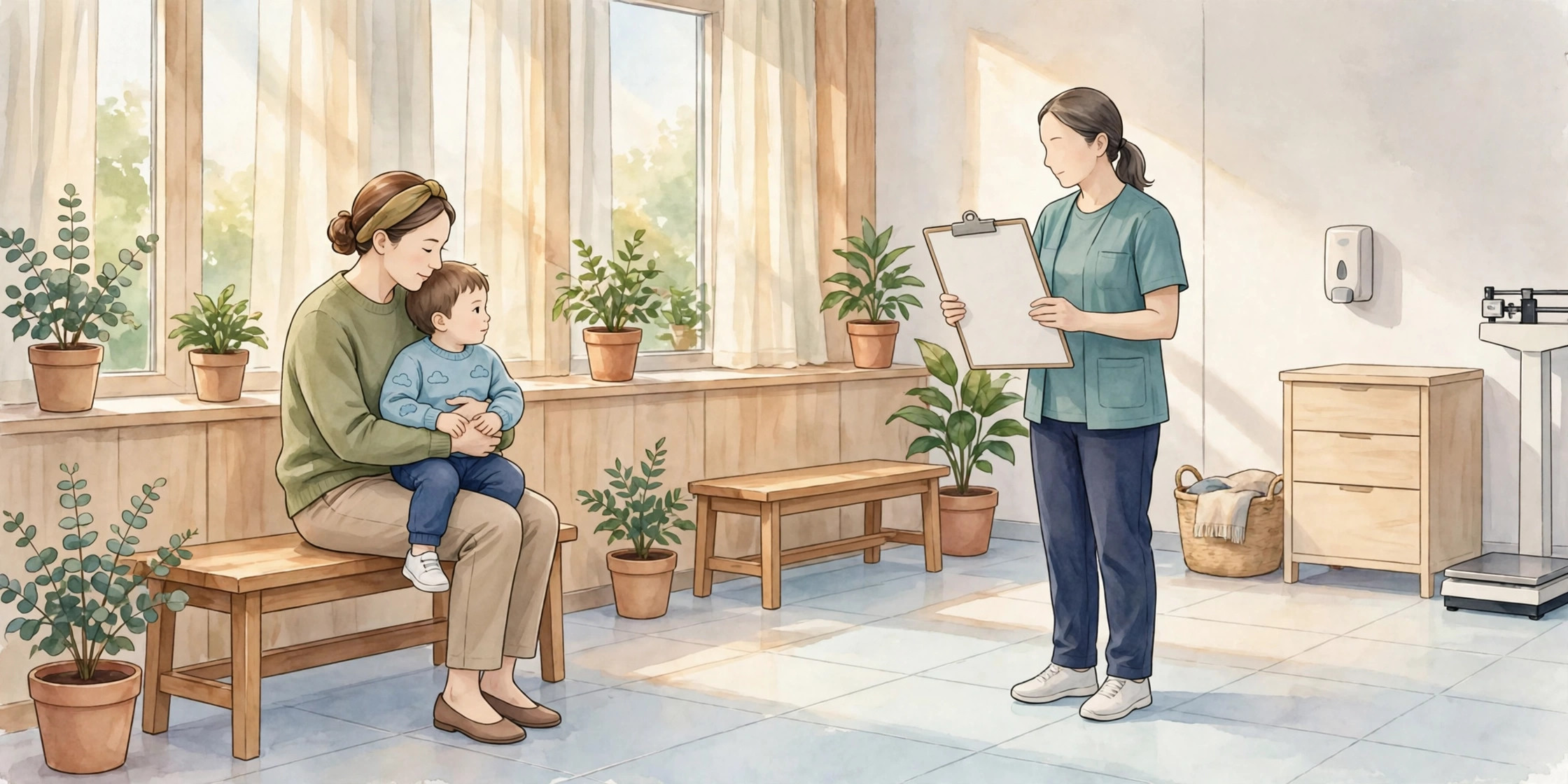
At the centre, a health worker will check the mother’s health and, for children, measure weight and height to record growth. This screening is part of registration and is repeated at follow-up visits.
The screening is short and free. For a pregnant woman, it may include checking weight, blood pressure, and general health, and reviewing the pregnancy record.
For a child, it includes measuring weight and height and recording them on the growth chart. The health worker will also ask about breastfeeding, feeding, and any illness. This is not a test you can fail — it is a baseline, so the centre can see how the mother and child are doing and whether anything needs attention. Answer honestly, even if you are worried about the answers: the centre is there to help, not to judge.
Step 4: Collect Your Food and Stipend Schedule
Once registered, the centre will explain when to return for food distribution, check-ups, and stipend collection. Regular attendance is part of the programme — follow-up visits keep the support active.
Write down the return date before you leave, and keep it somewhere safe — on the child’s health card, in your phone, or on a paper on the wall at home.
Ask the centre what to do if you cannot attend on the scheduled date, for example because of illness or travel, so a missed visit does not mean losing your place in the programme. Ask also how the stipend is paid and where to collect it, and confirm the amounts and schedule at your local Nashonuma centre.
Your First-Visit Checklist
- I know the name and location of my nearest participating Nashonuma centre.
- I have my original CNIC.
- I have my BISP registration details (if I am a beneficiary).
- I have my child’s B-Form or birth registration (if registering a child).
- I have my antenatal or health record (if pregnant).
- I have asked whether my district is covered.
- I have asked about the current food package and stipend — confirmed at the centre.
- I have written down my return date before leaving.
Benazir Nashonuma Programme and BISP Kafaalat — How They Work Together
The Benazir Nashonuma programme is a separate programme from Kafaalat, but the two are connected. A family receiving Kafaalat payments can also receive Nashonuma support if the mother or child qualifies. The Nashonuma stipend is additional to the Kafaalat payment — it does not replace it.
If you are a Kafaalat beneficiary and you are pregnant or have a child under two, ask about Nashonuma at your health centre. Many eligible families miss out simply because they do not know the programme exists.
The two programmes have different purposes. Kafaalat is a general cash payment to support a low-income household. Nashonuma is a targeted nutrition programme for a mother and a young child during a specific window of life.
That is why a family can receive both at the same time, and why Nashonuma support ends when the child turns two, while Kafaalat continues separately.
| Benazir Kafaalat | Benazir Nashonuma | |
|---|---|---|
| Who it is for | Low-income households registered with BISP | Pregnant women, breastfeeding mothers, and children under two in BISP families |
| Main support | Quarterly cash payment | Specialised food, health check-ups, growth monitoring, counselling, plus a cash stipend |
| Where you go | Authorised payment points and campsites | Participating health facilities and Nashonuma centres |
| When it ends | While the household remains eligible | When the child reaches two years of age |
| Can you receive both? | Yes — if you qualify for Nashonuma as well | Yes — it is additional to Kafaalat, not a replacement |
If you are a Kafaalat beneficiary, you do not need to give up anything to join the Benazir Nashonuma programme. If you are not yet a Kafaalat beneficiary, ask at the centre whether you can be referred for BISP registration — and check your status on the 8171 portal at 8171.bisp.gov.pk, or read our guide to Benazir Kafaalat and the 8171 programme for the basics.
Benazir Nashonuma Programme: What to Expect at the Centre
A Nashonuma visit usually includes a short health check, growth measurement for the child, nutrition counselling, and distribution of the specialised food. Visits are scheduled, so the centre will give you a return date. Bring your CNIC and your child’s health card to each visit.
A first visit takes longer than a follow-up visit, because registration and screening happen then.
Later visits are usually quicker: a health check, a growth measurement, a short counselling conversation, and food distribution. Bring your child’s health card every time, so the growth record stays complete. If your child is ill on the day of a visit, tell the health worker — the visit is also a chance to get advice on the illness, and the worker can tell you whether to come back sooner than the scheduled date.
You may also meet other mothers at the centre.
The counselling sessions are often done in small groups, and other mothers’ questions can be as useful as your own. Do not be shy about asking questions — if you are unsure about breastfeeding, feeding, or a symptom, this is the right place to ask.
Benazir Nashonuma Programme: Common Questions
Is Nashonuma available in my district? The programme operates in selected districts and is expanding. Ask at your nearest health facility or BISP office whether your district is covered. Do not rely on an old list online — confirm coverage at your local Nashonuma centre.
Does registration cost anything? No. Registration, health checks, and food distribution under the Benazir Nashonuma programme are free. Anyone asking for a fee in Nashonuma’s name is committing fraud — report it to the BISP helpline on 0800-26477.
Can I register if I am not a BISP beneficiary? The programme is aimed at BISP-registered families. If you are not registered with BISP, ask at the centre whether you can be referred for BISP registration first.
What happens when my child turns two? Nashonuma support ends when the child reaches two years of age. Your Kafaalat support, if you receive it, continues separately, and your child may then qualify for the Taleemi Wazaif education stipend once they start school.
How much is the Nashonuma stipend? Stipend amounts can change with programme updates, and this guide does not state a figure. Confirm the current amount at your local Nashonuma centre, where staff can tell you the package for your area.
How often do I need to visit the centre? Visits are scheduled by the centre, and regular attendance is part of the programme. The centre will give you a return date at each visit — follow it, and ask what to do if you cannot attend on that date.
What food does the programme provide? The programme provides specialised nutritious food for the mother during pregnancy and breastfeeding, and for the child once they reach the age for complementary feeding. The exact food items can change, so confirm the current package at your local Nashonuma centre.
Benazir Nashonuma Programme: Conclusion
The Benazir Nashonuma programme is one of the most valuable BISP programmes for young families, because it protects children’s health during the two years that matter most. If you are pregnant, breastfeeding, or have a child under two, visit your nearest health centre and ask about registration. The service is free, and the support — food, health checks, and a stipend — can make a real difference to your child’s growth.
Check your BISP status first on the 8171 portal at 8171.bisp.gov.pk, or by checking your BISP status by CNIC online, then take your documents to the nearest participating health facility and ask about Nashonuma. The visit costs nothing, the registration is free, and the help your child receives in the first 1,000 days can last a lifetime.