Ehsaas Amdan Programme 2026 — Easy Step-by-Step Guide to Free Assets & Eligibility
This is not an official BISP website. This guide is independent, general information about the Ehsaas Amdan Programme. For official information, always use the 8171 portal at 8171.bisp.gov.pk or the BISP helpline on 0800-26477.
Quick answer: The Ehsaas Amdan Programme is a livelihood programme that gives poor households a free income-generating asset — a goat, cow, buffalo, poultry, a Chingchi rickshaw body, agricultural inputs, or stock and tools for a small shop — plus training, instead of a cash payment. It is aimed largely at households already in the Benazir Kafaalat system, in selected districts and union councils, and beneficiaries are identified through a community process, not an online form. IMPORTANT: the programme as originally announced began in January 2020 as a four-year programme, and no official announcement of a fresh round of asset distribution in 2026 was verified for this guide — confirm the current position at your nearest BISP or Ehsaas office, or on the 8171 portal at 8171.bisp.gov.pk, before travelling or paying anyone. The Ehsaas Amdan Programme is free, and nobody can sell you an asset or guarantee your selection for a fee.
What Is the Ehsaas Amdan Programme?
The Ehsaas Amdan Programme is a livelihood programme run under the Ehsaas framework that gives poor households an income-generating asset instead of a cash payment. “Amdan” means income — and that is the whole idea. Rather than giving a family money that is spent in a few weeks, the programme gives them something that can keep earning: a goat, a cow, a buffalo, poultry, a Chingchi rickshaw body, agricultural inputs, or the stock and tools to start a small shop or enterprise.
The programme was launched in early 2020 with a budget of about Rs 15 billion, and the Pakistan Poverty Alleviation Fund (PPAF) is its lead implementing agency, working through partner organisations with a strong presence in the selected districts. It is part of the National Poverty Graduation Initiative — the idea that the poorest families can, with the right asset and some training, graduate out of poverty and eventually out of the government’s social protection system altogether.
The Ehsaas Amdan Programme is aimed largely, though not exclusively, at households already in the Benazir Kafaalat system. The thinking is straightforward: Kafaalat keeps a family fed today, while Amdan gives the same family a way to earn tomorrow. A household that receives both is being supported on two fronts at once — a regular cash payment for immediate needs, and a productive asset that can grow into a lasting income.
That distinction matters, because it changes what you should expect. This is not a monthly stipend and it is not a loan you have to repay. The asset is given free of cost to the selected household. But it is also not something you can simply apply for online and receive in the post. Beneficiaries are identified through a community process in targeted union councils, and the programme began in a defined set of the poorest districts. If your area was never covered, you cannot simply walk in and claim an asset — you need to check whether your district and union council are included, and whether selections are currently happening.
One important warning before anything else: the programme as originally announced was a four-year programme that began in January 2020. This guide was written in November 2026, and no official announcement confirming a fresh round of Amdan asset distribution in 2026 was verified for this guide. That does not mean the programme has ended — its partner organisations and related livelihood work continue — but it does mean you should confirm the current position at your nearest BISP or Ehsaas office, or on the 8171 portal at 8171.bisp.gov.pk, before travelling or paying anyone. Nobody can sell you an Amdan asset, and nobody can guarantee your selection for a fee. If someone asks you for money in the name of the Ehsaas Amdan Programme, that is fraud — report it to the BISP helpline on 0800-26477.
How the Ehsaas Amdan Programme Works
The Ehsaas Amdan Programme works in four broad stages: identification, planning, asset transfer, and training. Understanding each stage helps you see where you fit in — and why patience is part of the process.
First, households are identified through a community engagement process in the selected union councils. The starting point is usually the poverty scorecard survey data — the same National Socio-Economic Registry (NSER) system that BISP uses — and the programme’s own documents describe a target group of households with a poverty scorecard (PSC) score of 0–18, the poorest band. Community organisations and partner organisations then work in the villages to verify who is genuinely deserving, because a survey score alone does not tell the whole story of a household.
Second, each selected household develops a Livelihood Investment Plan with the help of the programme’s field staff. This is a simple plan, not a formal business document: what skills does the household already have, what resources does it own, and what asset would actually help it earn? A family that already keeps animals might benefit most from a goat or a buffalo. A young man who can drive might benefit from a rickshaw body. A woman who can sew might benefit from a sewing machine or shop inputs. The plan matches the asset to the person, so the asset is used rather than sold.
Third, the asset is procured and transferred. The PPAF’s own description of the programme stresses community procurement processes, designed to keep the identification, selection, and purchase of assets transparent and accountable. In practice this means the asset is bought through an organised process and handed over to the beneficiary, rather than cash being handed over for the beneficiary to buy it alone.
Fourth, training is provided. Beneficiaries who need vocational skills are supported to attend courses at certified technical training institutes, and training on using the asset and on basic business planning is given to eligible household members. A goat is only useful if you know how to look after it; a small shop only survives if you know how to price stock and keep a little aside for the next purchase. The training is part of the programme, not an optional extra.
The Ehsaas Amdan Programme also links to the interest-free loan scheme. Its documents describe around 221,926 interest-free loans as part of the wider graduation effort, with about half of those loans going to households that had already received an asset — so a family could, for example, receive a goat and later take a small interest-free loan to buy feed, expand the herd, or add a second income activity. If you want to understand interest-free lending in general, read our guide to the Akhuwat programme, which has long provided interest-free loans to small borrowers in Pakistan.
What Assets Does the Ehsaas Amdan Programme Give?
The assets fall into four broad groups, and the exact asset a household receives depends on its Livelihood Investment Plan, its skills, and what is available in its area.
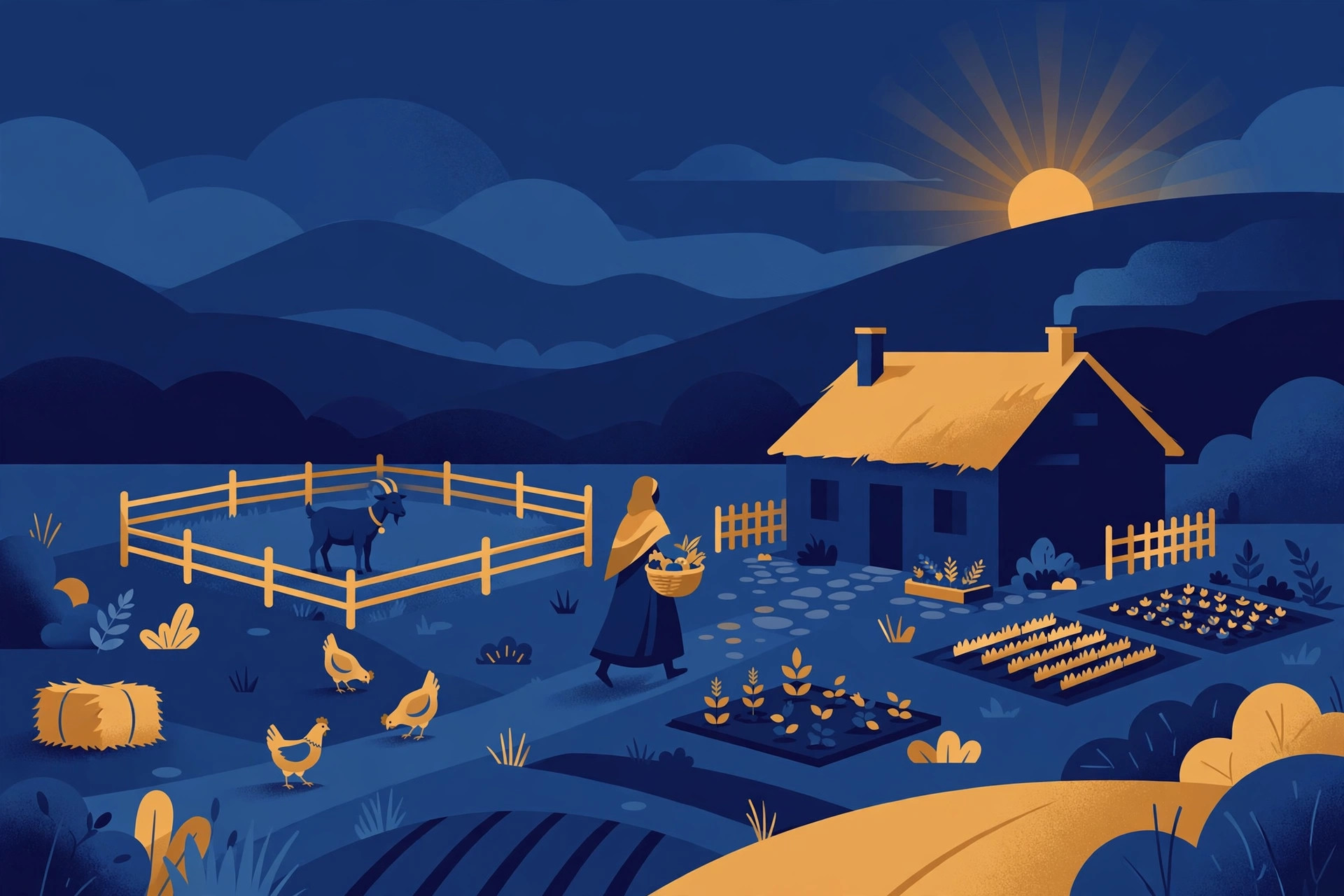
- Livestock — goats, cows, buffaloes, and poultry units. At the launch, the government announced that women beneficiaries would receive one cow, one buffalo, and three goats, so that a household could earn from milk and from selling animals over time.
- Agricultural inputs — seeds, fertiliser, tools, and other inputs that help a farming household grow more from the land it already works.
- Chingchi rickshaw bodies — the body of a Chingchi rickshaw, for a household member who can drive and earn fares. This suits young men in towns and larger villages where rickshaw transport is in demand.
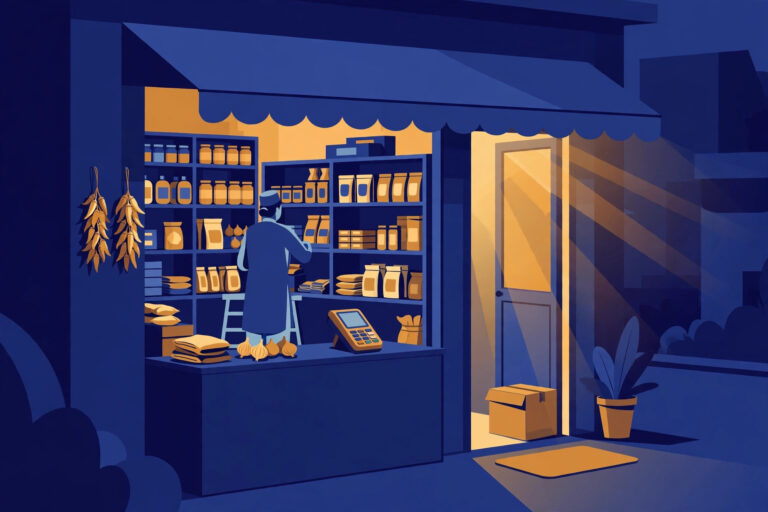
- Inputs for small retail outlets and small enterprises — stock for a small shop, tools for a trade, or equipment for a home-based business such as tailoring.
The value of the assets is not stated in this guide as a confirmed official figure, because secondary sources differ. Some guides describe assets as usually worth between Rs 75,000 and Rs 100,000 per beneficiary, while others describe the ceiling as up to Rs 100,000. Treat those figures as reported, not official — confirm the current asset package at your local BISP or Ehsaas office if you are selected. What matters more than the rupee value is whether the asset fits your household: a buffalo is worth little to a family with no fodder and no one to look after it, while a sewing machine is worth a great deal to a woman who already sews for her neighbours.
Example — a widow with no income: A widow in a village in Layyah lives with her two children and has no regular income. Her household is already in the Kafaalat system. Through the community process, she is identified as an Amdan beneficiary, and her Livelihood Investment Plan notes that she has kept goats before. She receives goats, along with basic training on feeding and care. Within a year she is selling milk and, later, a kid goat — a small but steady income she controls herself.
Example — a young man who can drive: A young man in a small town has a driving licence but no vehicle of his own, and he works as a daily-wage labourer when work is available. His household is selected, and his plan identifies a Chingchi rickshaw body as the right asset. He fits the body to a motorcycle arrangement through the programme’s process and begins earning daily fares — irregular at first, but his own income rather than a wage that may or may not come.
Example — a woman who sews: A woman in a village already sews clothes for neighbours on a borrowed machine. Her household’s plan identifies tailoring inputs — her own machine and initial cloth stock — as the right asset. She can now take more orders, charge properly, and keep the income in the household. The asset did not teach her a new skill; it removed the one obstacle that was stopping her from earning from a skill she already had.
These examples are illustrative, based on the asset types the programme itself describes. They show the principle: the asset follows the person’s existing ability, it does not replace it.
Who Qualifies for the Ehsaas Amdan Programme?
The programme is aimed at the poorest households. The conditions below are drawn from the programme’s own published description and from the eligibility summaries that describe it. Because the programme operates in selected districts and through a community process, meeting these conditions does not guarantee selection — it means you are in the group the programme is looking for.
- You are in a low-income household with no stable income. Daily-wage earners, labourers, and families living below the poverty line are the core target group.
- Your household is in the NSER database. Beneficiaries are identified largely through the poverty scorecard survey, and the programme’s documents describe a target of households with a PSC score of 0–18. If you are not sure about your household’s score, check your PMT score online or read our guide to checking your BISP registration by CNIC.
- You live in a targeted district or union council. The programme began in 375 rural union councils across 23 of the poorest districts in all four provinces. Three Punjab districts named at the launch were Dera Ghazi Khan, Layyah, and Jhang. If your area is not among the selected ones, you cannot be selected under this programme.
- You are not a government employee or pension holder. The programme is for households without a secure income.
- You can manage the asset. Basic skill in looking after the asset — keeping livestock, driving, running a small shop — is preferred, though not always mandatory, because training is provided.
- You are not already receiving similar asset support from another government programme. The asset is meant to reach households that have not already been given one.
Priority is given to the most vulnerable within that group: widows, women, persons with disabilities, families without a breadwinner, and young people who want to start a small business. The Ehsaas Amdan Programme’s own target was that 60% of asset beneficiaries would be women and 30% would be youth — a deliberate choice, because women and young people are the most likely to turn a small asset into a household income, and the least likely to be reached by other schemes.
Example — a family that qualifies but is not selected: A poor household in a district that was never included in the programme’s 23 districts asks at the BISP office about Amdan and is told their district is not covered. They are not rejected because they are ineligible — they are simply outside the programme’s area. Their correct next step is the Kafaalat payment and other schemes that do cover their district, such as the interest-free loans described in our Akhuwat programme guide or the youth business loans in our Kamyab Jawan programme guide.
Example — a household that qualifies and is selected: A Kafaalat household in one of the covered union councils, with a low poverty score and a woman who has kept poultry before, is identified through the community process. Her Livelihood Investment Plan records poultry as the right asset, she receives a poultry unit and training, and she begins selling eggs in the village. The income is small, but it arrives every week rather than every three months.
Ehsaas Amdan Programme vs Kafaalat — What Is the Difference?
Many people confuse the two programmes because both sit under the same umbrella and both target the same poor households. The difference is simple: Kafaalat is cash support, Amdan is an earning asset. A household can receive both, and the programme was designed so that many households would.
| Benazir Kafaalat | Ehsaas Amdan Programme | |
|---|---|---|
| What you receive | Quarterly cash payment | A productive asset (livestock, rickshaw, shop inputs) plus training |
| Amount or value | Rs 14,500 per quarter for the Oct–Dec 2026 cycle, per the government’s June 2026 announcement, rising to Rs 18,000 planned from January 2027 — check the exact amount for your cycle on the 8171 portal | Asset value reported as up to about Rs 100,000 per beneficiary — not officially confirmed; confirm locally |
| Purpose | Meet immediate household needs | Create a lasting income so the household can graduate out of poverty |
| How you are chosen | NSER survey and PMT score (cut-off 32, or 37 with a disabled member) | Community process in targeted union councils, largely from Kafaalat households with PSC 0–18 |
| Where it operates | Nationwide | Selected districts — 375 rural union councils in 23 poorest districts at launch |
| Do you repay it? | No — it is a cash grant | No — the asset is given free of cost |
| Can you receive both? | Yes | Yes — Amdan is complementary to Kafaalat |
If you are a Kafaalat beneficiary, you do not lose your Kafaalat payment by receiving an Ehsaas Amdan Programme asset. The two are designed to work together, and the long-term aim is the opposite: that the income from the asset eventually makes the household less dependent on the cash payment. If you are not yet a Kafaalat beneficiary, start there — check your status on the 8171 portal at 8171.bisp.gov.pk, or read our guide to Benazir Kafaalat and the 8171 programme.
How to Check Your Ehsaas Amdan Programme Eligibility and Get Selected
There is no confirmed online application form for the Ehsaas Amdan Programme that this guide can point you to, and you should be careful about any website or agent that claims to offer one. Selection happens through the community process in the covered areas, not through a self-service online form. The steps below describe the realistic route — checking first, then going through the proper local channel.
Step 1: Check Your BISP and Poverty Score Status
Before anything else, find out where your household stands in the system. Send your CNIC number (without dashes) by SMS to 8171 — the SMS is free — or check on the 8171 portal at 8171.bisp.gov.pk. This tells you whether your household is registered and eligible under BISP. If your household has never been surveyed, or your record is out of date, you will need the dynamic survey first. Read our guide to the BISP dynamic survey and our guide to checking your BISP status by CNIC online for the detail.
Step 2: Ask Whether Your District and Union Council Are Covered
Go to your nearest BISP tehsil office or Ehsaas centre and ask two questions: is my district covered by the Ehsaas Amdan Programme, and is my union council among the selected ones? This is the single most important check, because if your area is not covered, no application of any kind will help. Take your original CNIC with you. If the office says your area is not covered, ask which livelihood or asset schemes do operate in your district, so you do not leave empty-handed.
Step 3: Ask About the Current Round of Selections
Because the programme as originally announced was a four-year programme beginning in January 2020, you need to ask whether selections are currently happening in 2026, or whether the work in your area is now running through a successor or partner organisation. Ask plainly: is there a current Amdan selection round in my union council, and if not, who is the partner organisation working here? Write down the name of the organisation and the name of the person you spoke to.
Step 4: Take Part in the Community Process
If selections are happening in your area, the identification is done through a community engagement process run by the partner organisation, not by filling in a form at a counter. This usually means village meetings, household visits, and verification by local community organisations. Attend the meetings, answer questions honestly about your household’s income and situation, and do not pay anyone to put your name on a list. A genuine process costs nothing.
Step 5: Develop Your Livelihood Investment Plan
If your household is shortlisted, field staff will help you develop a Livelihood Investment Plan — a simple record of your skills, your resources, and the asset that would help you most. Think about this before the visit: what can you already do, what do you already own, and what would you actually use every day? A plan that matches your real skills is far more likely to be approved than a plan that asks for the most expensive asset.
Step 6: Receive the Asset and the Training
Once approved, the asset is procured through the programme’s process and handed over to you. Attend the training that comes with it — on looking after the asset and on basic business planning — even if you think you already know the work. The training also covers how to keep the asset productive, when to sell or breed livestock, and how to set aside a little from each sale for feed, medicine, or restocking.
Step 7: Keep the Asset Working
An asset only graduates a household out of poverty if it is kept and used. Do not sell the asset immediately for cash — that defeats the entire purpose and may disqualify your household from future support. If the asset falls sick, dies, or is lost, report it to the partner organisation promptly and ask what support is available, rather than staying silent and hoping nobody notices.
Your Before-You-Go Checklist for the Ehsaas Amdan Programme
- ☐ I have checked my household’s BISP status by SMS to 8171 or on the 8171 portal at 8171.bisp.gov.pk.
- ☐ I know whether my district and union council are covered by the Ehsaas Amdan Programme.
- ☐ I have asked at the BISP tehsil office or Ehsaas centre whether selections are happening in 2026.
- ☐ I have my original CNIC and my household’s BISP details.
- ☐ I know what asset would suit my skills, and I can explain why.
- ☐ I have not paid anyone any fee for registration or selection.
- ☐ I have the name of the partner organisation working in my area, if any.
What to Do With Your Ehsaas Amdan Programme Asset — Making It Earn
Receiving the asset is the beginning, not the end. A goat that is not fed properly will not give milk. A rickshaw that is not maintained will break down. A small shop that sells on credit to everyone and collects from no one will run out of stock. A few practical habits make the difference between an asset that earns for years and one that is gone in months.
Keep a simple record. Even a notebook with dates, sales, and expenses will tell you whether the asset is earning or costing you money. If you sell milk, write down how much you sold each week and what you spent on feed. If you run a shop, write down what you bought, what you sold, and what is left. After a month, the notebook will show you the truth more clearly than memory ever will.
Set aside a small part of every sale for the asset itself. For livestock, that means feed, vaccination, and medicine. For a rickshaw, it means fuel, oil, and repairs. For a shop, it means restocking. If you spend every rupee the asset earns, the asset will slowly run down until there is nothing left to earn with.
Use the interest-free loan link if you need to grow. Households that received an asset under the programme were also given opportunities to take an interest-free loan to expand — for example, to buy more animals or more stock. A small loan taken for a clear purpose, with a plan to repay it from the asset’s earnings, is very different from borrowing to meet a daily expense. Read our Akhuwat programme guide for how interest-free lending works in practice, and our Kamyab Jawan programme guide for youth business loans.
Protect the asset. For livestock, that means vaccination on schedule and a dry, safe place at night. For a rickshaw, it means parking it safely and servicing it before a small fault becomes a big repair. For shop stock, it means keeping it dry and secure. An asset that is looked after lasts years; one that is neglected does not survive the first season.
Ehsaas Amdan Programme: Common Questions
Can I apply for the Ehsaas Amdan Programme online? There is no confirmed online application form for this programme that this guide could verify. Beneficiaries are identified through a community process in the targeted union councils, run by the programme’s partner organisations. Do not trust any website or agent that claims to register you online for a fee — check at your nearest BISP or Ehsaas office instead.
Is the Ehsaas Amdan Programme still running in 2026? The programme as originally announced began in January 2020 as a four-year programme. This guide could not verify an official announcement of a fresh round of asset distribution in 2026. Confirm the current position at your nearest BISP or Ehsaas office or on the 8171 portal at 8171.bisp.gov.pk before you act on anything you read about the programme.
How much is the Ehsaas Amdan Programme asset worth? Secondary sources describe assets as usually worth between Rs 75,000 and Rs 100,000 per beneficiary, with some describing the ceiling as up to Rs 100,000. These figures are reported, not officially confirmed in this guide. Confirm the current asset package at your local office if you are selected.
Do I have to repay the asset or pay a fee? No. The Ehsaas Amdan Programme asset is given free of cost, and registration and selection are free. Anyone asking for a fee in the programme’s name is committing fraud — report it to the BISP helpline on 0800-26477.
Can I choose which Ehsaas Amdan Programme asset I receive? Not freely. The asset is matched to your household through a Livelihood Investment Plan, based on your skills, your situation, and what is available. You can discuss your preference with the field staff, but the plan — not your first choice alone — decides.
Do I lose my Kafaalat payment if I receive an Amdan asset? No. The Ehsaas Amdan Programme is complementary to Kafaalat, and households can receive both. The long-term aim is that the asset’s income eventually reduces the household’s dependence on cash support — but receiving an asset does not cancel your Kafaalat payment.
Which districts are covered? The programme began in 375 rural union councils across 23 of the poorest districts in all four provinces. Three Punjab districts named at the launch were Dera Ghazi Khan, Layyah, and Jhang. Ask at your BISP tehsil office whether your district and union council are covered, and whether coverage has changed since the launch.
Conclusion
The Ehsaas Amdan Programme is built on a simple and hopeful idea: that a poor household given the right asset, a little training, and a fair chance can start earning its own income and slowly climb out of poverty. A goat, a rickshaw, a sewing machine, or a small shop’s first stock will not make a family rich overnight — but in the hands of a household that knows how to use it, it can mean milk to sell every morning, fares every day, or orders every week, and that steady trickle of income is worth more than any one-off payment.
If you think your household might qualify for the Ehsaas Amdan Programme, start with the checks that cost nothing: your BISP status on the 8171 portal at 8171.bisp.gov.pk, your PMT score, and a visit to your nearest BISP tehsil office to ask whether your area is covered and whether selections are happening now. Go with your CNIC, go with an honest account of your household’s situation, and go with a clear idea of which asset you could actually use. And remember the two rules that protect you: the programme is free, and nobody can sell you a place on its list.