Punjab Ration Card 2026 — Easy Step-by-Step Guide to Apply Online, Eligibility & Rs 3,000
This is not an official Punjab government website. This guide is independent, general information about the Punjab ration card. For official information, always check the PSER portal at pser.punjab.gov.pk or the Punjab Social Protection Authority before you apply.
What Is the Punjab Ration Card?
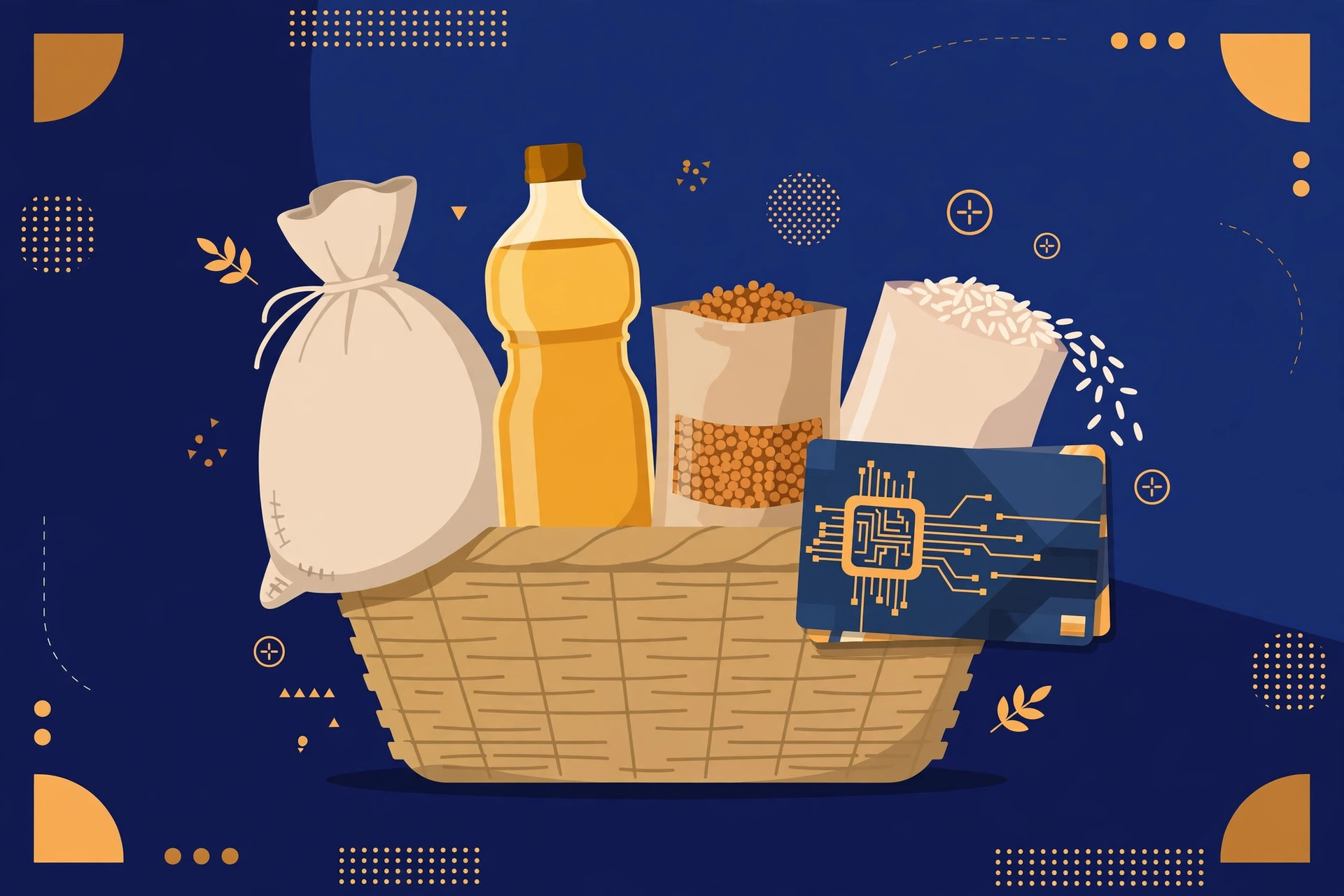
The Punjab ration card is a provincial food support programme that gives eligible low-income families in Punjab Rs 3,000 every month for basic groceries — flour, rice, sugar, ghee, and pulses. The Chief Minister of Punjab launched it on 29 April 2025, and payments started from 1 June 2025. The support is delivered through a digital smart card rather than a physical ration book, and it is redeemed at approved utility stores and registered karyana (grocery) shops. The programme aims to reach around 1.5 million low-income families across the province.
The Punjab ration card is not the same as the older Ehsaas Rashan programme, and it is not the same as BISP Kafaalat. It is a separate Punjab government programme, run through the Punjab Socio-Economic Registry (PSER) — a provincial survey system that is different from the federal NSER survey used by BISP. That distinction matters, because it means that being registered for BISP does not automatically register you for the Punjab ration card, and being registered for the ration card does not make you a BISP beneficiary. In fact, the reported rules say that families already receiving BISP Kafaalat benefits are not eligible for the ration card, because the two programmes are meant to reach different households.
One more fact to understand before anything else: you do not apply for the Punjab ration card directly. You register in the PSER survey, and once your data is verified and your PMT score qualifies, the government enrols you. The PSER portal is therefore the front door, and the survey is the process. Anyone who offers to sell you a ration card, or to register you for a fee, is committing fraud — registration is free.
Example — the family that already had BISP: A woman who receives Kafaalat hears about the Punjab ration card and applies for it too, hoping for Rs 3,000 more each month. Her application is rejected, because the reported rules say BISP beneficiaries are not eligible for the ration card. The two programmes are designed to reach different households, and a family cannot draw from both. Her Kafaalat payment is unaffected — she simply cannot also hold a ration card.
Example — the family that qualified through PSER: A labourer’s family in a village has never received BISP, because their PMT score is just above the BISP cut-off. They register in the PSER survey at their Union Council, their PMT score comes out below 35, and they receive a digital ration card worth Rs 3,000 a month, which they redeem at the local utility store for flour, sugar, and ghee. The Punjab ration card reached a household that BISP’s rules had left out.
Who Can Apply for the Punjab Ration Card?
The Punjab ration card is targeted at the lowest-income households in Punjab. To qualify, a household must meet all of the following conditions, as reported across secondary guides. Because the exact thresholds are reported slightly differently in different sources and can be revised by the government, you should confirm your own case on the PSER portal rather than relying on any single number in this guide.
First, you must be a permanent resident of Punjab with a valid NADRA CNIC. Second, you must be registered in the PSER survey, which is the Punjab Socio-Economic Registry — a provincial household survey that is separate from the federal NSER survey. If your family has never been surveyed under PSER, you need to complete that survey first. Third, your household’s PMT (Proxy Means Test) score must be below 35, according to the widely reported threshold. The PMT score is calculated from your survey data — your income, housing, assets, and family size — and not from any figure you declare yourself.
Fourth, your total monthly household income is commonly reported as needing to be below Rs 50,000, although one source reports the threshold as below Rs 35,000. The PMT score, not the income figure alone, is the actual determining factor, so a household slightly above one reported income figure may still qualify if its PMT score is low enough, and a household below it may not qualify if its score is too high. Fifth, you must not be a government employee, and only one person per family may apply — if two members of the same household apply, both applications are reported to be cancelled. Sixth, your household must not already be receiving BISP Kafaalat benefits.
Example — one application per family: Two brothers from the same household both apply for the Punjab ration card, thinking two cards mean Rs 6,000 a month. Both applications are cancelled, because only one person per family may apply. Had one brother applied alone, the household could have qualified. Applying twice did not double the benefit — it removed it entirely.
How the Punjab Ration Card Works
Once you are enrolled, you receive a digital smart card carrying Rs 3,000 per month. The amount is for groceries — flour, rice, sugar, ghee, and pulses — at approved utility stores and registered karyana shops. The card is digital, so there is no physical book to lose, and the balance is checked through the PSER system.
There is one rule that catches many families out: the Rs 3,000 does not carry forward. If you do not use it in that month, it expires. Use it before the month ends. That is different from a cash payment, which you can save, and it means you should plan a monthly shop around the card rather than letting the balance sit unused.
The Punjab ration card is also different from a cash transfer in another way: it can only be spent on food at approved shops. You cannot withdraw it as cash, transfer it to another person, or spend it on non-food items. If a shopkeeper offers to give you cash for the card’s balance at a discount, refuse — that is not how the programme works, and it can lead to your card being cancelled.
How to Apply for the Punjab Ration Card — Step by Step
Step 1: Complete Your PSER Registration
Go to the official PSER portal at pser.punjab.gov.pk on your phone or computer. Register with your CNIC and your mobile number, and fill in the household survey — your family members, income, housing, and assets. The portal can be slow during afternoon peak hours, so try early in the morning if it does not load. If you cannot go online, visit your nearest Union Council office or e-Khidmat Markaz with your original CNIC, and the staff will register you for free. Remember that PSER is not the same as NSER: PSER is Punjab’s provincial registry, while NSER is the federal registry used by BISP. Completing one does not complete the other.
Step 2: Wait for Verification and Your PMT Score
After you submit the survey, your data is verified and a PMT score is calculated. You can check your PMT score free by texting your CNIC to 8123, according to one secondary guide. If your score is below 35 and your other conditions are met, you qualify. If your score is above the threshold, you do not qualify, and re-applying with the same data will not change the result.
Step 3: Receive Your Approval SMS
If you qualify, you will receive an approval SMS. That message tells you that your digital ration card is active. Do not pay anyone for the SMS, the card, or the activation — all of it is free. If anyone contacts you claiming your card is ready but asking for a fee to activate it, that is fraud.
Step 4: Use the Card at an Approved Shop
Take your CNIC to an approved utility store or registered karyana shop and use the Rs 3,000 monthly balance for groceries. Check the balance before you shop, buy what your household needs, and use the full amount before the month ends, because it does not carry forward. Keep the receipt from each shop, so you have proof of what was bought if there is ever a dispute.
Punjab Ration Card Compared With BISP and Ehsaas Rashan
Three food and cash programmes are often confused. This table separates them.
| Punjab ration card | BISP Kafaalat | Ehsaas Rashan / Rashan Riayat | |
|---|---|---|---|
| Run by | Punjab government (PSPA) | Federal government (BISP) | Federal / Punjab subsidy programme |
| What you get | Rs 3,000/month for groceries | Rs 14,500/quarter cash (rising to Rs 18,000 from Jan 2027) | Subsidised food items at a discount |
| How it is given | Digital smart card, utility stores and karyana shops | Cash at camps, bank agents, or wallets | Subsidy at utility stores |
| Registry | PSER (Punjab) | NSER (federal) | Varies by programme |
| Can you hold it with BISP? | No — BISP beneficiaries are reported as ineligible | — | Depends on the specific scheme’s rules |
| Where to apply | pser.punjab.gov.pk, Union Council, e-Khidmat Markaz | BISP tehsil office (NSER survey) | Utility stores / programme portal |
If you already receive Kafaalat, the Punjab ration card is not for you, and applying for it wastes your time and the office’s. If you do not receive Kafaalat and your household is low-income, the Punjab ration card may be the programme that reaches you. Check your PMT score and your PSER registration first, and let those decide.
Common Problems — and What to Do
Your PMT Score Is Above 35
A PMT score above the threshold means the survey data shows your household as better off than the programme’s cut-off allows. You cannot change the score by re-applying with the same data. If you believe the survey recorded wrong information — for example, an asset your household does not own — go to the Union Council or e-Khidmat Markaz and ask for the record to be checked and corrected, then re-apply. Do not pay anyone who promises to lower your score.
The PSER Portal Will Not Load
The portal is reported to be slow during afternoon peak hours. Try between 6am and 9am, when fewer people are online. If it still does not load, visit your Union Council office or the nearest e-Khidmat Markaz, where staff can register you for free. Do not use any other website that claims to be the PSER portal — the official address is pser.punjab.gov.pk, and any other site asking for your CNIC is not official.
Your Balance Expired at Month End
The Rs 3,000 monthly balance does not carry forward, according to secondary guides. If you did not use it, it is gone for that month, and it cannot be recovered. Plan a monthly shop early in the month, so the balance is used well before the deadline. Set a reminder on your phone for the first week of each month.
A Shopkeeper Refuses the Card or Overcharges
If an approved shop refuses your card, or charges more than the marked price, or offers you cash at a discount instead of groceries, report it. You can complain through the PSPA helpline, which is reported as 0800-02345, or at your Union Council. Keep your receipt and note the shop’s name and the date. Do not accept a cash discount — it is not how the programme works, and it can lead to your card being cancelled.
You Were Told BISP Beneficiaries Can Also Apply
That is not what the reported rules say. Families already receiving BISP Kafaalat benefits are reported as ineligible for the Punjab ration card. If an agent tells you otherwise and asks for a fee to register you anyway, that agent is either mistaken or committing fraud. Check the rule on the PSER portal or at your Union Council before you pay anyone anything.
Your Punjab Ration Card Checklist
- I am a permanent resident of Punjab with a valid CNIC.
- I have completed PSER registration — at pser.punjab.gov.pk, a Union Council, or an e-Khidmat Markaz.
- I know my PMT score, and it is below 35.
- My household income is below the reported threshold, and no member is a government employee.
- Only one person from my family has applied.
- My household does not receive BISP Kafaalat benefits.
- I have not paid anyone for registration, activation, or the card.
- I will use the Rs 3,000 before the month ends, because it does not carry forward.
Common Questions
How do I apply for the Punjab ration card online?
Go to the official PSER portal at pser.punjab.gov.pk, register with your CNIC and mobile number, and complete the household survey. You do not apply for the card directly — you register in PSER, and once your data is verified and your PMT score qualifies, the government enrols you. You can also register in person at a Union Council office or an e-Khidmat Markaz, for free.
Who is eligible for the Punjab ration card?
Permanent residents of Punjab with a valid CNIC, registered in PSER, with a PMT score below 35 and a household income below the reported threshold (commonly cited as Rs 50,000 a month, with one source citing Rs 35,000). You must not be a government employee, only one person per family may apply, and your household must not already receive BISP Kafaalat benefits. Confirm your own case on the PSER portal.
How much does the Punjab ration card give?
Rs 3,000 per month, for groceries — flour, rice, sugar, ghee, and pulses — at approved utility stores and registered karyana shops. The balance does not carry forward to the next month, so use it before the month ends.
Is the Punjab ration card the same as BISP?
No. The Punjab ration card is a Punjab government programme run through PSER, giving Rs 3,000 a month for food. BISP Kafaalat is a federal cash programme giving Rs 14,500 per quarter. Families already receiving BISP benefits are reported as ineligible for the ration card.
What is PSER, and how is it different from NSER?
PSER is the Punjab Socio-Economic Registry, a provincial household survey used for Punjab programmes like the ration card. NSER is the federal National Socio-Economic Registry used by BISP. They are different registries, and completing one does not complete the other. The Punjab ration card needs PSER registration.
Can BISP beneficiaries also get the ration card?
According to the reported rules, no. Households already receiving BISP Kafaalat benefits are not eligible for the Punjab ration card. If an agent tells you otherwise and asks for a fee, that is fraud.
How do I check my Punjab ration card status?
Check through the PSER portal at pser.punjab.gov.pk with your CNIC, or text your CNIC to 8123 to check your PMT score, according to one secondary guide. You can also ask at your Union Council or e-Khidmat Markaz. There is no publicly downloadable beneficiary list — verification is done by CNIC.
Does the Rs 3,000 carry forward if I do not use it?
No. According to secondary guides, the monthly balance expires at the end of the month and does not carry forward. Plan your shopping early in the month.
Conclusion
The Punjab ration card is a straightforward programme once you understand its one central rule: it runs on PSER, not on BISP’s NSER, and it gives Rs 3,000 a month for groceries to low-income Punjab households that are not already receiving Kafaalat. Register in the PSER survey at pser.punjab.gov.pk or at your Union Council, check that your PMT score is below 35, wait for the approval SMS, and use the balance at an approved shop before the month ends.
Registration is free, only one person per family may apply, and no agent can register you faster or cheaper than the official route. If you already receive Kafaalat, this programme is not for you — but if you do not, and your household is low-income, the Punjab ration card may be the support that reaches you. For your next step, read our guide to checking your PMT score, and to the difference between the PSER and NSER registries.