Punjab Daanish School Admission 2026 — Easy Guide to Free Boarding, Eligibility & Entry Test
This is not an official Daanish Schools website. This guide is independent, general information about Punjab Daanish School admission. For official information, always check the Punjab Daanish Schools and Centres of Excellence Authority at daanishschools.punjab.gov.pk before you apply or pay anything.
What Is Punjab Daanish School Admission?
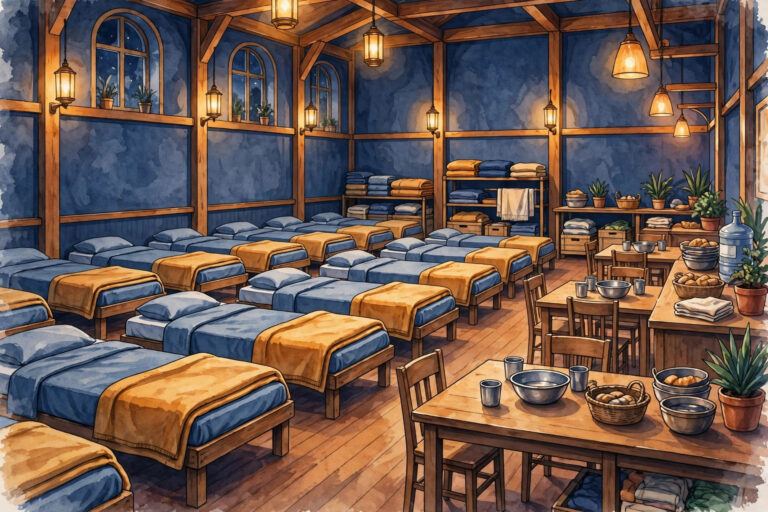
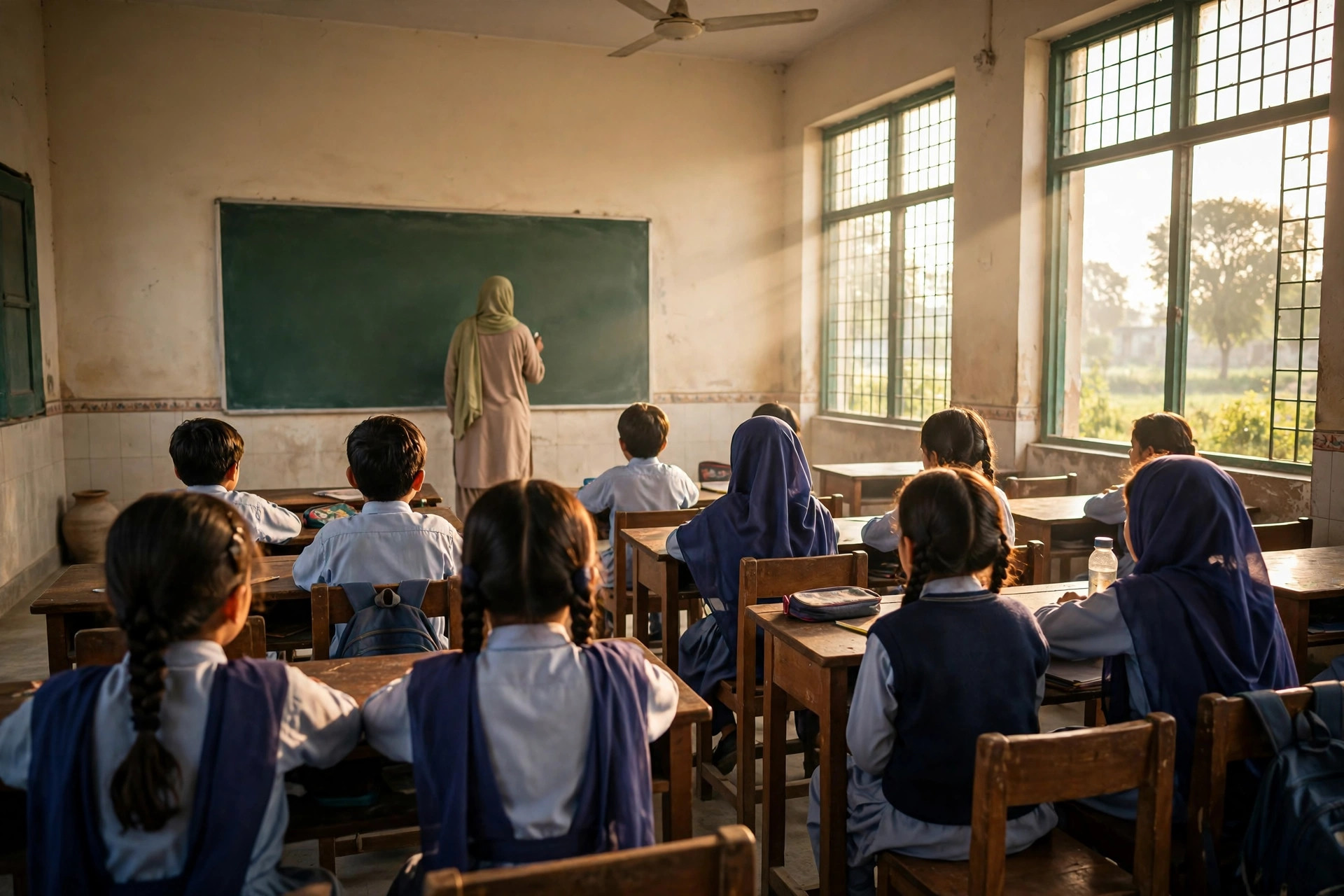
Punjab Daanish School admission is the doorway to one of the best free educations in Pakistan. The Daanish Schools are boarding schools run by the Punjab Daanish Schools and Centres of Excellence Authority, set up under a 2010 provincial law, and they give poor, orphaned and needy children free schooling, free boarding, free meals, free uniforms and free books — from Class 6 onwards. A Punjab Daanish School admission is not a scholarship you carry to another school. It is a place at a residential school where a child lives, eats, studies and grows, at no cost to the family, for as long as the child keeps up.
The schools were built for children whose families cannot afford a good education, and the whole system is designed around that purpose. The main entry point is Class 6, for children who have passed Class 5. Admission is by a written entry test, a home verification and a medical check — not by recommendation, not by payment, and not by influence. The authority says plainly that no recommendations are accepted, and any person who offers to get your child in for a fee is lying to you.
There is also a federal Daanish School at Kuri, Islamabad, run by the Ministry of Federal Education and Professional Training, which is a separate school with its own admission round. This guide is about the Punjab schools, run by the Punjab authority, and it says so wherever the two could be confused.
Example — the orphan from Rajanpur: A boy from Rajanpur loses his father when he is ten. His mother earns a living as a daily-wage worker, and there is no money for a good school. He passes Class 5 at his village government school, applies for Punjab Daanish School admission, and passes the written test. He is offered a free seat: a bed in a hostel, three meals a day, a uniform, books, and teachers who expect him to work hard. His mother pays nothing. Four years later he is in Class 10, and the school is already preparing him for college.
Example — the daughter of a labourer: A girl from a labourer’s family in Muzaffargarh finishes Class 5 with good marks. Her parents are both illiterate, and the family income is far below the limit. She applies for Punjab Daanish School admission under the deprived categories, passes the test and the home verification, and joins the girls’ campus. Her parents visit her on the days the school allows, and her younger sister, watching her, starts studying harder so she can follow her.
Who Can Apply for Punjab Daanish School Admission?
A child qualifies for Punjab Daanish School admission if four things are true. The child has passed Class 5. The child fits the age limit. The family income is within the limit. And the child falls into one of the deprived categories the authority has set. Then the child must pass the written test, a home check and a medical examination.
The age limits on the 2026 form were 10 to 12 years for boys and 10 to 13 years for girls, counted on 31 March 2026. The income limit on that form was Rs 40,000 a month from all sources. There is one conflict to flag honestly: the authority’s criteria page still mentions Rs 15,000, the original figure, but it also says the authority can notify a new amount, and the 2026 form — the newer document — says Rs 40,000. This guide uses the form’s figure, because the form is what you actually apply on, but check the current form when you apply, because the authority can change the figure.
The seven deprived categories, in order of priority, are the heart of the scheme. They cover orphans, children of illiterate parents with no property, children of labourers, children from homes in urban slums or rural areas, and other children from the poorest households. A child needs to meet only one of the conditions — for example, a family income under Rs 40,000 a month, or being an orphan, or having illiterate parents — but the child must also pass the test. Meeting a category gets you into the race; it does not guarantee a seat.
About 10 per cent of seats are for families who pay — the self-finance seats. The federal school set the self-finance fee at Rs 20,500 a month in 2026, and the Punjab schools use the same figure, according to reports. If your family can afford that, the self-finance route is the honest alternative, but it is a small share of seats and it is not the free route this guide is about.
A Punjab domicile is mandatory for all applicants to the Punjab schools. If your child does not yet have a domicile, apply for it early — the district office needs time, and the admission form asks for it. Our guide to the NADRA B-Form 2026 documents and fee explains the birth registration certificate your child needs first, and the domicile is issued by the district administration, not by NADRA.
Punjab Daanish School Admission Dates — When to Apply
The Punjab authority says it places an advertisement in two national newspapers and one local newspaper in October each year, and posts the form on its website. For the 2026 intake, the form and advertisement went up on 16 October 2025. For the next round, for Class 6 in the 2027 session, the advertisement was expected around October 2026 — and reports say the forms were available from 19 October 2026, with a last date for submission of 12 November 2026 and a written entry test on 15 November 2026.
That timing matters, because by the time you read this guide the 2026 round is over. Do not search for a “2026 last date” and do not trust a website that gives you one: the round has closed. What you should do is get ready for the next one. The published sample timeline from an earlier year gives the order of events: advertisement in November, applications closing in late December, a written test a week later, then home checks, the Class 5 result and a medical before a new session in April. The exact dates move every year, but the order does not.
There is one conflict in the reported test dates for the current round. One source reports the written test on 15 November 2026, while another reports the test, run through the HEC Education Testing Council, from 30 October to 1 November 2026, with roll number slips available from 26 October 2026. Both cannot be the same test for the same class, so treat the dates as reported and check your own roll number slip — the slip is the document that tells you when and where your child sits the test. The test is run through the HEC Education Testing Council portal at etc.hec.gov.pk, where slips are downloaded.
The federal Daanish School at Kuri, Islamabad, runs on its own calendar. In 2026 it took Classes 6, 7 and 8, with forms from 26 January to 14 February 2026 and a test on 27 February 2026. For its 2027 round, forms were issued from 19 October 2026, the last date was 12 November 2026, and the entrance test was on 12 December 2026, according to reports. Do not mix the two calendars up: the Punjab schools and the federal school advertise separately.
The Punjab Daanish School Entry Test — What It Covers
The written entry test for Punjab Daanish School admission is a 100-mark paper, set by the authority’s academic wing, and it is the single biggest filter in the whole process. The reported subject breakdown is: English 35 marks, Mathematics 20 marks, General Science 15 marks, Urdu 10 marks, and IQ 20 marks. The test is held at the schools themselves, or at centres the authority names on the roll number slip, and it is the same paper for all candidates in the same class.
There is no shortcut to passing it. The English paper tests reading and basic grammar at Class 5 level. The mathematics paper tests the arithmetic a Class 5 child should know. The science paper tests general science from the primary syllabus. The Urdu paper tests reading and writing. And the IQ paper tests reasoning — patterns, sequences and simple logic. A child who has done well in Class 5 at a government school, and who has practised past papers, is well placed. A child who has not opened a book since the Class 5 result will struggle, however deserving the family is.
After the written test, the authority prepares merit lists, and then comes the verification. A home check confirms the family’s circumstances — the income, the housing, the category the child applied under. Then the Class 5 result is checked, and a medical examination confirms the child is fit for boarding life. Only after all of that is a seat offered. The authority’s own words are worth remembering: selection is by written test, interview, medical check and family verification, and no recommendations are accepted.
Documents You Need for Punjab Daanish School Admission
The documents for Punjab Daanish School admission are the ones that prove the child’s age, the child’s schooling, and the family’s circumstances. Keep them ready before the advertisement comes out, because the window between the advertisement and the last date is short.
- The child’s B-Form (Child Registration Certificate) — original and copy. This is the document that holds most families up, so get it first if you do not have it.
- The child’s Class 5 result card or certificate.
- The parents’ CNICs (original and copy).
- The Punjab domicile certificate of the child or the father.
- Proof of family income: a salary slip, a labour card, or an income certificate from the Union Council, whichever applies.
- Proof of the deprived category: a death certificate if the child is an orphan, or the documents that show the parents are illiterate or labourers.
- Recent passport-size photographs of the child.
- The completed admission form, available from the authority’s website or the school.
If your child does not have a B-Form, apply for it now — our guide to the NADRA B-Form 2026 documents and fee explains the documents and the fee. If your child does not have a birth certificate, our guide to NADRA birth certificate online apply explains how birth registration works. And if your family needs help with school costs for a child who does not get a Daanish seat, our guide to Benazir Taleemi Wazaif explains the stipends paid for children’s schooling in BISP families.
Punjab Daanish School Admission — Step by Step
Step 1: Watch for the Advertisement in October
The authority advertises in October each year in two national newspapers and one local newspaper, and posts the form on its website. Watch the newspapers and the authority’s website from the start of October. Do not wait for someone to tell you — by the time the news reaches your village, the last date may be a week away.
Step 2: Get the Form and Fill It In
Download the form from the authority’s website or collect it from the school. Fill it in with the child’s details exactly as they appear on the B-Form: name, date of birth, father’s name. A spelling that differs from the B-Form is the most common reason a form is returned.
Step 3: Attach the Documents and Submit Before the Last Date
Attach the B-Form, the Class 5 result, the parents’ CNICs, the domicile and the income and category proofs. Submit the form at the school or through the channel the advertisement names, before the last date. Late forms are not accepted.
Step 4: Download the Roll Number Slip
Download the roll number slip from the HEC Education Testing Council portal at etc.hec.gov.pk, or from the channel the authority names. The slip tells you the test date, time and centre. Check the slip carefully — the test dates reported for the current round differ between sources, and your slip is the only authoritative date for your child.
Step 5: Sit the Test, Then the Home Check and Medical
Take your child to the test centre on the date on the slip, with the slip and the B-Form. After the test, wait for the merit list. If your child’s name is on it, the authority will arrange the home check and the medical examination. Pass those, and the seat is offered.
Punjab Daanish School Admission Compared With Other Free Schooling
The table below compares a Daanish seat with the other free or cheap schooling options a poor family in Punjab usually considers.
| Punjab Daanish School | Government school | Benazir Taleemi Wazaif | |
|---|---|---|---|
| Cost | Free — boarding, meals, uniform, books | Free tuition; family pays other costs | Stipend for schooling, child stays at home |
| Boarding | Yes, residential | No, day school | No |
| Entry | Class 6, by test + verification | Open enrolment | BISP family, enrolled in school |
| Who | Poor, orphan and needy children | Every child | Children in BISP families |
| What it gives | A full residential education | A school place | Cash to keep the child in school |
A Daanish seat is the most complete offer on the table — it takes the child out of the daily struggle for food, uniform and books, and gives them all three plus teaching. But it is also the hardest to get, because the seats are few and the test is competitive. A family should apply for the Daanish School and keep the child in government school at the same time, so that a failed test does not mean a lost year. The Taleemi Wazaif stipend can help with the costs of the government school while the child waits for the next Daanish round.
Common Problems — and What to Do
You Missed the Last Date
The admission window is short — about three to four weeks from advertisement to last date. If you missed it, there is no late form and no second chance in the same round. Get the documents ready now — B-Form, domicile, income proof — so that next October you can apply on the first day instead of the last.
Your Child’s B-Form Is Not Ready
The B-Form is the document that holds most families up. It takes time to get, and the admission form cannot be completed without it. Apply for the B-Form at least a month before the advertisement comes out. Our guide to the NADRA B-Form 2026 documents and fee explains the process.
Your Family Income Is Just Above the Limit
The income limit on the 2026 form was Rs 40,000 a month from all sources. If your family income is above it, the child does not qualify for a free seat — but the self-finance seats, at a reported Rs 20,500 a month, are the honest alternative, and the child can also apply for the Punjab Honhaar Scholarship 2026 and for Taleemi Wazaif support. Do not understate your income on the form: the home check will find it out, and a false declaration ends the application.
Someone Offers to Get Your Child In for a Fee
No recommendation is accepted, and no payment can buy a seat. The selection is by written test, home check and medical, and the authority’s own advertisement says so. Anyone who asks for money is running a scam. Report the person to the school and to the authority.
Your Punjab Daanish School Admission Checklist
- My child has passed Class 5 and fits the age limit (10–12 boys, 10–13 girls on 31 March).
- My family income is within the limit (Rs 40,000 a month on the 2026 form — confirm the current form).
- My child falls into one of the seven deprived categories.
- I have my child’s B-Form, Class 5 result, parents’ CNICs and Punjab domicile ready.
- I have proof of income and proof of the category ready.
- I am watching for the October advertisement in the newspapers and on the authority’s website.
- I will download the roll number slip from the HEC ETC portal and check the test date on the slip itself.
- I know no recommendation is accepted and I will pay nobody for a seat.
Common Questions
What is Punjab Daanish School admission?
Punjab Daanish School admission is the entry process for the Punjab Daanish Schools — free residential schools for poor, orphaned and needy children, run by the Punjab Daanish Schools and Centres of Excellence Authority. Admission is mainly to Class 6, by written test, home verification and medical check.
Who can apply for Punjab Daanish School admission?
A child who has passed Class 5, fits the age limit (10–12 for boys, 10–13 for girls on 31 March), comes from a household earning no more than Rs 40,000 a month (on the 2026 form), and falls into one of the seven deprived categories. A Punjab domicile is mandatory.
Is Daanish School free?
Yes, for deserving children. Boarding, meals, uniforms, books and teaching are free. About 10 per cent of seats are self-finance seats, reported at Rs 20,500 a month.
When does Punjab Daanish School admission open?
The authority advertises in October each year. For the 2027 session, forms were reported available from 19 October 2026 with a last date of 12 November 2026. The 2026 round is over — prepare your documents now for the next round.
What is the Daanish School entry test?
A 100-mark written paper: English 35, Mathematics 20, General Science 15, Urdu 10 and IQ 20, according to reports. It is followed by a home check, a Class 5 result check and a medical examination. Roll number slips are issued through the HEC Education Testing Council portal.
What documents are needed for Punjab Daanish School admission?
The child’s B-Form, Class 5 result card, parents’ CNICs, Punjab domicile, proof of family income, proof of the deprived category, and passport-size photographs of the child.
Can a child from another province apply for Punjab Daanish School admission?
No — a Punjab domicile is mandatory for the Punjab schools. The federal Daanish School at Kuri, Islamabad, has its own admission round for children from across the country.
What if my child does not get a Daanish seat?
Keep the child in government school and apply again next year if the child still fits the age limit. The Benazir Taleemi Wazaif stipend can help with school costs, and the Punjab Honhaar Scholarship 2026 is another route for bright students.
Conclusion
Punjab Daanish School admission is one of the few doors in Pakistan that opens purely on merit and need. A child from the poorest home, with a good Class 5 result and a family income under the limit, can win a free boarding education — a bed, three meals, a uniform, books and teachers — that no money in the family could otherwise buy. The price of that door is preparation: a B-Form ready in advance, a domicile in the file, an income proof that is honest, and a child who has practised for the test.
The 2026 round is over, and no website can sell you a place in it. The next round will be advertised in October, and the families who are ready on the first day will be the ones whose children sit the test. Get the documents now, keep the child studying, and watch the authority’s website — daanishschools.punjab.gov.pk — from the start of October. A Daanish seat is worth a year of preparation, because it can change the whole direction of a child’s life. If your family is also connected to BISP, read our guide to BISP new registration 2026 so that the Taleemi Wazaif support is in place while you wait for the next round.