
NADRA B-Form 2026 — Easy Step-by-Step Guide to Documents, Fee & How to Apply
This is not an official NADRA or BISP website. This guide is independent, general information about the NADRA B-Form. For official information, confirm on NADRA’s official website or at your nearest NADRA centre. For BISP matters, always use the 8171 portal at 8171.bisp.gov.pk or the BISP helpline on 0800-26477.
Quick answer: The NADRA B-Form — officially the Child Registration Certificate (CRC) — is the identity document for children under 18. You need the child’s computerised birth certificate from the Union Council and a parent’s valid CNIC. The fee is Rs 50 for normal processing (7 days) or Rs 500 for executive processing (1 day), plus Rs 165 if you want delivery. Apply in person at a NADRA centre, or online through the Pak ID app when no biometrics are needed. A NADRA B-Form is also required to enrol a child for the BISP Taleemi Wazaif stipend — make it soon after birth, and renew it at ages 3 and 10 under NADRA’s 2026 rules.
What Is the NADRA B-Form?
The NADRA B-Form — officially called the Child Registration Certificate (CRC) — is the identity document NADRA issues for children under 18 years of age in Pakistan. Just as an adult carries a CNIC, a child carries a B-Form. It records the child’s name, date of birth, place of birth, parents’ names and CNIC numbers, and the child’s registration number in NADRA’s national database.
The NADRA B-Form is the first official identity document in a child’s life. It is the paper that connects a child to the state record: it proves the child exists in the official system, who the child’s parents are, and when and where the child was born. Every later document — the school record, the passport, and eventually the CNIC at 18 — builds on the information first recorded on the B-Form.
That is why getting it right matters. A wrong spelling of a name, a wrong date of birth, or a missing parent’s record on the NADRA B-Form can cause problems years later, when the child applies for a passport or a CNIC and the records do not match. The good news is that the process itself is simple, the fee is small, and in 2026 you can apply either in person at a NADRA Registration Centre or online through NADRA’s Pak ID app.
The B-Form is issued by NADRA, not by BISP and not by the Union Council. The Union Council issues the birth certificate, which is the document you take to NADRA. NADRA then checks that birth certificate against its own records and issues the B-Form. Understanding this division of work saves a wasted trip: the Union Council cannot give you a B-Form, and NADRA cannot register a birth that the Union Council has not recorded first.
Why Your Child Needs a NADRA B-Form
A child needs a NADRA B-Form for several everyday reasons, and most families discover the need suddenly — at school admission time, at the passport office, or when a government programme asks for it. Getting the B-Form early, soon after birth, means you are never caught without it.
- School admission. Most schools ask for the child’s B-Form at the time of admission. Without it, admission can be delayed or the child’s record may be created with incomplete details.
- Passport. A child’s passport application requires the B-Form. Children under three need it too if a passport is being made for them.
- BISP Taleemi Wazaif registration. Children of BISP beneficiary families are registered for the Taleemi Wazaif education stipend using their B-Form. Without a B-Form, a child cannot be enrolled for the stipend.
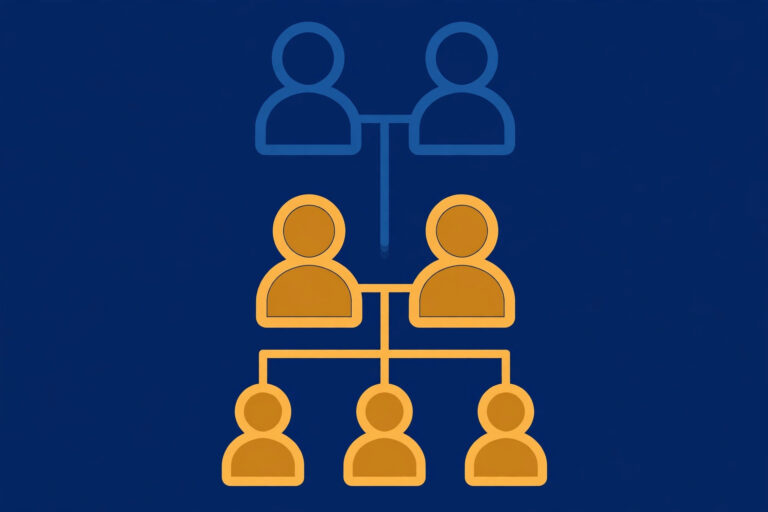
- NADRA family record. The NADRA B-Form links the child to the parents in NADRA’s family tree, which is the basis for the Family Registration Certificate later on.
- CNIC at 18. When the child turns 18, the CNIC application is built on the B-Form record. A correct B-Form makes the CNIC process smooth.
Example — school admission: Ayesha takes her five-year-old son to a school for admission and the school asks for his B-Form. She has never made one. The school gives her a few days, but she must now rush to the Union Council for the birth certificate and then to NADRA. If she had made the B-Form when her son was a baby, admission would have taken ten minutes.
Example — Taleemi Wazaif: A BISP beneficiary mother wants to enrol her eight-year-old daughter for the Taleemi Wazaif stipend. At the enrolment camp, the staff ask for the child’s B-Form. The mother has one, made years ago, so the enrolment takes a few minutes and the stipend starts with the next cycle. Another mother in the same queue has no B-Form for her son and is sent away to make one first — her child’s stipend is delayed by weeks.
Example — a passport for a baby: A father plans to take his two-year-old daughter abroad to visit family. At the passport office he learns that even a two-year-old needs a B-Form, and that for a passport the child’s presence at the NADRA centre is required even under the age of three. Because he applies early, the passport is ready before the travel date.
The lesson from all three examples is the same: make the NADRA B-Form soon after birth, keep it safe, and renew it when NADRA’s age rules require it. The rest of this guide explains exactly how.
NADRA B-Form Documents Required
Before you go to NADRA or open the Pak ID app, gather the documents. A missing paper is the most common reason for a wasted trip, so check this list twice.
- The child’s computerised birth certificate issued by the Union Council, Municipal Committee or Cantonment Board where the child was born. This is the single most important document. NADRA will not issue a B-Form without it. A hospital birth slip alone is not enough — the birth must be registered with the Union Council first, and the computerised certificate obtained from there.
- A parent’s valid CNIC or NICOP. The applying parent must have a valid CNIC or, for overseas Pakistanis, a NICOP. NADRA checks the parent’s identity against its own database.
- Both parents’ CNICs. In practice, NADRA’s record links the child to both parents, so both parents’ CNIC numbers should be in the system. If one parent’s CNIC record is missing or outdated — for example, if the parents’ marriage was never updated in NADRA’s record — the application can stall. If you are unsure, check that your own CNIC details are correct first; our guide to checking your NADRA CNIC number verification online explains how to confirm your record.
- Nikah Nama (marriage certificate). Parents’ marital status should be updated in NADRA’s record. If your marriage is not yet recorded with NADRA, you may be asked for the Nikah Nama so the family link can be established.
- Detailed Birth Certificate or S-1 form — only for a child born abroad. If your child was born outside Pakistan, NADRA asks for the detailed birth certificate or S-1 form instead of a Union Council certificate.
- Guardianship certificate — only if a guardian, not a parent, is applying for the child.
Bring originals, not only photocopies. NADRA staff will check the original documents and return them. Keep photocopies with you as well, in case they are asked for. And if your child’s birth has not yet been registered with the Union Council, do that first — it is a separate step, done at the Union Council office, usually with the hospital birth slip and the parents’ CNICs.
NADRA B-Form Fee 2026
The fee for a NADRA B-Form is small, and as of October 2026 NADRA’s fee page lists only two categories for the Child Registration Certificate. There is no Urgent category for the B-Form.
| Category | Fee | Processing time |
|---|---|---|
| Normal | Rs 50 | 7 days |
| Executive | Rs 500 | 1 day |
| Delivery within Pakistan | Rs 165 | — |
A few things to understand about this fee table. First, the same fee applies whether you are applying for a new B-Form, renewing one, or getting a duplicate of a lost one — the fee is for the certificate, not for the reason you need it. Second, the delivery charge of Rs 165 applies if you want the printed B-Form delivered to your address within Pakistan; if you collect it from the centre, you do not pay delivery. Third, fees can change, so confirm the current fee on NADRA’s official website or at your nearest NADRA centre before you pay, and always keep your payment receipt.
Be careful about agents. Some agents outside NADRA centres offer to make a B-Form for Rs 2,000 or Rs 3,000. The official fee is Rs 50 for normal processing. Never pay an agent a large fee for a document you can get yourself for Rs 50. If anyone demands extra money in NADRA’s name, that is fraud — do not pay, and report it.
One more warning: some older guides and articles online still list different figures — for example, that a normal B-Form is free, or that an urgent B-Form costs Rs 1,150. Those figures do not match NADRA’s fee page as checked in October 2026. This guide follows the fee page figures (Rs 50 normal, Rs 500 executive), but because fee pages can be revised, confirm the amount at your nearest NADRA centre before you travel.
The New Age-Based NADRA B-Form Rules
In 2026 NADRA changed how the B-Form works. Instead of one B-Form that lasts until the child turns 18, the B-Form is now issued in stages, and each stage expires when the child reaches the next age bracket. This is the single biggest change parents need to know about.
| Stage | Age bracket | What changes |
|---|---|---|
| First B-Form | Birth to 3 years | No biometrics are generally required, and the child’s presence is usually not needed — except if the B-Form is for a passport |
| Second B-Form | 3 to 10 years | The child must be present; a photograph and iris scan are taken |
| Third B-Form | 10 to 18 years | The child must be present; a photograph, iris scan and fingerprints are taken |
In practice, this means you renew the B-Form at age 3, again at age 10, and then the child applies for a CNIC at 18. The renewal is the same process as a fresh application — same documents, same fee — but with the child’s biometrics captured at the centre for the older age groups.
Example — renewing at age three: Bilal’s daughter turns three. Her first B-Form, made when she was a baby, has now expired under the new rules. Bilal takes her to the NADRA centre with her birth certificate and his CNIC. His daughter’s photograph and iris scan are taken, and a new B-Form is issued. The whole visit takes under an hour.
Example — a ten-year-old’s fingerprints: A mother takes her ten-year-old son to renew his B-Form. At the centre, his photograph and iris scan are taken, and his fingerprints are captured as well. He is nervous at first, but the staff explain each step, and it takes only a few minutes. His new B-Form is valid until he turns 18, when he will apply for his CNIC.
Why does NADRA do this? Because a baby’s face changes completely by age three, and a three-year-old’s face changes again by ten. A photograph taken at birth is useless for identifying a ten-year-old. The staged B-Form keeps the child’s record current, so the document actually proves who the child is at each age.
How to Apply for a NADRA B-Form
You have two ways to apply: in person at a NADRA Registration Centre, or online through the Pak ID app. Both are official. The in-person route is the one most families use, especially when the child must be present for a photograph or biometrics. The online route is convenient for a fresh application for a young child, where no biometrics are needed.
Step 1: Register the Birth with the Union Council
If you have not already done so, register your child’s birth at the Union Council, Municipal Committee or Cantonment Board where the child was born. Take the hospital birth slip and both parents’ CNICs. The Union Council will issue a computerised birth certificate. Without this certificate, NADRA cannot issue a B-Form, so this step comes first.
Step 2: Check Your Own CNIC Record
Make sure your own CNIC is valid and your details — name spelling, marital status, address — are correct in NADRA’s record. If your marriage is not recorded, or your address has changed, update it first, because the B-Form is built on your record. If you need to correct your details, read our guide on how to update your CNIC, mobile number and address in BISP records — and for NADRA itself, visit your nearest NADRA centre with the supporting documents.
Step 3: Visit the NADRA Registration Centre
Go to your nearest NADRA Registration Centre with the child (if the child is over three, or under three and the B-Form is for a passport), the computerised birth certificate, and the parents’ CNICs. Take a token at the entrance and wait for your turn. NADRA centres can be busy in the morning, so going earlier in the day usually means a shorter wait.
Step 4: Fill in the Application and Give Biometrics
At the counter, the staff will check your documents and fill in the application. For a child over three, the child’s photograph and iris scan are taken; for a child over ten, fingerprints are taken too. The staff will show you the printed form to check — read it carefully. Check the spelling of the child’s name, the date of birth, and the parents’ names. A mistake caught here costs nothing; a mistake found later means a correction application and another visit.
Step 5: Pay the Fee and Keep the Receipt
Pay Rs 50 for normal processing (7 days) or Rs 500 for executive processing (1 day), plus Rs 165 if you want delivery to your home. Keep the receipt safe — it has your tracking number, and you will need it to collect the B-Form or to ask about a delay.
Step 6: Collect the B-Form
Return to the centre on the date given, with your receipt, or wait for delivery if you paid for it. When you receive the B-Form, check it immediately at the counter: name spelling, date of birth, parents’ names, and the registration number. If anything is wrong, point it out before you leave.
Applying Online Through the Pak ID App
NADRA’s Pak ID app — listed as “Pak Identity” on Google Play and the App Store — supports fresh B-Form applications, modification and reprint services. It is the official online route, and it is the right choice when the child is young and no biometrics are needed.
- Download the official Pak ID app from Google Play or the App Store. Only use the app published by NADRA. Never download it from a random website or an APK link sent on WhatsApp.
- Create an account or log in with your CNIC, mobile number and email.
- Select the Child Registration Certificate (CRC) from the services list.
- Fill in the child’s details — name, date of birth, place of birth — exactly as they appear on the computerised birth certificate.
- Upload the documents the app asks for, including the computerised birth certificate and your CNIC.
- Pay the fee through the app’s payment options and keep the digital receipt.
- Collect the B-Form as a PDF in the app, or as a printed copy at a NADRA centre, depending on the option you chose.
A note of caution: older guides say the online route is only for children up to one year old. That was the 2025 rule. NADRA’s current page lists Pak ID as an option for every CRC application, but if the child is over three and biometrics are required, you will still need to visit a centre in person. If the app asks you to visit a centre, that is normal — it is not an error.
NADRA B-Form vs Family Registration Certificate
Many people confuse the B-Form with the Family Registration Certificate (FRC). They are different documents, issued by the same department, for different purposes.
| NADRA B-Form (CRC) | Family Registration Certificate (FRC) | |
|---|---|---|
| Who it is for | One child under 18 | An adult applicant and their family members |
| What it proves | The child’s identity, birth and parentage | The composition of a family — parents, siblings, spouse and children |
| Main uses | School admission, passport, Taleemi Wazaif | Visa applications, immigration, inheritance, sponsorship |
| Biometrics | Photo and iris scan from age 3, fingerprints from age 10 | Usually none — it prints NADRA’s existing family record |
| Where to apply | NADRA centre or Pak ID app | NADRA centre or Pak ID app |
| Fee (2026, as listed) | Rs 50 normal / Rs 500 executive | Rs 1,000 for one family type / Rs 2,000 for both families combined |
The key difference is simple: the B-Form registers one child. The FRC summarises a whole family. And one depends on the other — the FRC can only list family members who are already registered with NADRA, which for children means they must already have a B-Form. So if you plan to apply for an FRC later, making your children’s B-Forms now is the first step.
NADRA B-Form: Common Mistakes to Avoid
- Going to NADRA without the Union Council birth certificate. The hospital slip is not enough. Register the birth first.
- Leaving the child at home when they are over three. The child’s presence is mandatory for a photograph and iris scan. A wasted trip is the result.
- Not checking the form before it is printed. Read the name spelling and date of birth on the screen or printout at the counter. Corrections later take another visit.
- Paying an agent Rs 2,000 or more. The official fee is Rs 50 normal. Agents outside the centre are not NADRA staff.
- Using a fake or lookalike app. Only the official Pak ID app published by NADRA. Never pay through a link sent on WhatsApp or Facebook.
- Forgetting to renew at 3 and 10. Under the new rules the B-Form expires at each age bracket. A school or passport office will not accept an expired B-Form.
- Losing the receipt. Without the tracking number, collecting the B-Form or asking about a delay becomes difficult.
NADRA B-Form and BISP Taleemi Wazaif
For BISP beneficiary families, the B-Form has a direct financial meaning: it is the document used to register children for the Taleemi Wazaif education stipend. The stipend is paid for children enrolled in school, and enrolment requires the child’s B-Form.
If you are a BISP beneficiary and your child is starting school, make the B-Form before the enrolment camp visits your area. Families who arrive at the camp without it are sent away to make one, and the stipend starts late. The same applies at re-survey time: if your family is due for a re-survey, have your children’s B-Forms ready before you go — read our guide to the BISP dynamic survey (NSER) 2026 so you know what to expect. Check your BISP status first — you can check your BISP registration by CNIC or check your status on the 8171 portal — then make sure every school-going child in the family has a valid B-Form.
The Kafaalat payment itself is separate: BISP Kafaalat is Rs 14,500 per quarter for the Oct–Dec 2026 cycle, per the government’s June 2026 announcement, rising to Rs 18,000 planned from January 2027 — check the exact amount for your cycle on the 8171 portal. The B-Form does not affect the Kafaalat payment, but it does unlock the Taleemi Wazaif stipend for your children, so it is worth doing promptly.
NADRA B-Form: Common Questions
What is the NADRA B-Form fee in 2026? As listed on NADRA’s fee page as of October 2026, the fee is Rs 50 for normal processing (7 days) and Rs 500 for executive processing (1 day). There is no Urgent category for the B-Form. Delivery within Pakistan costs Rs 165 extra. Fees can change — confirm the current fee at your nearest NADRA centre before you pay.
What documents are needed for a NADRA B-Form? The child’s computerised birth certificate from the Union Council, Municipal Committee or Cantonment Board, and a parent’s valid CNIC or NICOP. For a child born abroad, a detailed birth certificate or S-1 form is needed instead. Parents’ marital status should be updated in NADRA’s record, so keep the Nikah Nama ready if asked.
Can I apply for a NADRA B-Form online? Yes. NADRA’s Pak ID app supports fresh B-Form applications, modification and reprint services. If the child is over three and biometrics are required, you will still need to visit a NADRA centre in person for the photograph, iris scan and fingerprints.
Does my child need to be present? Children above three years must be present for their photograph and iris scan. Children under three generally do not need to be present — except if the B-Form is for a passport, in which case even a young child must be brought to the centre.
How long is a NADRA B-Form valid? Under NADRA’s 2026 rules, the B-Form is issued in stages and expires when the child reaches the next age bracket — renew at age 3 and again at age 10. At 18, the child applies for a CNIC.
What if I lose the NADRA B-Form? Apply for a duplicate at a NADRA centre or through the Pak ID app. The fee is the same as for a new B-Form. Keep your old B-Form number or your receipt if you have it, as it can speed up the reprint.
Is a NADRA B-Form needed for BISP Taleemi Wazaif? Yes. Children of BISP beneficiary families are registered for the Taleemi Wazaif education stipend using their B-Form. Without it, enrolment cannot be completed.
Before You Go: Your NADRA B-Form Checklist
- ☐ My child’s birth is registered with the Union Council and I have the computerised birth certificate.
- ☐ I have my valid CNIC (and my spouse’s CNIC details are in NADRA’s record).
- ☐ I have the Nikah Nama ready, in case marital status needs to be shown.
- ☐ My child is coming with me (mandatory if over three, or if the B-Form is for a passport).
- ☐ I know the fee for the NADRA B-Form — Rs 50 normal (7 days) or Rs 500 executive (1 day) — and I will confirm it at the centre.
- ☐ I will check the name spelling and date of birth on the form before it is printed.
- ☐ I will keep the payment receipt safe for collection and tracking.
- ☐ I have noted the renewal ages — 3 and 10 — so the B-Form never expires unnoticed.
Conclusion
The NADRA B-Form is a small document with a large job: it is your child’s first official identity, the key to school admission and a passport, and the document that enrols BISP families’ children in the Taleemi Wazaif stipend. The fee is Rs 50 for normal processing, the documents are few, and the process takes one visit if you arrive prepared. The most common reason families struggle is not the process itself — it is arriving without the Union Council birth certificate, leaving an older child at home, or trusting an agent who charges ten times the official fee.
Make the B-Form soon after birth, check every spelling at the counter, keep the receipt, and renew it at ages 3 and 10. If you are a BISP beneficiary, confirm your status on the 8171 portal at 8171.bisp.gov.pk or by checking your BISP registration by CNIC, and make sure every school-going child has a valid B-Form before the next Taleemi Wazaif enrolment. A morning spent at the NADRA centre now saves your child weeks of delay later.