
Ehsaas Tahafuz — Easy Step-by-Step Guide to Free Catastrophic Health Support in 2026
This is not an official BISP or Ehsaas website. This guide is independent, general information about the Ehsaas Tahafuz health support programme. For official information, always use the 8171 portal at 8171.bisp.gov.pk or the BISP helpline on 0800-26477. The programme began as a pilot and its November 2026 status is not fully verified — confirm at the hospital’s Tahafuz desk before you rely on it.
What Is the Ehsaas Tahafuz Programme?
The Ehsaas Tahafuz programme is the Government of Pakistan’s health safety net for the worst medical bills a poor family can face: the one-time, catastrophic hospital costs that can wipe out a family’s savings, force the sale of a home or livestock, or leave a patient untreated because the family simply cannot pay. Its name says what it does — tahafuz means protection — and it protects vulnerable families from the financial shock of a serious illness or accident, by paying for pre-approved treatment packages at participating public hospitals.
The programme was launched as a pilot, and its first facilitation desk was opened at Holy Family Hospital in Rawalpindi in January 2021 by the then Special Assistant to the Prime Minister on Poverty Alleviation, Dr Sania Nishtar. It was described at launch as Pakistan’s first “precision safety net” for health: instead of giving every citizen the same insurance card, it identifies individual patients facing catastrophic costs who are not covered by any other scheme, assesses them through income and poverty profiling, and funds their specific treatment by allocating government and donor funding to that patient. The programme is managed by a Project Management Unit (PMU) in the Poverty Alleviation and Social Safety Division (PASSD).
The core idea is simple, and it is what separates this programme from health insurance. Health insurance pays for whoever is enrolled, for whatever is covered, whether the bill is large or small. Ehsaas Tahafuz pays for the patient in front of the doctor right now, whose bill is so large relative to the family’s income that it would be catastrophic — the word the programme itself uses. A poor family can often manage a small clinic fee or a few days of medicine. What it cannot manage is major surgery, cancer treatment, or a long intensive-care stay. That is the gap this programme was built to fill.
Two things must be said plainly at the start, because they shape everything else in this guide. First, Ehsaas Tahafuz is not a card you carry and not a scheme you join in advance. There is no Tahafuz card, no online registration form to fill in before you fall ill, and no premium to pay. The process starts inside the hospital, when a doctor identifies a patient whose treatment is catastrophically expensive, and the patient or their family visits the hospital’s Tahafuz Facilitation Desk. Second, the programme’s position in November 2026 is not fully verified. It began as a pilot at one hospital, was reported to be expanding to 14 public tertiary hospitals, and has since lived through a change of government and the reorganisation of Ehsaas programmes under BISP. Whether the desk at a particular hospital is still operating, and which treatments it currently funds, must be confirmed at that hospital — this guide tells you exactly how to ask, and what to do if the answer is no.
How Ehsaas Tahafuz Differs From the Sehat Card
Most confusion about this programme comes from mixing it up with the Sehat Card (Sehat Sahulat). They are related — Tahafuz was designed to catch the patients the Sehat Card misses — but they work in opposite ways, and knowing the difference tells you which door to knock on.
| Ehsaas Tahafuz | Sehat Card (Sehat Sahulat / Punjab Health Insurance Program) | |
|---|---|---|
| What it is | One-time funding for catastrophic treatment costs, assessed patient by patient | Health insurance that pays for admitted treatment at empanelled hospitals |
| Who it is for | Poor patients facing costs they cannot bear, who are NOT covered by Sehat Sahulat | Eligible residents — in Punjab, all permanent residents, with your CNIC as your card |
| How you join | No joining in advance; the process starts at the hospital’s Tahafuz desk | No registration in Punjab — your CNIC is your card |
| Where it works | Participating public tertiary hospitals, starting with Holy Family Hospital Rawalpindi | Empanelled hospitals, mainly private in Punjab since June 2025 |
| What it pays | Pre-approved treatment packages for catastrophic costs | Admitted treatment up to yearly family limits, some categories fully free, others 50% |
| What to do first | Go to the Tahafuz Facilitation Desk inside the hospital with your CNIC and medical reports | Take your CNIC to an empanelled hospital and confirm cover before admission |
| Status in Nov 2026 | Pilot-origin programme; confirm the desk is operating at your hospital | Running in Punjab; see our Sehat Card guide |
The rule of thumb is this: if you have Sehat Card cover for your treatment, use the Sehat Card — Tahafuz is for patients who do not have that cover, or who are in a hospital that is not enrolled in the Sehat Sahulat programme. The pilot’s own description says exactly that: it identifies patients facing catastrophic health expenditures “who are not covered by Sehat Sahulat Card or are in hospital not enrolled in Sehat Sahulat programme”. So the first question at any hospital is always: does the Sehat Card cover this treatment here? If the answer is yes, that is your route. If the answer is no, the Tahafuz desk is your next question. Our Sehat Card 2026 guide explains the card’s rules, limits, and the hospitals where it works, so you can check that first.
Example — the patient the Sehat Card could not help: A daily-wage worker in Rawalpindi needs major orthopaedic surgery after an accident. He is admitted to Holy Family Hospital, a public hospital. The Sehat Card does not cover his treatment there in the way it would at an empanelled private hospital. A doctor refers him to the hospital’s Tahafuz Facilitation Desk, where verifiers check his income and poverty profile against the system. He is found eligible, and the cost of his pre-approved treatment package is funded. Without that desk, his family would have had to borrow the entire cost or take him home untreated.
Example — the patient who should use the Sehat Card instead: A woman in Lahore needs a planned operation that is covered by the Sehat Card at an empanelled private hospital near her. Her family first hears about Tahafuz and travels to a public hospital to ask for it — but her treatment is already covered by the Sehat Card, so the Tahafuz route is the wrong one for her. She is directed back to the Sehat Card hospital, where her treatment is arranged. Knowing which programme fits your situation saves a wasted journey.
What Does Ehsaas Tahafuz Cover?
According to the programme’s description as reported in 2025 guides and in the launch reporting, Ehsaas Tahafuz covers around 900 pre-approved treatment packages across 21 medical departments. A “pre-approved treatment package” means a defined treatment with an agreed cost — a specific surgery, a course of chemotherapy, a dialysis package — rather than an open-ended promise to pay any bill. The hospital and the programme agree in advance what each package includes and what it costs, and funding is allocated for that package when a patient is found eligible.
The departments and treatments named in the sources include cardiac surgery and interventions, neurosurgery, orthopaedic trauma surgery, cancer treatment including chemotherapy, radiotherapy and surgery, dialysis and renal treatment, intensive care for critical illness, and maternal and child emergency care. In the original pilot phase at Holy Family Hospital, the coverage was narrower: financial assistance for catastrophic health costs related to gastroenterology, orthopaedics, and gynaecology only. That pilot list is a fact from the January 2021 launch reporting, and it matters because it shows how the programme started small — three departments at one hospital — before the reported expansion to 900 packages across 21 departments and 14 hospitals.
What is not covered is equally important. The programme does not pay for routine outpatient visits, ordinary medicines you take at home, or treatment that another scheme already covers. It is for one-time, high-cost, in-hospital treatment — the catastrophic event, not the everyday cost of being ill. It also does not pay you cash: the funding goes to the treatment, through the hospital, not into a patient’s bank account. Anyone who offers you “Tahafuz cash” in exchange for a fee or your bank details is committing fraud.
All of the coverage figures above — the 900 packages, the 21 departments, the 14 hospitals — come from secondary sources and from the programme’s own expansion announcements as reported, not from a verified official list checked in November 2026. They are presented here as reported, and the body of this guide repeatedly tells you to confirm the current position at the hospital desk, because a package list from 2022 may not match the desk’s list in 2026. The safest question to ask at the desk is not “how many packages do you cover?” but “is my treatment covered, and what do I need to show you?”
Who Qualifies for Ehsaas Tahafuz?
Eligibility for Ehsaas Tahafuz is decided in the hospital, not online and not in advance. It is based on three things, as described in the launch reporting and in later guides: your income and poverty profile, your medical need, and whether any other scheme already covers you.
- Low income and poverty profiling. The patient must come from a low-income household, below or near the national poverty line. Eligibility is determined using income and poverty profiling, and by assessing how catastrophic the expense is relative to the family’s income. A bill that is manageable for a middle-income family can be catastrophic for a daily-wage family, and the system is designed to recognise that difference. The assessment uses the poverty data the government already holds — the NSER survey record — so a family that has been surveyed is easier to assess than one that has not.
- Genuine medical need. The patient must require emergency or life-saving treatment that the family cannot afford — a major surgery, cancer treatment, trauma care, or another high-cost intervention. The doctor’s assessment is part of the process: the treatment must be one the hospital has identified as necessary and as falling within a pre-approved package.
- No other cover. Patients who already have Sehat Sahulat Card coverage for the treatment are generally directed to that scheme. Tahafuz is for patients without insurance coverage, or in hospitals not enrolled in Sehat Sahulat. If you are covered elsewhere, say so honestly — the desk will direct you to the right scheme, and pretending otherwise only wastes everyone’s time, including yours.
Some guides also list exclusions that are worth knowing, although they are hedged here because they come from secondary sources: government servants and government pensioners are generally not selected, and people covered by other health insurance may not benefit. Do not treat those as confirmed rules — ask at the desk. What is confirmed from the launch reporting is the method: income, poverty profiling, and the catastrophic size of the expense relative to income.
Example — a family assessed by the system: A widow’s son needs emergency surgery. At the Tahafuz desk she shows her CNIC, and the verifiers check her household against the poverty database. Her NSER record shows a low PMT score, her income is daily wages, and the surgery’s cost is many times her monthly income. The system finds her eligible, and funding for the pre-approved package is allocated. She did not fill in a form at home or pay anyone — the assessment happened at the hospital, from data the government already held.
If your family has not yet been surveyed under NSER, that can slow an assessment down, because the poverty profile is harder to verify. If you are a BISP beneficiary, your record already exists — you can check your BISP status by CNIC online to confirm it. If you have never been surveyed, read our guide to the BISP dynamic survey (NSER) 2026 and visit your nearest BISP office to get surveyed. The PMT cut-off for BISP is 32, or 37 if a household member has a disability — that is the BISP figure, not a Tahafuz figure, and this guide does not claim Tahafuz uses the same cut-off, because no source confirmed that.
How to Apply for Ehsaas Tahafuz — Step by Step
There is no online application form for Ehsaas Tahafuz that this guide can point you to with confidence. Some secondary guides claim you can register on a website or send your CNIC by SMS to 8500 to check eligibility. The 8500 number is associated with the Sehat Sahulat programme’s eligibility check, and the websites named in those guides — including one claiming to be “ehsaas tahafuz.pk” — were not verified as official in this session. This guide therefore does not tell you to use them. The process below follows the launch reporting, which is the most reliable source available: the process starts in the hospital.
Step 1: Get Admitted to a Participating Public Hospital
The programme works through public tertiary hospitals — the large government hospitals that handle specialist and emergency care. The pilot hospital was Holy Family Hospital in Rawalpindi, and the expansion as reported covered 14 public tertiary hospitals across the provinces and federating units. Go to the hospital where the treatment is available, and get examined or referred by a doctor there. If you are unsure which hospital offers the treatment, ask at the nearest large government hospital or call the BISP helpline on 0800-26477 (toll-free, Monday to Friday, 9:00 am to 5:00 pm) and ask where to go.
Step 2: Ask for the Tahafuz Facilitation Desk
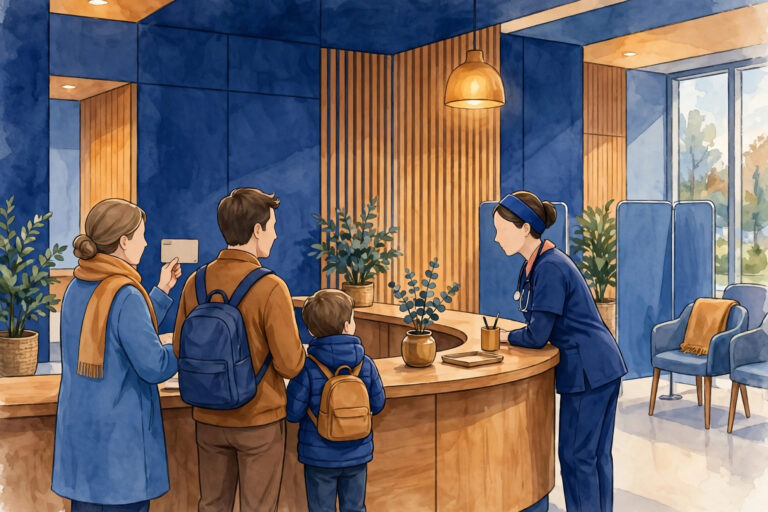
Inside the hospital, ask for the Tahafuz Facilitation Desk — or the Tahafuz desk, if that is what staff call it. At the pilot hospital, the desk was opened specifically to identify eligible patients, and verifiers were deployed there to target deserving patients. If the hospital has no desk, or the staff say the programme is not running there, do not argue — ask which hospital in your area does have a desk, and ask the Sehat Card question as well, because your treatment may be covered that way instead.
Step 3: Bring Your Documents
Take the patient’s CNIC and the CNIC of the attendant or guardian, your medical reports, lab results, and any referral letter from the doctor. Bring proof of income if you have it — a salary slip, a BISP card, or anything that shows the household’s poverty position — and your poverty score details if you know them. The desk will check the patient’s CNIC against the poverty database, so a valid CNIC is essential. If the patient’s CNIC has expired, renew it first — our guide to NADRA CNIC verification explains how to check your record, and a valid card is also what keeps BISP payments flowing.
Step 4: The Assessment
The verifiers at the desk assess the patient using income, poverty profiling, and the size of the expense relative to income. This is the “precision safety net” idea: the assessment is about this patient, this bill, and this family’s ability to pay. You may be asked questions about your household income, your work, and your assets. Answer honestly and completely — an honest assessment is faster than one that has to be re-checked.
Step 5: Approval and Funding
If the patient is found eligible, funding is allocated for the pre-approved treatment package — the programme’s own launch description says eligible patients are “provided funding by allocating donations to the patient”. The funding comes from the government and from independent donors, which is why the programme’s budget can be limited: guides note that the programme has faced budget constraints in recent years, and that applying early in the financial year increases the chance of full coverage. That last point is as reported in secondary guides and is hedged here accordingly. If funding is approved, the treatment goes ahead at the hospital; if it is not approved, ask the desk staff what the reason was and whether another scheme — the Sehat Card, a hospital welfare fund, or a charity — can help instead.
Which Hospitals Offer Ehsaas Tahafuz?
The honest answer is: the pilot hospital is confirmed, and the rest is reported, not verified for November 2026. Holy Family Hospital in Rawalpindi is the confirmed pilot site — its Tahafuz Facilitation Desk was opened on 27 January 2021, and the launch reporting names it explicitly. The expansion to 14 public tertiary hospitals across all provinces and federating units was announced as the programme was being expanded in early 2022, and the hospital empanelment portal for the programme was reported to have opened on 31 March 2022. Some secondary guides name other hospitals, including the Pakistan Institute of Medical Sciences (PIMS) in Islamabad, as participating — but a full, current, verified list of 14 hospitals was not found in this session, and this guide will not invent one.
That means the practical advice is simple and must be followed. Do not travel to a hospital because a guide on the internet listed it as a Tahafuz hospital. Call the hospital first, or call the BISP helpline on 0800-26477 and ask, or go to the nearest large government hospital and ask at the information desk whether a Tahafuz desk is operating there and which hospital you should go to if it is not. A wasted journey to a hospital that has no desk costs a sick patient time and money they cannot afford, and it is the single most avoidable mistake in this whole process.
It is also worth understanding why a hospital list is hard to pin down. The programme was funded by the government and by independent donors, and donor-funded programmes change with their funding. A hospital that was empanelled in 2022 may not be empanelled in 2026, and a hospital that was not empanelled then may have joined since. The empanelment portal reported in 2022 was the mechanism for adding hospitals, and its current status was not verified in this session. Treat every hospital claim about this programme as something to confirm on the day you need it.
Ehsaas Tahafuz and Your BISP Record
For BISP beneficiary families, this programme connects to the safety net in a practical way: the poverty assessment at the Tahafuz desk is easier and faster when the government already has your household’s data. A family that has been surveyed under NSER, has a PMT score on record, and is receiving Kafaalat has a verifiable poverty profile, and the desk’s verifiers can check it against the system. A family with no record at all is harder to assess, and the process takes longer.
That is one more reason to keep your BISP record current. If your household has never been surveyed, read our guide to the BISP dynamic survey (NSER) 2026 and get surveyed. If your status is unclear, check your BISP status by CNIC online or read the full programme guide in Ehsaas Program 8171 — registration, eligibility & CNIC check. And if you are a mother with young children, the Nashonuma programme offers nutrition support for pregnant women and children under two — read our guides to the Benazir Nashonuma Programme and the Ehsaas Nashonuma Programme — because a healthy pregnancy and a healthy child are the best protection against the hospital bill this programme exists to pay.
The Kafaalat payment itself is separate from Tahafuz: BISP Kafaalat is Rs 14,500 per quarter for the Oct–Dec 2026 cycle, per the government’s June 2026 announcement, rising to Rs 18,000 planned from January 2027 — check the exact amount for your cycle on the 8171 portal. Tahafuz does not pay you cash and does not change your Kafaalat amount. What it can do is stop a hospital bill from destroying the household that the Kafaalat payment is trying to support. The two programmes protect the same family in different ways: one pays a regular quarterly amount, the other steps in for the one bill that would break everything.
Example — the bill that would have broken the family: A family in Rawalpindi lives on daily wages and a Kafaalat payment. The father needs major surgery costing many months of the family’s total income. The family has no savings, no property to sell, and no insurance. At Holy Family Hospital, the Tahafuz desk assesses him, finds him eligible, and the treatment package is funded. The family keeps its home, keeps the children in school, and the Kafaalat payments continue as before. Without the desk, the same bill would have meant debt for years.
Scams to Watch Out For
Because the programme deals with desperate families and large sums, it attracts fraudsters. The rules below will protect you.
- There is no Tahafuz card, no online registration fee, and no premium. Anyone selling you a “Tahafuz card” or asking for a registration fee is a fraudster.
- Do not pay anyone to get your case approved at a hospital desk. The assessment is done by the hospital’s verifiers, free of charge. An agent who promises approval for money cannot deliver it.
- Do not trust a website or app that claims to be the official Tahafuz registration portal. No official online registration route was verified in this session. The process starts at the hospital desk, not on a website.
- Never share your CNIC number, bank details, or fingerprints with someone who promises you Tahafuz cash. The programme funds treatment through the hospital, not cash into your account.
- Real BISP messages come only from 8171. A message from any other number promising Tahafuz money is fake. Read our guide on BISP scam messages and fake agents to learn the common tricks, and if you are ever unsure, call the BISP helpline on 0800-26477.
If someone at or near a hospital demands money in the programme’s name, refuse, note their name if you can, and report it to the hospital administration and on the BISP helpline. A genuine official will never mind being checked.
If the Tahafuz Desk Cannot Help You
Sometimes the answer at the desk is no: the hospital has no desk, the treatment is not in a pre-approved package, the funding for the year is exhausted, or the patient is found ineligible. A “no” is not the end of the road. Ask the desk staff, or the hospital’s social welfare office, three questions before you leave: Is this treatment covered by the Sehat Card at another hospital? Is there a hospital welfare fund, a zakat fund, or a charity that helps with this treatment? And which hospital should I go to next? Write the answers down.
Other routes worth checking: the Sehat Card at an empanelled hospital, for the treatments it covers; the hospital’s own welfare or zakat fund, which many large government hospitals run; and established charities that fund medical treatment. If your BISP payment has been delayed and you were counting on it for medical costs, ask at the BISP office or on the helpline what to do. And if the problem is a routine health cost rather than a catastrophic one, the Sehat Card guide is the place to start, not Tahafuz — Tahafuz is for the one bill that would break a family, and using the right programme for the right problem is what makes the safety net work.
Example — the “no” that led to a “yes” somewhere else: A patient is told at one hospital that the Tahafuz desk there is not operating. Instead of going home, the family asks which hospital has a working desk, travels there with the medical reports, and is assessed the same week. The first hospital’s “no” was about that hospital, not about the patient — and asking the next question made the difference.
Your Hospital Visit Checklist
- I know which treatment is needed and I have the doctor’s referral and medical reports.
- I have the patient’s CNIC and the attendant’s CNIC, plus proof of income if I have it.
- I have asked whether the Sehat Card covers this treatment — Tahafuz is for patients it does not cover.
- I have confirmed the hospital has a working Tahafuz Facilitation Desk before travelling.
- I know the nearest alternative hospital if this one has no desk.
- I have not paid anyone for registration, a card, or approval.
- I have not shared my CNIC number or bank details with anyone promising Tahafuz cash.
- I have the BISP helpline number saved: 0800-26477 (Mon–Fri, 9:00 am–5:00 pm, toll-free).
Common Questions
What is Ehsaas Tahafuz?
Ehsaas Tahafuz is the Government of Pakistan’s health safety net for catastrophic hospital costs: it funds pre-approved treatment packages for poor patients at participating public hospitals, assessed patient by patient at the hospital’s Tahafuz Facilitation Desk. It is not a card, not insurance, and not a cash payment.
Who qualifies for Ehsaas Tahafuz?
Low-income patients who need emergency or life-saving treatment they cannot afford, and who are not already covered by the Sehat Sahulat Card for that treatment. Eligibility is assessed at the hospital using income, poverty profiling, and how catastrophic the expense is relative to the family’s income.
How do I apply for Ehsaas Tahafuz?
There is no verified online application. The process starts in the hospital: get admitted or referred at a participating public hospital, go to the Tahafuz Facilitation Desk with your CNIC and medical reports, and let the verifiers assess you. Do not trust websites or apps claiming to register you online.
Which hospitals offer Ehsaas Tahafuz?
Holy Family Hospital in Rawalpindi is the confirmed pilot site, and the programme was reported to be expanding to 14 public tertiary hospitals. A full current list was not verified for November 2026 — confirm the desk is operating at your hospital before you travel.
What treatments does Ehsaas Tahafuz cover?
As reported, around 900 pre-approved treatment packages across 21 departments, including cardiac surgery, neurosurgery, orthopaedic trauma, cancer treatment, dialysis, and intensive care. The pilot phase covered gastroenterology, orthopaedics, and gynaecology only. Confirm whether your treatment is covered at the desk.
Is Ehsaas Tahafuz still running in 2026?
Its November 2026 status is not fully verified in this session. It began as a pilot in 2021, was reported to be expanding in 2022, and has since lived through a change of government and the reorganisation of Ehsaas programmes under BISP. Confirm at the hospital desk or on 0800-26477 before you rely on it.
Does Ehsaas Tahafuz pay cash to patients?
No. Funding is allocated for the treatment package through the hospital. Anyone offering you Tahafuz cash for a fee is committing fraud.
Can I check my eligibility by SMS to 8500?
The 8500 number is associated with the Sehat Sahulat programme’s eligibility check, not with a verified Tahafuz registration route. Do not rely on it for Tahafuz; the assessment happens at the hospital desk.
Conclusion
Ehsaas Tahafuz is a powerful idea with an uncertain present: a safety net built for the single worst bill a poor family can face, assessed patient by patient, at a desk inside a public hospital, funded by the government and by donors. When it works, it is the difference between a family keeping its home and losing everything to a hospital bill. But it began as a pilot at one hospital, its expansion was reported rather than recently verified, and its November 2026 position must be confirmed at the hospital where you need it — not assumed from an old guide.
So use this guide as a map of the questions to ask, not as a promise. Ask first whether the Sehat Card covers your treatment. If it does not, go to a participating public hospital, ask for the Tahafuz Facilitation Desk, take your CNIC and your medical reports, and let the verifiers assess you. Never pay anyone for registration, a card, or approval, and never trust a website that claims to register you online. And keep your BISP record current, because a family the system already knows is a family the desk can assess quickly. Check your status on the 8171 portal at 8171.bisp.gov.pk, keep your CNIC valid, and keep the helpline number — 0800-26477 — saved. The safety net works best for the families who know which door to knock on, and now you know which doors these are.