
Punjab Solar Tubewell Scheme 2026 — Easy Step-by-Step Guide to Subsidy, Eligibility & How to Apply
This is not an official Government of Punjab or BISP website. This guide is independent, general information about the Punjab solar tubewell scheme. For official information, always check the CM Solarization portal at cmstp.punjab.gov.pk or the Punjab Agriculture Department at agriculture.punjab.gov.pk before you apply or pay anything.
What Is the Punjab Solar Tubewell Scheme?
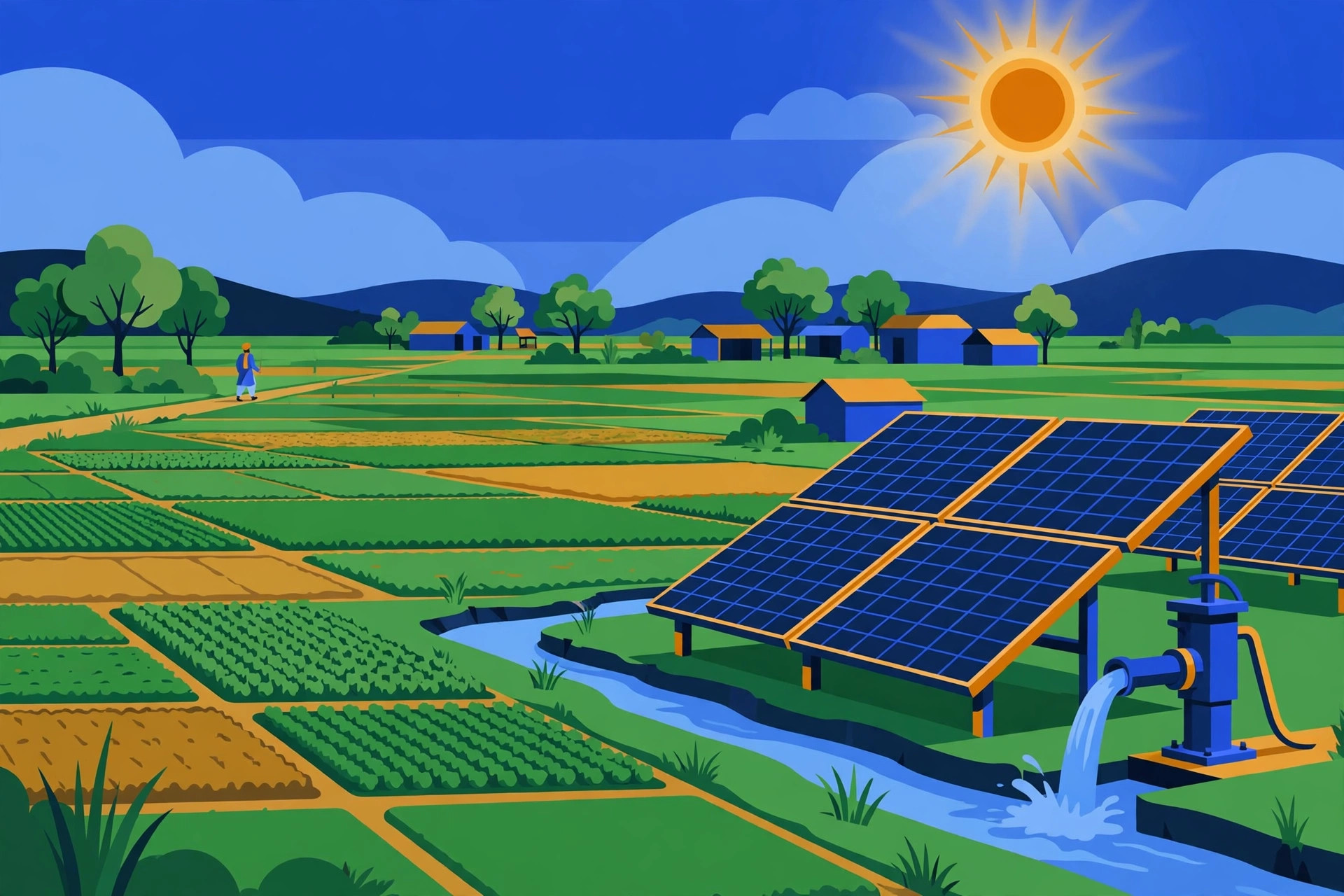
The Punjab solar tubewell scheme is the Government of Punjab’s programme to convert existing diesel and electric tubewells to solar power, so that farmers can run their irrigation without paying for diesel every week or facing high electricity bills and load shedding. Its official name is the CM Punjab Solarization for Agricultural Tubewells, also called the CM Solarization Program for Agri Tubewells, and it was launched under Chief Minister Maryam Nawaz Sharif. The idea is simple: the sun that already shines on a farmer’s fields can also power the pump that waters them, and the government pays a large share of the cost of making that switch.
The Punjab solar tubewell scheme matters because irrigation is one of the biggest running costs on a farm. A diesel tubewell burns expensive fuel every time it runs, and the price of diesel keeps rising. An electric tubewell depends on the grid, on the electricity tariff, and on hours of supply that do not always match the hours a crop needs water. A solar tubewell runs on sunlight during the day, which is exactly when most irrigation happens, and once it is installed, the daily cost of running it is close to zero. For a farmer with a few acres, that difference can decide whether a crop season ends in profit or in loss.
Under this scheme, the government gives a subsidy that depends on the size of the solar system. For a 10 kW system the reported subsidy is Rs 500,000, for a 15 kW system it is Rs 750,000, and for a 20 kW system it is Rs 1,000,000. These figures have been reported consistently, and the system size depends on the tubewell and the land it serves.
The farmer pays the remaining share, but the exact split is reported differently — some sources describe a 25% upfront farmer share with the remaining 75% as a subsidy-backed interest-free instalment plan through the Bank of Punjab, while others describe a 20% farmer share with an 80% subsidy. Both versions are explained honestly in the subsidy section below.
Example — the diesel bill that ate the profit: A farmer in Faisalabad district runs a diesel tubewell on five acres of wheat and vegetables. Every season he spends tens of thousands of rupees on diesel, and when the diesel price rises mid-season, his whole budget breaks. He hears about the Punjab solar tubewell scheme from a neighbour, checks that his tubewell and his one acre of land qualify, and applies through the portal. If he is selected in the balloting, his pump runs on sunlight instead of diesel, and the money he used to spend on fuel stays in his pocket.
Example — the electric tubewell that stops at the wrong hour: A farmer near Multan has an electric tubewell, but the power goes off for hours at a time, often exactly when his cotton needs water. He delays irrigation, the crop suffers, and his electricity bill still arrives in full. The Punjab solar tubewell scheme offers him a way out: a solar system that runs during the day without waiting for the grid. He applies online, keeps his Fard-e-Malakiat and his bills ready, and waits for the district balloting result.
Who Can Apply for the Punjab Solar Tubewell Scheme?
This scheme is for farmers in Punjab who already own a working tubewell and agricultural land. The eligibility conditions reported for the scheme are clear, and you should check yourself against each one before you spend time applying. First, you must be a resident of Punjab with a valid CNIC and a Punjab domicile. Second, you must own at least one acre of agricultural land, and you must be able to prove it with a Fard-e-Malakiat, the official record of your land ownership. Third, you must own a working diesel or electric tubewell — this scheme converts an existing tubewell to solar, so it does not give you a tubewell from scratch.
There are further conditions that catch many applicants out. If your tubewell is electric, the reported rule is that its three-phase connection must have been installed on or before 30 October 2024. A connection installed after that date is reported as not eligible, so check the date on your connection record before applying. You must also not be a bill defaulter — unpaid electricity bills or outstanding dues against your connection can disqualify you. You will also need a Family Registration Certificate (FRC) from NADRA, because the scheme allows one system per family, and the FRC is how the department checks that.
The one-system-per-family rule is important. If two brothers in one family each apply for a system on different pieces of land, only one application can succeed, because the limit is per family, not per person or per tubewell. Families should therefore decide in advance which member will apply and on which tubewell, rather than submitting several applications and having them all questioned. The scheme is aimed at spreading the subsidy fairly across as many farming families as possible, and the family limit is how that fairness is enforced.
Selection under this scheme is done by district-level balloting, which is a lottery. Applying does not guarantee selection, because the number of applicants is far larger than the number of systems available. Reports say more than 530,000 farmers applied and about 385,000 were declared eligible, while the number of systems in the scheme is reported in the thousands, not the hundreds of thousands. That gap is the reason for the lottery: every eligible farmer gets a chance, but not every eligible farmer gets a system. If you are not selected in one round, keep your documents ready, because further phases have been reported.
Punjab Solar Tubewell Scheme Subsidy 2026 — Full Table
The subsidy under this scheme depends on the size of the solar system installed on your tubewell. The table below brings the reported figures together. These subsidy amounts have been reported consistently, but the farmer’s share of the total cost is reported differently in different sources, so the table shows the subsidy and explains the share separately.
| System size | Reported government subsidy | What it suits |
|---|---|---|
| 10 kW solar system | Rs 500,000 | Smaller tubewells and smaller landholdings |
| 15 kW solar system | Rs 750,000 | Medium tubewells and medium landholdings |
| 20 kW solar system | Rs 1,000,000 | Larger tubewells and larger landholdings |
The right system size for your tubewell depends on the pump’s power, the depth of your water, and the area you irrigate. A system that is too small will not run your pump properly, and a system that is too large wastes subsidy. The department and the installing company assess this when your application is processed, so do not choose a size on your own and do not let anyone sell you a bigger system than you need.
The farmer’s share is where the reports differ, and you deserve to know that plainly. Some reports describe the arrangement as 25% paid upfront by the farmer, with the remaining 75% covered by a subsidy-backed interest-free instalment plan arranged through the Bank of Punjab. Other reports describe it as a 20% farmer share with an 80% government subsidy.
Both versions may reflect different phases or different ways of describing the same arrangement, and the only safe step is to check the current terms on the portal at cmstp.punjab.gov.pk or by calling the helpline on 0800-17000 between 8 AM and 8 PM before you commit any money. If you are comparing this scheme with other support for farmers, our guide to the PM Kisan Card explains a different kind of farm support, and our guide to the Green Tractor Scheme covers subsidised machinery. Never pay the farmer’s share to an agent or a middleman — payments go through the official channel only.
Documents You Need for the Punjab Solar Tubewell Scheme
Before you open the portal, gather your documents, because an application with missing papers is the most common reason for rejection. You need your valid CNIC and your Punjab domicile certificate. You need your Fard-e-Malakiat, the land record proving you own at least one acre of agricultural land, and it should be recent — an old, torn, or outdated Fard can cause delays, so get a fresh copy from the land record centre if yours is old. You also need your Family Registration Certificate from NADRA, which proves the members of your family and supports the one-system-per-family rule.
For the tubewell itself, keep the record of your connection. If it is an electric tubewell, keep your electricity bills and the record showing when your three-phase connection was installed, because the reported cut-off is 30 October 2024. If it is a diesel tubewell, keep any record of the tubewell and its ownership. You should also keep a recent photograph and your active mobile number, because the portal and the helpline will contact you on that number. If your mobile number changes after you apply, update it with the department immediately, or you may miss the balloting result.
How to Apply for the Punjab Solar Tubewell Scheme — Step by Step
Applying is done online through the official portal. Follow these steps.
Step 1: Check That You Meet Every Condition
Before you apply, go through the eligibility list in this guide one by one. Are you a Punjab resident with a CNIC and domicile? Do you own at least one acre of agricultural land? Do you own a working diesel or electric tubewell? Is your electric connection dated on or before 30 October 2024? Are your bills paid up? If the answer to any of these is no, fix that problem first. An application that fails eligibility wastes your time and a place in the process.
Step 2: Gather Your Documents
Collect your CNIC, domicile, Fard-e-Malakiat, FRC, tubewell and electricity records, and a recent photograph. Check that the name and CNIC number are the same on every document. A small mismatch — a different spelling of your name on the Fard and on your CNIC — can cause a rejection, so correct mismatches at the land record office or NADRA before you apply, not after.
Step 3: Open the Official Portal
Go to the official portal at cmstp.punjab.gov.pk. Make sure the address is exactly that — the scheme runs only on .gov.pk websites. Never enter your CNIC number on any other website that claims to register you for the Punjab solar tubewell scheme, and never pay anyone who promises to register you from a shop or an office that is not official.
Step 4: Fill in the Application Form
Create your account or log in, and fill in the application form with your personal details, your land details, and your tubewell details. Enter the system size you are applying for only if the form asks you to choose; otherwise, leave the sizing to the department’s assessment. Upload clear scans or photographs of your documents. A blurry photograph of a Fard is a common reason for an application being sent back, so check each upload before you submit.
Step 5: Submit, Note Your Tracking Number, and Wait for Balloting
Submit the form and save your application or tracking number. Selection is by district-level balloting, so there is nothing more to do except wait for the result and answer your phone when the department calls. If you are selected, the department will tell you the next steps, including the farmer’s share payment through the official bank channel and the installation schedule. If you are not selected, keep your documents ready for the next phase. Phase 2 registration has been reported as open or expected in 2026 updates, but that is a report, not a certainty — check the portal itself for the current status rather than trusting a social media post.
Punjab Solar Tubewell Scheme Compared With Other Punjab Support
Farmers often mix up this scheme with other Punjab programmes, because several of them involve subsidies and online portals. This table separates them.
| Punjab solar tubewell scheme | CM Punjab solar panel scheme | Green Tractor Scheme | |
|---|---|---|---|
| What it gives | Subsidy to convert a tubewell to solar | Solar panels for households | Subsidised tractors for farmers |
| Who it is for | Farmers with a tubewell and land | Households, mainly domestic users | Farmers needing machinery |
| Subsidy | Rs 500,000–1,000,000 by system size | Reported separately | Reported separately |
| Where to apply | cmstp.punjab.gov.pk | Reported portal | Reported portal |
| Selection | District balloting | Reported separately | Balloting |
If you are a farmer, you may qualify for more than one of these, but each has its own application and its own portal, so apply to each separately and do not assume that selection in one means selection in another. For the household solar programme, read our guide to the CM Punjab solar panel scheme, and for current costs, read our guide to solar panel prices in Punjab. The Bank of Punjab car loan scheme is a different Bank of Punjab product and has nothing to do with tubewells, but it shows how the bank’s instalment products work in general.
Common Problems in the Punjab Solar Tubewell Scheme — and What to Do
Your Application Is Rejected for a Missing Document
This is the most common problem, and it is also the most avoidable. Read the document list in this guide before you apply, and upload every document the form asks for. If your application is sent back, read the reason carefully, fix exactly that document, and resubmit if the portal allows it. Do not submit a fresh application with the same missing document — it will be rejected again.
Your Three-Phase Connection Date Is After 30 October 2024
For electric tubewells, the reported rule is that the connection must have been installed on or before 30 October 2024. If your connection is newer than that, your application may be rejected under the current rules. Do not pay anyone who promises to change the date on your record. Instead, watch for announcements about later phases, because the rules of a new phase can differ from the rules of the first one.
You Are Not Selected in the Balloting
With more than 530,000 applicants reported and only thousands of systems, most eligible farmers will not be selected in the first round. That is not a reflection on your application — it is arithmetic. Keep your documents current, keep your phone number updated, and check the portal for the next phase. Phase 2 has been reported as open or expected, but confirm it on cmstp.punjab.gov.pk itself before you travel anywhere or pay anything.
Someone Asks You for Money to Guarantee Selection
No one can guarantee selection in a lottery, and anyone who asks for money to guarantee it is running a scam. Selection is by district balloting, and the farmer’s share is paid only through the official bank channel after selection. If an agent asks for an advance fee, a registration fee, or a “balloting fee”, refuse, and report the number to the helpline on 0800-17000.
One more practical point: keep photocopies of everything you submit, and note down your application or tracking number the moment you receive it. Farmers who lose their tracking number struggle to check their status later, and a single phone call to the helpline is much easier when you can quote your number. Keep your own documents in one folder at home so nothing is lost, and remember that farming families with students should also look at the Punjab Honhaar Scholarship 2026, which supports higher education for Punjab students.
Your Punjab Solar Tubewell Scheme Checklist
- I am a Punjab resident with a valid CNIC and Punjab domicile.
- I own at least one acre of agricultural land and have a recent Fard-e-Malakiat.
- I own a working diesel or electric tubewell.
- My electric three-phase connection, if any, was installed on or before 30 October 2024.
- I am not a bill defaulter, and my electricity bills are paid up.
- I have my FRC from NADRA, for the one-system-per-family rule.
- I am applying only on the official portal at cmstp.punjab.gov.pk — no agent, no other website.
- I have saved my application or tracking number, and I know selection is by district balloting.
Common Questions
What is the Punjab solar tubewell scheme? It is the Government of Punjab’s programme, officially the CM Punjab Solarization for Agricultural Tubewells, that converts existing diesel and electric tubewells to solar power. The government gives a subsidy of Rs 500,000 for a 10 kW system, Rs 750,000 for a 15 kW system, or Rs 1,000,000 for a 20 kW system, and selection is by district-level balloting.
Who can apply for the Punjab solar tubewell scheme? A Punjab resident with a valid CNIC and Punjab domicile who owns at least one acre of agricultural land and a working diesel or electric tubewell. For electric tubewells, the three-phase connection must have been installed on or before 30 October 2024, and the applicant must not be a bill defaulter. A Fard-e-Malakiat and an FRC are required, and only one system is allowed per family.
How much subsidy does this scheme give? The reported subsidy is Rs 500,000 for a 10 kW system, Rs 750,000 for a 15 kW system, and Rs 1,000,000 for a 20 kW system. The farmer’s share is reported differently in different sources — some say 25% upfront with 75% as interest-free instalments through the Bank of Punjab, others say a 20% farmer share with an 80% subsidy — so confirm the current terms on the portal before you pay.
How do I apply for this scheme? Apply online at the official portal, cmstp.punjab.gov.pk. Fill in the form with your personal, land, and tubewell details, upload your documents, and save your tracking number. Selection is by district balloting, and the helpline is 0800-17000 from 8 AM to 8 PM.
Is Phase 2 of this scheme open? Phase 2 registration has been reported as open or expected in 2026 updates, but that is a report, not a confirmed fact. Check the portal at cmstp.punjab.gov.pk itself for the current status before you apply or travel anywhere.
How many tubewells does this scheme cover? The scale is reported differently in different sources: one report gives 7,000 tubewells at a cost of Rs 9,887.42 million over 2024-25 and 2025-26, other reports give 8,000 in the first phase, and some 2026 updates mention 10,000 or more. More than 530,000 farmers are reported to have applied, with about 385,000 declared eligible. Treat the scale as reported, not confirmed.
Can I apply if my tubewell is new or my connection is new? The scheme converts an existing tubewell, so you must already own a working tubewell. For electric tubewells, the reported rule requires a three-phase connection installed on or before 30 October 2024, so a newer connection may not qualify under the current rules.
Does this scheme charge a fee to apply? There is no reported application fee, and no one should ask you for a registration or balloting fee. The farmer’s share is paid only after selection, through the official bank channel. Anyone who asks for money to guarantee selection is running a scam.
Conclusion
The Punjab solar tubewell scheme is one of the most useful programmes available to Punjab’s farmers, because it attacks the single biggest running cost on the farm: the energy that powers irrigation. A solar tubewell frees you from diesel prices and from power cuts, and the subsidy — Rs 500,000 to Rs 1,000,000 depending on system size — makes the switch affordable for families that could never pay for it alone. The scheme is not a gift for everyone who applies, because balloting decides who is selected, but it is a genuine chance, and the only cost of taking that chance is an honest application.
Check your eligibility against the list in this guide, gather your Fard-e-Malakiat, your FRC, and your tubewell records, and apply only on the official portal at cmstp.punjab.gov.pk. Confirm the farmer’s share and the current phase status on the portal or by calling 0800-17000, and never pay an agent for selection. If you are selected, your pump will run on sunlight — and your next crop season will start with one less bill to worry about. For other farm support, read our guides to the PM Kisan Card and the Green Tractor Scheme.