Maryam Ki Dastak Punjab 2026 — Easy Guide to 65+ Doorstep Services, Fees & Booking
This is not an official Government of Punjab website. This guide is independent, general information about Maryam Ki Dastak Punjab. For official information, always check the Dastak portal at dastak.punjab.gov.pk or call the helpline 1202 before you book. Dastak facilitators are registered and trained — never hand documents or money to an unregistered person.
What Is Maryam Ki Dastak Punjab?
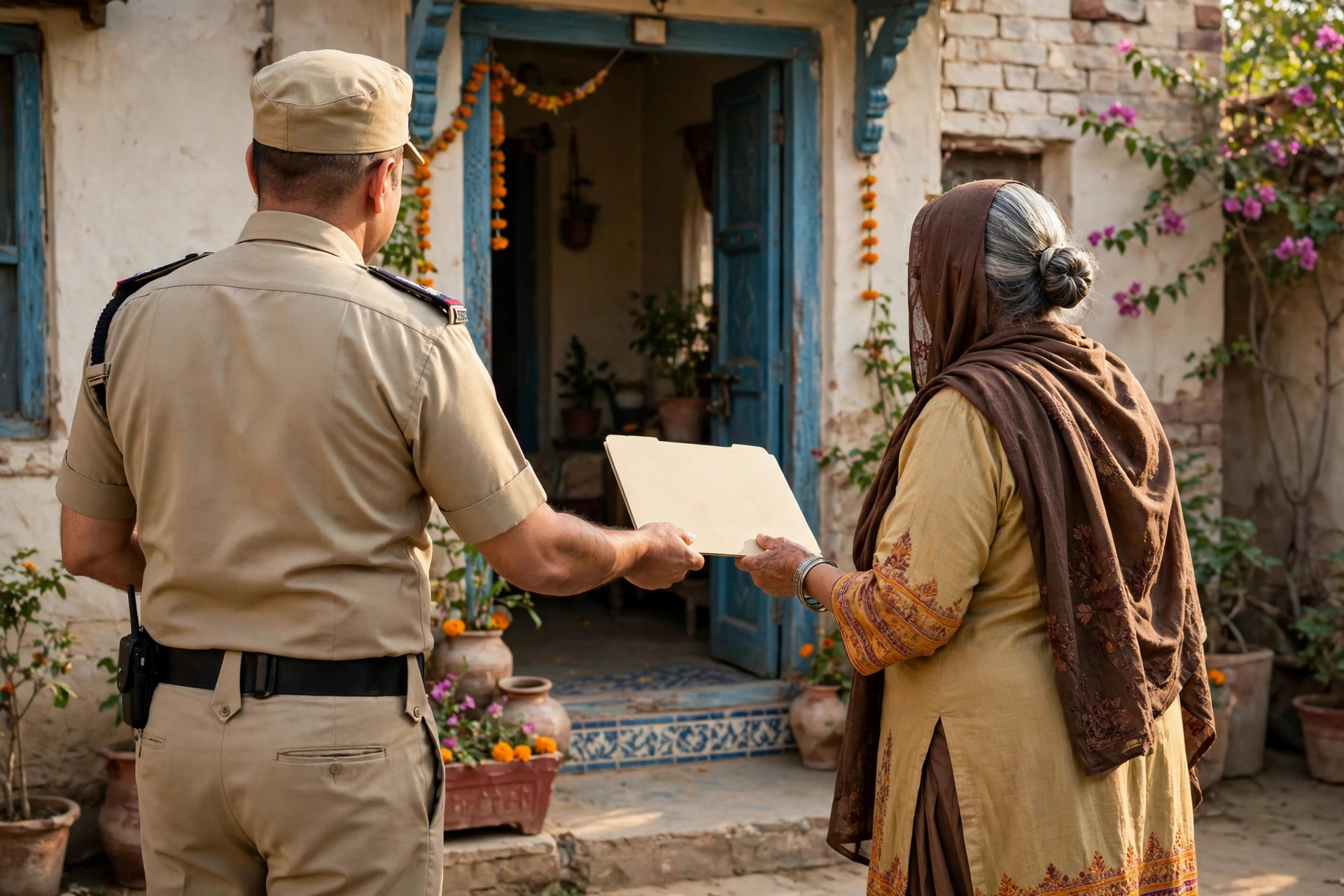
Maryam Ki Dastak Punjab is the Punjab government’s doorstep-delivery programme for government services. The idea is simple: instead of you going to a government office, the government comes to you. A trained, registered Dastak facilitator visits your home, collects your documents, completes the work, and delivers the finished document to your door. The programme is aimed especially at elderly people, women, and persons with disabilities — the people for whom a trip to a government office is the hardest.
The programme runs on technology built by PITB, the Punjab Information Technology Board, and it was launched under Chief Minister Maryam Nawaz. The facilitator is the heart of it: a registered person with an ID, trained by the programme, who does the running around for you. You book the service, the facilitator comes to your home, and the document comes back to your home. You do not stand in a queue, you do not take a day off work, and you do not travel to a district office.
Maryam Ki Dastak Punjab covers 65 or more services — the count is hedged at 65+ because some guides say 76, and the list changes as new services are added. The services include domicile certificates, birth, death, marriage and divorce certificates, driving licence services, fard and e-stamping and property registration, vehicle registration and transfer and token tax, police verification and character certificates, tenant registration, FIR copies, disability certificates, WASA connections, food business licences, and LDA services. The list differs by district, so check the app or the portal for the services available in your district.
Example — the elderly woman who needs a domicile: An elderly woman in a village near Jhang needs a domicile certificate for her grandson’s college admission, but she cannot travel to the district office. Her family books Maryam Ki Dastak Punjab on the app, a facilitator visits her home, collects her CNIC and documents, and the domicile certificate is delivered to her door a few days later. She never leaves her home.
Example — the working man who needs a licence renewal: A man in Lahore works six days a week and cannot take a day off to renew his driving licence. He books the renewal through Maryam Ki Dastak Punjab, the facilitator collects his old licence and documents at his home in the evening, and the renewed licence is delivered by courier. His job is not interrupted, and his licence is renewed.
Maryam Ki Dastak Punjab — How to Book
You can book Maryam Ki Dastak Punjab in three ways. The table below gives them.
| Way to book | How |
|---|---|
| Dastak Citizen App | Download from the Google Play Store or the Apple App Store |
| Web portal | dastak.punjab.gov.pk |
| Helpline | 1202 (alternate 1000 reported) |
The app is the main route, and it is the only route for doorstep delivery — the doorstep service works only through the Dastak Citizen App, as reported in October 2026. The web portal also works for booking, and the helpline 1202 works for people who do not use a smartphone. The support email is support@dastak.punjab.gov.pk. If you are booking for an elderly relative, you can book on their behalf — the facilitator will still visit their home, not yours.
When you book, choose the service, give your address and your mobile number, and choose a time. The facilitator will call before coming. Keep your CNIC and the documents for the service ready — the facilitator collects them at the visit, and a missing document means a second visit.
Maryam Ki Dastak Punjab — Self-Service vs Doorstep Service
Maryam Ki Dastak Punjab offers two ways to get a service done: self-service and doorstep service. They are different, and the table below separates them.
| Way | What happens | Who it suits |
|---|---|---|
| Self-service | You apply online yourself and collect the documents yourself | People comfortable with online forms |
| Doorstep service | A facilitator visits your home, collects documents, and delivers the finished document | Elderly people, women, persons with disabilities, busy people |
The government fee for the service is the same either way. The difference is the doorstep service charge, which may apply on top of the government fee. The fee structure is published on the official portal — check it before you book, so you know exactly what you will pay. Pay only the amount the portal shows. Do not pay a facilitator in cash outside the portal, and do not pay more than the published fee.
The doorstep service is the one that changes lives. An elderly person who cannot walk to an office, a woman who cannot travel alone, a person with a disability who cannot climb the office stairs — for them, the facilitator at the door is the difference between getting the document and not getting it. That is why the programme was built, and that is why it is called Dastak — a knock on the door.
Maryam Ki Dastak Punjab — The Services in Detail
The services fall into groups, and the table below gives the main ones. Remember that the list differs by district — check the app or the portal for your district.
| Group | Services |
|---|---|
| Identity and family | Domicile certificate, birth certificate, death certificate, marriage certificate, divorce certificate |
| Driving | Learner permit, licence renewal, duplicate licence, international licence (DLIMS now routes through Dastak) |
| Property | Fard, e-stamping, property registration (Board of Revenue) |
| Vehicles | Vehicle registration, transfer, token tax (Excise) |
| Police | Police verification, character certificate, tenant registration, FIR copy |
| Other | Disability certificate, WASA connection, food business licence, LDA services |
The driving licence services deserve a note. The DLIMS homepage now redirects to Dastak, and all licence applications go through Dastak. If you need a licence renewal, the Dastak route is the current route — our guide to the Punjab driving licence renewal online 2026 explains it in detail. The same applies to the other services: the Dastak programme is the hub, and the individual service guides on this site explain each one in depth.
Maryam Ki Dastak Punjab — The Scale So Far
The programme reports more than 2.5 million applications processed by early 2026, and coverage reported at about 40 districts. Those figures are reported, not confirmed on the official portal, but they give a sense of the scale: this is not a pilot, it is a working programme that millions of people have already used. The coverage differs by district, and new districts are added over time — check the app for yours.
The programme also creates jobs. Dastak hires facilitators, who earn by commission — a person who becomes a facilitator visits homes, collects documents, and earns for each completed service. That is a separate opportunity from the services themselves, and it is worth a mention: if you are looking for work, becoming a Dastak facilitator is a real option. The programme’s own portal has the details for facilitator registration.
Common Problems — and What to Do
The Service You Need Is Not Listed in Your District
The service list differs by district. If the service you need is not listed for your district, it may not be available there yet. Check the app again in a few weeks, or call the helpline 1202 and ask when the service will reach your district. Do not book a different service hoping it will be converted — the facilitator can only do the service you booked.
The Facilitator Did Not Come at the Booked Time
If the facilitator does not come at the booked time, call the helpline 1202 with your booking number. The facilitator may have been delayed, or the booking may have been assigned to a different facilitator. Do not pay anyone who comes without a booking — a real Dastak facilitator comes only for a booked service, and carries a registered ID.
Your Documents Were Not Enough
If the facilitator says your documents are not enough, ask exactly what is missing. The most common missing document is an updated CNIC, or a document that does not match the CNIC — a name spelt differently, an address that has changed. Fix the document first, then rebook. The facilitator cannot complete a service with documents that do not match.
You Were Asked to Pay More Than the Published Fee
Pay only the amount the portal shows: the government fee for the service plus any published doorstep service charge. If a facilitator asks for more, refuse, note the name and the ID, and call the helpline 1202 to report it. A registered facilitator does not take cash outside the portal.
Maryam Ki Dastak Punjab — Mistakes That Delay Your Service
The first mistake is booking the wrong service. The list is long, and the names are similar — a domicile certificate is not a birth certificate, and a licence renewal is not a learner permit. Read the service name carefully before you book. The second mistake is not having your documents ready when the facilitator comes. The facilitator’s visit is short, and a missing document means a second visit. The third mistake is paying cash to a facilitator outside the portal. Pay only through the portal. The fourth mistake is not checking whether the service is available in your district — the list differs by district, and a service that exists in Lahore may not exist in your tehsil yet. The fifth mistake is handing your original documents to an unregistered person. A real Dastak facilitator carries a registered ID — ask to see it before you hand over anything.
A Walkthrough of the Dastak App — Screen by Screen
The Dastak app is built for a person who has never used a government app before, and the screens show it. The first screen is the home screen, with the list of services in plain Urdu and English. The services are grouped by type — certificates, licences, permits, and property — so a user who needs a domicile certificate looks under certificates, and a user who needs a licence renewal looks under licences. The names are long, so read them slowly: a domicile certificate is not a birth certificate, and a licence renewal is not a learner permit.
The second screen is the service detail. It shows what the service is, what documents it needs, and what it costs. The fee is shown before you book — there is no surprise at the end. If the fee is Rs 0, the service is free. If the fee is listed, pay it through the portal, not in cash. The detail screen also shows whether the service is available in your district, which is the check most users skip.
The third screen is the booking. You choose a date and a time for the facilitator to come to your doorstep, and you enter your address. The app confirms the booking with a message and a reference number. Keep that number — it is your proof of the booking, and it is what you quote if the facilitator does not come.
The fourth screen is the visit itself. The facilitator arrives, shows a registered ID, collects your documents, and takes your photograph or your fingerprints if the service needs them. The visit is short — usually under half an hour — and the facilitator leaves with the documents. The app then shows the status of your application, and the certificate or document arrives at your doorstep when it is ready.
Dastak and the Other Digital Services
Dastak is not the only digital service in Punjab, and it is worth knowing how it fits with the others. The e-Khidmat Markaz is the physical version of the same idea — a centre where a citizen can get many services in one place. Dastak is the doorstep version: the same services, delivered at home. A citizen who lives near a Markaz can walk in; a citizen who cannot travel can book a Dastak visit instead.
The other services are the portals: the driving licence portal, the land record portal, and the NADRA services. Dastak does not replace them — it delivers some of them to your door. A licence renewal can be booked through Dastak, or done directly on the licence portal. The choice is yours, and the fee is the same either way. The difference is the visit: Dastak brings the facilitator to you, while the portal asks you to do the work yourself.
Dastak for the Elderly and People Who Cannot Travel
The doorstep model matters most for the people who cannot travel: the elderly, the sick, and persons with disabilities. A person who cannot walk to a government office can still get a domicile certificate, a birth certificate, or a licence renewal — because the facilitator comes to them. That is the whole point of the service: the government comes to the citizen, not the other way around.
For an elderly person, the practical steps are simple. A family member can book the service on the app or the portal, and the facilitator will come at the booked time. The elderly person needs to be present, with their CNIC and their documents, and the facilitator will do the rest — the photograph, the fingerprints, and the form. The family member should stay for the visit, to make sure the documents are handed over and the receipt is given.
For a person with a disability, the same applies: book the service, be present with your documents, and keep the receipt. The facilitator is trained to work with people who cannot travel, and the visit is designed to be short and simple. If the facilitator does not come at the booked time, call the helpline and quote the reference number.
The doorstep model also helps families in villages far from any government office. A family in a remote tehsil no longer has to spend a whole day travelling to the district office and back — the facilitator comes to the village, and the document comes back to the doorstep. That is a day of work saved, and a day of wages kept, for a family that cannot afford to lose either. For a daily-wage worker, a day spent travelling is a day without pay — and a service that comes to the door is a service that costs nothing in lost wages.
Your Maryam Ki Dastak Punjab Checklist
- I know the service I need, and I have checked it is available in my district on the app or portal.
- I will book on the Dastak Citizen App, on dastak.punjab.gov.pk, or by calling 1202.
- I have my CNIC and the documents for the service ready before the facilitator comes.
- I know the government fee plus any published doorstep charge, and I will pay only the amount the portal shows.
- I will check the facilitator’s registered ID before handing over any document.
- I know self-service means I do it online myself, and doorstep service means the facilitator comes to my home.
- I know the driving licence route now goes through Dastak, and the DLIMS homepage redirects there.
- I will call 1202 if the facilitator does not come, or if I am asked to pay more than the published fee.
Common Questions
What is Maryam Ki Dastak Punjab? Maryam Ki Dastak Punjab is the Punjab government’s doorstep-delivery programme for government services. A trained, registered facilitator visits your home, collects your documents, completes the work, and delivers the finished document to your door.
How do I book Maryam Ki Dastak Punjab? Book on the Dastak Citizen App, on the web portal dastak.punjab.gov.pk, or by calling the helpline 1202. The support email is support@dastak.punjab.gov.pk.
How many services does Maryam Ki Dastak Punjab offer? 65 or more services, including domicile, birth, death, marriage and divorce certificates, driving licence services, fard and e-stamping, vehicle registration, police verification and character certificates. The list differs by district — check the app or portal for yours.
Does Maryam Ki Dastak Punjab charge a fee? You pay the normal government fee for the service, plus a possible doorstep service charge. The fee structure is published on the official portal. Pay only the amount the portal shows.
What is the difference between self-service and doorstep service? Self-service means you apply online yourself and collect the documents yourself. Doorstep service means a facilitator visits your home, collects the documents, and delivers the finished document. Doorstep delivery works only through the Dastak Citizen App.
Is the driving licence renewal done through Dastak now? Yes. The DLIMS homepage redirects to Dastak, and all licence applications go through Dastak. See our Punjab driving licence renewal online 2026 guide for the details.
What is the Maryam Ki Dastak Punjab helpline number? 1202. An alternate number, 1000, is also reported. Call 1202 first.
Can I book Maryam Ki Dastak Punjab for an elderly relative? Yes. You can book on their behalf, and the facilitator will visit their home. The service is aimed especially at elderly people, women and persons with disabilities.
Conclusion
Maryam Ki Dastak Punjab is the government coming to your door. A domicile, a licence, a fard, a character certificate — the documents that used to cost a day in a queue now cost a booking on an app and a visit from a facilitator. The programme covers 65 or more services, it has processed more than 2.5 million applications, and it is built for the people who find a government office hardest to reach.
Book on the app or the portal, or call 1202. Have your documents ready, check the facilitator’s ID, and pay only the published fee. If you need one of the services in detail, this site has the guides: our Punjab domicile certificate 2026 post, our Punjab driving licence renewal online 2026 guide, our Punjab police character certificate online 2026 guide, our Punjab land record fard online 2026 guide, and our NADRA divorce certificate Pakistan 2026 guide.




One Comment