Maryam Nawaz Health Clinic Punjab 2026 — Easy Guide to Free Treatment, Services & Locations
This is not an official Government of Punjab website. This guide is independent, general information about the Maryam Nawaz Health Clinic programme. For official information, always check the clinic portal at mnhc.pshealthpunjab.gov.pk or call the health helpline 1033 before you visit. Treatment at a Maryam Nawaz Health Clinic is free — no one can charge you for it.
What Is the Maryam Nawaz Health Clinic?
The Maryam Nawaz Health Clinic is the Punjab government’s programme that turned 150 Basic Health Units (BHUs) into modern digital health clinics. It runs under the Primary and Secondary Healthcare Department, it was launched in January 2025, and it has already recorded more than 6 million consultations since launch, according to the Chief Minister’s Special Monitoring Unit. The idea is simple: a good clinic near your home, open to everyone, free of charge.
A Maryam Nawaz Health Clinic is a fixed clinic in a village or a small town, built on the old BHU building but rebuilt inside — new equipment, digital records, young doctors, and a pharmacy that stocks essential medicines. It is the clinic you walk into when you are ill, when your child needs a vaccine, when a pregnant woman needs a checkup, or when your blood pressure needs measuring. There is no income test, no registration, and no appointment. You walk in with a valid CNIC, your visit is logged digitally, and you are seen.
The programme matters because the BHU was the weakest link in Punjab’s health system for years. The building existed, but the doctor often did not, the medicines ran out, and the records were paper. The Maryam Nawaz Health Clinic changed the model: young MBBS doctors on pay-for-performance contracts, a female doctor or nurse on every team, and an Electronic Medical Record for every patient. The clinic is still the same building in the same village — but the service inside it is different.
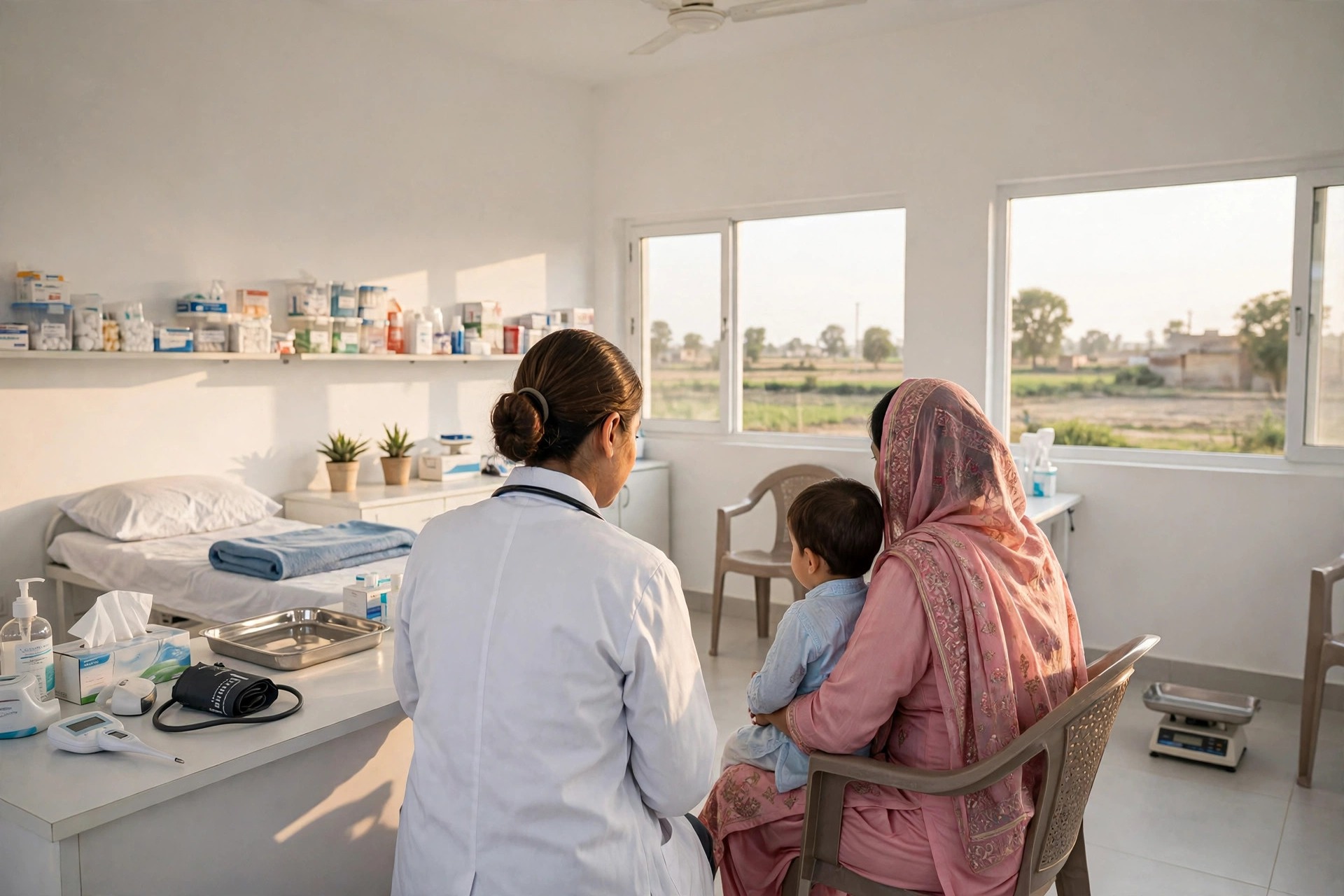
Example — the mother with a sick child: A mother in a village near Sahiwal notices her child has a fever that will not go down. She walks to the Maryam Nawaz Health Clinic with her CNIC, the doctor checks the child, runs a blood test, and gives medicine from the clinic pharmacy. She pays nothing, and the visit is recorded on the clinic’s digital system so the next visit starts from her child’s record.
Example — the elderly man with diabetes: An elderly man in Gujranwala needs his sugar checked every month. He visits the Maryam Nawaz Health Clinic, gets his blood sugar tested, and collects his medicine from the pharmacy. The doctor notes his readings in the Electronic Medical Record, so the next month’s visit takes minutes instead of starting from zero.
Maryam Nawaz Health Clinic — What Is Free
Everything at a Maryam Nawaz Health Clinic is free for every Punjab resident. The table below lists the main services.
| Service | What it covers |
|---|---|
| Consultation | Free checkup by a doctor for everyday illness |
| BP and sugar checks | Blood pressure and blood sugar testing |
| Maternal care | Antenatal and postnatal care; deliveries at select 24/7 clinics |
| Immunisation | Vaccines for children under the national schedule |
| Family planning | Counselling and services for families |
| Basic lab tests | Blood count, urine test, sugar test |
| Essential medicines | Medicines from the BHU pharmacy, free of charge |
| Referral | Referral slip to a DHQ or THQ hospital for specialist care |
Two features of this list deserve attention. First, maternal care: pregnant women can get antenatal checkups at the clinic, and selected clinics run 24/7 with delivery services. A woman in a village no longer has to travel to a city hospital for a routine pregnancy check. Second, the referral: if the clinic doctor finds something that needs a specialist, you get a referral slip to the District or Tehsil Headquarters hospital. The clinic is the first step, not the last — and the referral is the bridge to the next level of care.
The medicines are the part most patients notice first. The BHU pharmacy stocks essential medicines, and they are given free. A patient who used to pay a private pharmacy for every tablet now gets the same medicine at the clinic. If a medicine is not in stock, the doctor will tell you — but the stock is monitored digitally, which is one of the reasons the programme works better than the old BHU.
Maryam Nawaz Health Clinic — How to Find Yours and When to Go
Finding your clinic is easy. The portal mnhc.pshealthpunjab.gov.pk has a clinic locator: choose your district and tehsil, and it shows the Maryam Nawaz Health Clinics near you, including which ones are standard clinics and which ones are 24/7 clinics. The portal is the official source — use it, not a forwarded list on social media.
Most clinics are open Saturday to Thursday, from 8 AM to 2 PM. Some clinics run 24/7 — those are the ones with delivery services and round-the-clock staff. If you need a clinic at night, check the portal first for a 24/7 clinic in your district, because a standard clinic will be closed. The health helpline is 1033 — call it if you are unsure which clinic to visit or whether a clinic is open.
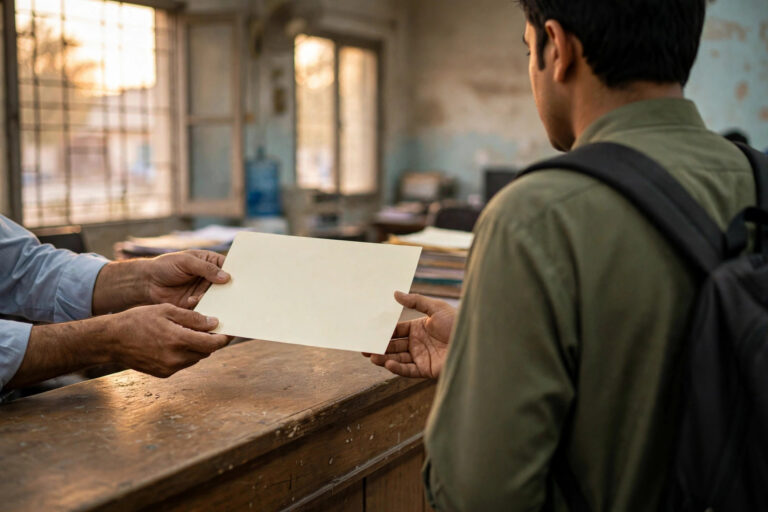
You do not need an appointment, and you do not need to register in advance. Walk in with a valid CNIC. Your visit is logged in the Electronic Medical Record system, which means the clinic has your history the next time you come. Bring your CNIC every time — it is the only document you need, and it is how the system finds your record.
Maryam Nawaz Health Clinic — Who Runs It and How It Works
The clinics are run by young MBBS doctors under pay-for-performance contracts. That detail matters: the doctors are paid on the basis of their performance, which is measured through the digital records — how many patients they see, how the clinic is run, whether the medicines are in stock. It is a different model from the old BHU, where a doctor’s pay did not depend on whether the clinic was open.
Every clinic team includes female doctors and nurses. That matters for women patients, who often avoid a clinic staffed only by men. A mother who needs a pregnancy checkup, a woman who needs family planning advice — both can see a female doctor at a Maryam Nawaz Health Clinic. The programme made that a rule, not an accident.
The Electronic Medical Record is the quiet revolution in the programme. Every visit is logged digitally: your symptoms, your tests, your medicines, your next appointment. A patient who returns after a month does not start from zero — the doctor sees the last visit, the last test result, and the last prescription. For a patient with diabetes or high blood pressure, that continuity is the difference between treatment and guesswork.
Maryam Nawaz Health Clinic vs Clinics on Wheels vs Sehat Card
Punjab now has three health schemes, and readers mix them up. They are different programmes for different needs, and the table below separates them.
| Scheme | What it is | Best for |
|---|---|---|
| Maryam Nawaz Health Clinic | 150 fixed BHU clinics, upgraded and digital | Everyday illness, checkups, vaccines, maternal care near home |
| Clinics on Wheels | 911 mobile vans visiting villages, 45,000+ patients a day, 36 districts | Villages the fixed clinics do not reach; the van comes to you |
| Sehat Sahulat Card | Free hospital treatment up to Rs 10 lakh per family per year | Hospital admission, surgery, and specialist treatment |
The Maryam Nawaz Health Clinic is the fixed clinic you walk to. Clinics on Wheels is the van that drives to you — our guide to the Punjab Clinics on Wheels 2026 explains that programme. The Sehat Card is the hospital card — our Sehat Card post explains how it covers hospital treatment up to Rs 10 lakh per family per year. A patient with a fever goes to the clinic. A patient who needs surgery uses the Sehat Card at a hospital. The three schemes fit together; they do not replace each other.
The Doctor Side of the Portal — A Separate Route
The portal mnhc.pshealthpunjab.gov.pk has a second meaning, and it must not be confused with the patient guide. The same portal is where doctors apply to operate a BHU under the programme. A doctor who wants to run a clinic needs an MBBS or BDS degree, PMDC registration, a Rs 0.5 million bank guarantee, and must be aged 45 or under. That is the operator route, and it is for doctors only.
Patients do not use that route. A patient does not apply, does not register, and does not need a bank guarantee. A patient walks in with a CNIC. If you are a doctor reading this guide, use the portal’s operator section. If you are a patient, ignore it — your route is the clinic door, not the portal.
Common Problems — and What to Do
The Clinic Near You Is Closed When You Arrive
Most clinics run Saturday to Thursday, 8 AM to 2 PM. If you arrive on a Friday, or after 2 PM, a standard clinic will be closed. Check the portal before you go, and find a 24/7 clinic in your district if you need care at night or on a Friday. The helpline 1033 can also tell you which clinic is open.
The Medicine You Need Is Not in Stock
The clinic pharmacy stocks essential medicines, but stocks run out. If the medicine you need is not available, ask the doctor for the prescription and buy it from a pharmacy — but tell the doctor first, because the stock is monitored and a reported shortage is how the supply is fixed. Do not pay anyone at the clinic for a medicine that is supposed to be free.
Your Record Cannot Be Found
If the clinic cannot find your Electronic Medical Record, it is usually because you came without your CNIC, or because your first visit was at a different clinic and the record is under a different spelling. Bring your CNIC every time, and tell the staff which clinic you visited before. The record is digital, but it still needs the right CNIC number to find it.
Someone Asks You to Pay for Treatment
Treatment at a Maryam Nawaz Health Clinic is free. Consultation, tests, medicines — all free. Anyone who asks you to pay for a checkup, a test, or a medicine at the clinic is breaking the rules. Refuse, note the name, and call the helpline 1033 to report it.
Maryam Nawaz Health Clinic — Mistakes That Waste Your Visit
The first mistake is going on a Friday or after 2 PM and finding the clinic closed. Check the hours on the portal before you leave home. The second mistake is forgetting your CNIC. The visit is logged against your CNIC, and without it the staff cannot open your record. The third mistake is going to the wrong scheme: a patient who needs hospital surgery should use the Sehat Card at a hospital, not wait at a BHU clinic. The fourth mistake is buying medicine from a private pharmacy before asking at the clinic pharmacy — the same medicine is free at the clinic. The fifth mistake is not following up: a patient with diabetes or high blood pressure needs a return visit, and the Electronic Medical Record makes the return visit easy. Go back when the doctor tells you to.
What Happens Inside a Clinic Visit
A visit to a clinic follows the same pattern every time, and knowing it in advance makes the visit faster. You arrive, you give your CNIC at the desk, and the staff open your Electronic Medical Record — or create one, if it is your first visit. The record holds your history: your last visit, your last prescription, and your last test. A patient who comes back is not starting from zero — the doctor can see what happened last time.
The doctor sees you, asks what is wrong, and examines you. The examination is basic — temperature, blood pressure, a look at the throat or the wound — and the doctor decides whether the problem can be treated at the clinic or needs a hospital. Most problems can be treated at the clinic: a fever, a cough, a wound, a blood pressure check. The doctor writes a prescription, and you take it to the clinic pharmacy, where the medicine is free. The visit ends with advice: come back in a week, or go to the hospital for a test, or take the medicine for five days and rest.
The whole visit usually takes less than an hour, and it costs nothing. The medicine is free, the consultation is free, and the record is kept for the next visit. That is the whole design: a small clinic, close to home, that treats the small problems before they become big ones.
How the Clinics Fit Into Punjab’s Health System
The clinics are the bottom layer of the health system, and they are the layer most people use most often. Above them are the tehsil headquarters hospitals and the district headquarters hospitals, which handle surgery, admissions, and specialists. Above those are the teaching hospitals in the big cities. The clinic’s job is to catch the problems that do not need a hospital — and to send the problems that do need one to the right place, with a referral.
That referral is the part most patients miss. A clinic doctor who says “you need a test at the DHQ” is not turning you away — the doctor is sending you up the ladder, to the place that has the machine and the specialist. The referral slip is the proof that the clinic has already seen you, and it is what gets you seen at the hospital without starting from zero.
The health card is the other half of the system. The Sehat Card pays for hospital treatment — surgery, admission, and expensive medicine — while the clinic treats the everyday problems for free. A family that uses both is covered at both ends: the clinic for the fever, the card for the operation. Use the clinic first, and the card when the clinic says you need a hospital.
What to Bring to Your First Visit
A first visit goes faster if you bring the right things. Bring your CNIC — the visit is logged against it, and without it the staff cannot open your record. Bring any medicine you are already taking, in its box, so the doctor can see exactly what it is and how much you take. Bring any old test reports or prescriptions you have, because the doctor can read them and avoid repeating a test you have already had.
Bring a family member if you are elderly, very ill, or cannot explain your symptoms clearly — a second person remembers what the doctor said, and can ask the questions you forget. And bring a small bag for the medicine: the pharmacy gives you the medicine free, but it does not always give you a bag to carry it home in.
The visit itself is free, the medicine is free, and the record is kept for the next time. The only thing the clinic asks of you is that you come back when the doctor tells you to — because a treatment that is not finished is a treatment that does not work. A patient who returns on time is a patient the doctor can help; a patient who disappears for a year comes back with a problem that has grown worse. Bring a pen, too, so you can write down what the doctor says — the name of the medicine, the number of days to take it, and the date of your next visit.
Your Maryam Nawaz Health Clinic Checklist
- I know the nearest Maryam Nawaz Health Clinic from the portal mnhc.pshealthpunjab.gov.pk.
- I know my clinic’s hours — mostly Saturday to Thursday, 8 AM to 2 PM — and which clinics are 24/7.
- I will walk in with my valid CNIC — no appointment, no registration, no fee.
- I know consultation, BP and sugar checks, vaccines, maternal care, basic lab tests and essential medicines are all free.
- I know to ask for a referral slip to a DHQ or THQ hospital if I need specialist care.
- I know the helpline is 1033 if I need help finding a clinic or reporting a problem.
- I know the clinic is different from Clinics on Wheels (the van) and the Sehat Card (the hospital card).
- I will not pay anyone at the clinic for treatment, tests or medicines.
Common Questions
What is the Maryam Nawaz Health Clinic? The Maryam Nawaz Health Clinic is the Punjab government’s programme that upgraded 150 Basic Health Units into modern digital clinics. It offers free consultation, tests and medicines to every Punjab resident, with no income test, no registration and no appointment.
Is treatment free at a Maryam Nawaz Health Clinic? Yes. Consultation, BP and sugar checks, maternal care, immunisation, family planning, basic lab tests and essential medicines are all free. Walk in with your CNIC.
How do I find a Maryam Nawaz Health Clinic near me? Use the clinic locator on mnhc.pshealthpunjab.gov.pk — choose your district and tehsil. The portal shows standard clinics and 24/7 clinics. The helpline is 1033.
What are the timings of a Maryam Nawaz Health Clinic? Most clinics are open Saturday to Thursday, 8 AM to 2 PM. Some clinics run 24/7, including delivery services. Check the portal for the 24/7 clinics in your district.
Do I need an appointment at a Maryam Nawaz Health Clinic? No. Walk in with a valid CNIC. Your visit is logged in the Electronic Medical Record system.
What is the difference between a Maryam Nawaz Health Clinic and Clinics on Wheels? The Maryam Nawaz Health Clinic is a fixed clinic in a village or town. Clinics on Wheels is a fleet of 911 mobile vans that visit villages. Both are free, and both are Punjab government programmes.
Does the Maryam Nawaz Health Clinic cover hospital treatment? No. The clinic covers everyday illness, checkups, vaccines and maternal care. Hospital treatment — admission, surgery, specialist care — is covered by the Sehat Sahulat Card, up to Rs 10 lakh per family per year.
What is the Maryam Nawaz Health Clinic helpline number? The health helpline is 1033. Call it to find a clinic, check timings, or report a problem.
Conclusion
The Maryam Nawaz Health Clinic is the clinic Punjab’s villages needed: a fixed, modern, digital BHU, free for everyone, with a doctor, a pharmacy, and a record that remembers you. More than 6 million consultations since January 2025 say that people are using it. Walk in with your CNIC, get checked, get your medicine, and go back when the doctor tells you to.
If your village is not near a fixed clinic, the van may come to you — our guide to the Punjab Clinics on Wheels 2026 explains that programme. For hospital treatment, the Sehat Card is the route — see our Sehat Card post. And for the nutrition support that keeps mothers and children healthy, our guide to the Ehsaas Nashonuma programme explains that scheme, while our Punjab Zewar-e-Taleem 2026 post covers the education stipend for girls.