

PEF Education Voucher Scheme Punjab 2026 — Easy Guide to Free Schooling, Voucher & Apply
This is not an official Punjab Education Foundation website. This guide is independent, general information about the PEF Education Voucher Scheme. For official information, always check PEF at pef.edu.pk before you act on anything here. The PEF Education Voucher Scheme is free for parents — PEF pays the school, and parents pay nothing.
What Is the PEF Education Voucher Scheme?
The PEF Education Voucher Scheme, known as EVS, is the Punjab Education Foundation’s programme that gives poor children free schooling in private schools. PEF — the Punjab Education Foundation, a Government of Punjab body — launched EVS in 2006, after its restructuring in 2004, to reach children in underprivileged areas who were not in school. The idea is a public-private partnership: the government does not build a new school, it pays an existing private school to teach the child for free.
The way the PEF Education Voucher Scheme works is simple, and it is important to understand it exactly, because it is different from a scholarship. PEF registers an eligible child, after NADRA verification, and issues a voucher card. The parent takes the card to an EVS partner school of their choice, and the child studies free. PEF pays the school directly — the parents pay no fee, and the parents receive no cash. The money goes from PEF to the school, never to the family. That is the whole design: the child gets a seat, the school gets paid, and the parent pays nothing.
The scale of the PEF Education Voucher Scheme is large. The PEF overview page gives 16 phases, all 36 districts of Punjab, about 0.5 million children in more than 1,780 EVS partner schools. Those figures are from the PEF overview page and are dated — they are not a 2026 count — but they show the size of the programme. It is one of the largest free-schooling programmes in Pakistan, and it is still active in the financial year 2026–27: PEF published a tender for printing EVS voucher cards for FY 2026–2027 on 3 November 2026, and a tender for printing voucher cards only happens while the scheme runs.
Example — the child who was not in school: A boy in a slum area of Lahore has never been to school, because his father cannot pay a private school fee and the nearest government school is far away. A PEF household survey finds the family, the child is registered and NADRA-verified, and the family receives a voucher card. The father takes the card to a partner school near their home, and the boy starts school the next week — free, with PEF paying the school.
Example — the girl who left school for fees: A girl in Faisalabad left her private school because her parents could not pay the monthly fee. Her family is surveyed, she is registered for the PEF Education Voucher Scheme, and she returns to a partner school with a voucher card. Her parents pay nothing, and PEF pays the school Rs 550 a month for her primary schooling.
PEF Education Voucher Scheme — How Much PEF Pays the School
The PEF Education Voucher Scheme pays the school a fixed amount per student per month, and the amount depends on the child’s level. The table below gives the voucher values from the PEF page.
| Level | Voucher value per student per month |
|---|---|
| Primary | Rs 550 |
| Elementary | Rs 600 |
| Secondary (arts) | Rs 900 |
| Secondary (science) | Rs 1,100 |
Two things about this table matter. First, the parent never sees this money. PEF pays the school directly — the voucher is a payment to the school, not cash to the family. A parent who is offered “the voucher money” in cash is being scammed: the money goes to the school, and only to the school. Second, the amount rises with the level, because older children cost more to teach — a science student needs a lab, and a lab costs more than a primary classroom.
The voucher covers the school fee. It does not cover everything a child needs — uniform, books, transport, and food are the family’s responsibility, unless the school provides them. That is an honest limit, and parents should know it before they enrol: the schooling is free, but the rest of the child’s needs are still the family’s.
PEF Education Voucher Scheme — Who Can Get a Voucher
The PEF Education Voucher Scheme is for poor children in underprivileged areas of Punjab. The child must be from a low-income family, and the family must be found through the programme’s own process: partner-school nomination and a household survey. There is no verified online parent application portal — parents do not apply online. The registration happens through the survey and the school, not through a website.
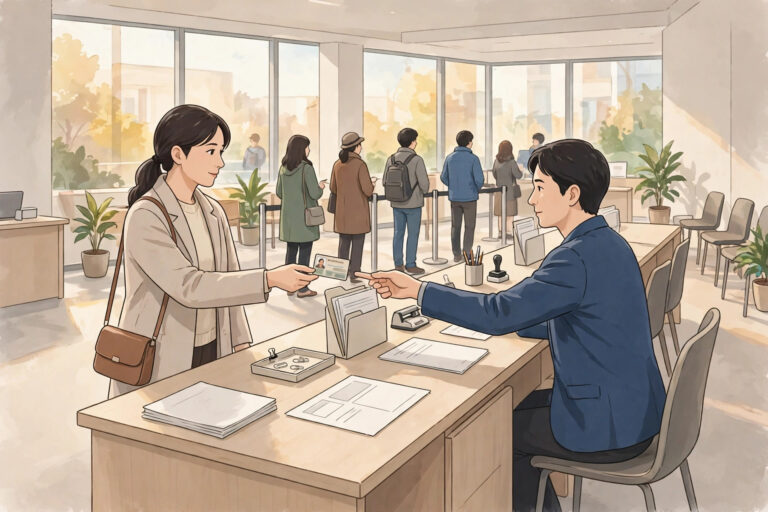
The process works like this. PEF and its partner schools identify children who are out of school or at risk of dropping out. A household survey checks the family’s condition. If the child is eligible, PEF registers the child, verifies the record with NADRA, and issues the voucher card. The parent then chooses an EVS partner school — the parent’s choice, not PEF’s — and the child enrols there. The voucher card is the proof: the parent shows it at the school, and the school enrols the child free.
If your child is out of school and you have not been surveyed, the useful step is to visit an EVS partner school near you and ask. The school can tell you whether it is a partner school, whether it has voucher seats, and how the survey works in your area. Do not pay anyone for a voucher card — the card is free, and it comes from PEF through the survey and the school, not from an agent.
PEF Education Voucher Scheme — No New Phase Announced
This section is a hedge, and it matters. No Phase 17 advertisement or last date was found on pef.edu.pk or in reputable news as of 10 November 2026. This guide does not invent a registration date, and it does not give a last date — because there is none to give. The scheme is active — the November 2026 tender for printing voucher cards proves that — but no new phase has been advertised.
That means two things for parents. First, do not believe a social media post that claims a new EVS phase with a last date. The posts are invented, and the dates are invented with them. Second, do not wait for a phase announcement to act. If your child is out of school, go to an EVS partner school now and ask about the survey and the voucher seats. The scheme runs through the schools and the surveys, not through a phase advertisement.
PEF Education Voucher Scheme — The ALP Route for Out-of-School Children
There is a related PEF route worth one section, because it serves the children the voucher scheme cannot reach. The Ed-Tech Accelerated Learning Programme, ALP, is for out-of-school children — children who work during the day and cannot attend a normal school. ALP runs about 99 active schools with about 25,000 children, in three daily shifts from 8 AM to 6:30 PM, so working children can attend. The schools use Chromebooks, and the Middle-Tech Stream teaches graphic design, the Internet of Things, tailoring and computer skills. A further 300 new schools have been approved for the urban slums of Lahore, Faisalabad, Multan, Sargodha and Rawalpindi.
ALP is not the same as EVS, and this guide does not present it as the same. EVS is a voucher for a child to study in a partner school. ALP is a separate accelerated programme for children who missed school entirely. A child who works during the day belongs in ALP. A child who can attend a normal school belongs in EVS. If your child works, ask about ALP at a PEF school. If your child can attend school normally, ask about the voucher.
PEF Education Voucher Scheme vs PEEF Scholarship — Do Not Mix Them
PEF and PEEF are different funds with similar names, and readers confuse them constantly. They are different organisations, for different children, and the table below separates them.
| Feature | PEF Education Voucher Scheme | PEEF Scholarship Pakistan |
|---|---|---|
| Full name | Punjab Education Foundation | Punjab Educational Endowment Fund |
| Who it is for | Poor children, free private schooling | Older students, Intermediate to Master’s, merit-cum-need |
| What you get | A voucher card — PEF pays the school, parents pay nothing | A monthly stipend plus tuition fee |
| How you get in | Partner-school nomination and household survey | Board results (Outreach) or forms through the institution |
| Ages | School-age children | Intermediate, Graduation, Professional, Master’s students |
The PEF Education Voucher Scheme is for a child who needs a school seat. The PEEF Scholarship Pakistan is for a student who needs a stipend to continue studying. A family can have both — a younger child on a PEF voucher and an older child on a PEEF scholarship — because they are different funds for different ages. Our PEEF Scholarship post explains that programme in detail.
Common Problems — and What to Do
Your Child Was Not Surveyed
If no household survey has reached your family, the voucher process cannot start. Go to the nearest EVS partner school and ask about the survey in your area. The school can tell you when the survey team comes, or how to get your family included. Do not wait for the survey to find you — go to the school and ask.
The Partner School Near You Has No Voucher Seats
EVS partner schools have a limited number of voucher seats. If the school near you is full, ask the school which other partner schools in your area have seats. The parent chooses the school, so you are free to take the voucher card to any EVS partner school that has a seat. If no school nearby has a seat, ask the school when new seats open.
Someone Offers to Sell You a Voucher Card
The voucher card is free, and it comes from PEF through the survey and the school. Anyone who offers to sell you a voucher card is running a scam. The money goes from PEF to the school — never to a parent, and never to an agent. Report the person to the school and to PEF.
You Saw a Phase 17 Date on Social Media
No Phase 17 advertisement or last date was found on pef.edu.pk or in reputable news as of 10 November 2026. A date on social media is invented. Do not plan around it, and do not pay anyone who claims to register you for a phase that has not been announced.
PEF Education Voucher Scheme — Mistakes That Cost Your Child a Seat
The first mistake is waiting for an online application that does not exist. There is no verified online parent application portal for the PEF Education Voucher Scheme. Registration happens through the partner school and the household survey — go to the school. The second mistake is paying for a voucher card. The card is free. The third mistake is believing a Phase 17 date from social media — there is none. The fourth mistake is confusing PEF with PEEF: the voucher is for a school-age child, and the scholarship is for an older student. Apply to the right fund for the right child. The fifth mistake is not asking. The survey, the school, and the voucher all start with a question at a partner school — and a parent who does not ask will not be found.
A Day at an EVS Partner School
A day at an EVS partner school looks like a day at any private school, and that is the point. The children arrive in the morning, in uniform, with their bags. The voucher children sit next to the fee-paying children, in the same classroom, with the same teacher, and the same books. No one in the classroom knows which child is on a voucher and which child is not — and that is how it should be.
The school day is the usual pattern: lessons in the morning, a break, more lessons, and home in the afternoon. The teacher does not treat the voucher child differently, because the school is paid the same for every child — the voucher is Rs 550 to Rs 1,100 a month, depending on the level, and it arrives from PEF whether the child is on a voucher or not. The school’s job is to teach, and the voucher is the way the teaching is paid for.
The difference is at home, not at school. A parent whose child is on a voucher does not pay a monthly fee, and does not have to choose between the school fee and the food. The child stays in school, year after year, because the fee is not a reason to leave. That is the whole design: the child stays, the school is paid, and the parent pays nothing.
How PEF Chooses Partner Schools
A school does not become a partner school by asking. PEF checks the school first: the building, the teachers, the results, and the fee. A school that charges a high fee cannot be a partner school, because the voucher would not cover it. A school with no teachers cannot be a partner school, because there would be no one to teach. A school that fails its students cannot be a partner school, because the voucher would be wasted.
The check is regular, not once. A partner school that lets its standards fall can lose its partnership, and its voucher children with it. That is why a parent should ask the school about its partnership: a school that has been a partner for years is a school that has passed the check, year after year. And a school that has just become a partner is a school that PEF has just checked and approved.
What Parents Should Ask at the School
When you visit a partner school, ask four questions. First, is this school an EVS partner school, and does it have voucher seats open now? Second, what is the voucher value for my child’s level — Rs 550, Rs 600, Rs 900, or Rs 1,100 a month? Third, what does the voucher cover, and what must I pay for myself — the uniform, the books, the transport? Fourth, how does the household survey work in this area, and when will the survey team come to my family? A school that answers all four clearly is a school that knows the programme. A school that cannot answer them is a school to ask again — or to leave.
Your PEF Education Voucher Scheme Checklist
- I know the PEF Education Voucher Scheme gives free private schooling — PEF pays the school, I pay nothing.
- I know there is NO online parent application portal — registration is through partner-school nomination and a household survey.
- I know the voucher values: Rs 550 primary, Rs 600 elementary, Rs 900 secondary arts, Rs 1,100 secondary science per month, paid to the school.
- I know no Phase 17 date has been announced as of 10 November 2026, and I will not believe a date from social media.
- I will visit an EVS partner school near me and ask about the survey and the voucher seats.
- I know the voucher card is free, and I will not pay anyone for one.
- I know PEF (vouchers for children) is different from PEEF (scholarships for older students).
- I know ALP is the separate route for out-of-school children who work during the day.
Common Questions
What is the PEF Education Voucher Scheme? The PEF Education Voucher Scheme (EVS) is the Punjab Education Foundation’s programme that gives poor children free schooling in private schools. PEF registers the child, issues a voucher card, and pays the partner school directly — parents pay no fee and receive no cash.
How much is the PEF voucher worth? Per student per month, paid to the school: Rs 550 for primary, Rs 600 for elementary, Rs 900 for secondary arts, and Rs 1,100 for secondary science. Parents never receive this money — it goes to the school.
How do I apply for the PEF Education Voucher Scheme? There is no verified online parent application portal. Registration is through partner-school nomination and a household survey. Visit an EVS partner school near you and ask about the survey and the voucher seats.
Is there a Phase 17 registration date for the PEF Education Voucher Scheme? No Phase 17 advertisement or last date was found on pef.edu.pk or in reputable news as of 10 November 2026. Do not trust a date from social media.
What is the difference between PEF and PEEF? PEF is the Punjab Education Foundation — free schooling vouchers for children. PEEF is the Punjab Educational Endowment Fund — scholarships with a monthly stipend for older students, from Intermediate to Master’s. Different funds, different ages.
What is the ALP programme? The Ed-Tech Accelerated Learning Programme is PEF’s route for out-of-school children who work during the day. About 99 ALP schools with about 25,000 children, in three daily shifts from 8 AM to 6:30 PM, with Chromebooks and a Middle-Tech Stream. It is separate from the voucher scheme.
How many children does the PEF Education Voucher Scheme cover? The PEF overview page gives 16 phases, all 36 districts, about 0.5 million children in more than 1,780 EVS partner schools. Those figures are from the PEF page and are dated, not a 2026 count.
Is the PEF Education Voucher Scheme free for parents? Yes. PEF pays the school directly. Parents pay no fee and receive no cash. The voucher card itself is free — never pay anyone for one.
Conclusion
The PEF Education Voucher Scheme is the simplest deal in Punjab education: a poor child gets a seat in a private school, PEF pays the school, and the parents pay nothing. The voucher card is the key — Rs 550 to Rs 1,100 a month, depending on the level, paid straight to the school. There is no online application and no Phase 17 date to wait for. The way in is the partner school and the household survey, and the way to start is to walk into a partner school near you and ask.
If your child is older and needs a scholarship rather than a school seat, the PEEF Scholarship is the route — see our PEEF Scholarship post. For university students from low-income families, our guide to the HEC need-based scholarship 2026 covers the federal need-based route, and the Daanish School admission post explains the free boarding school route — see our Punjab Daanish School admission 2026 guide. For girls’ education support, our Punjab Zewar-e-Taleem 2026 post explains the stipend for girls in school.



One Comment